
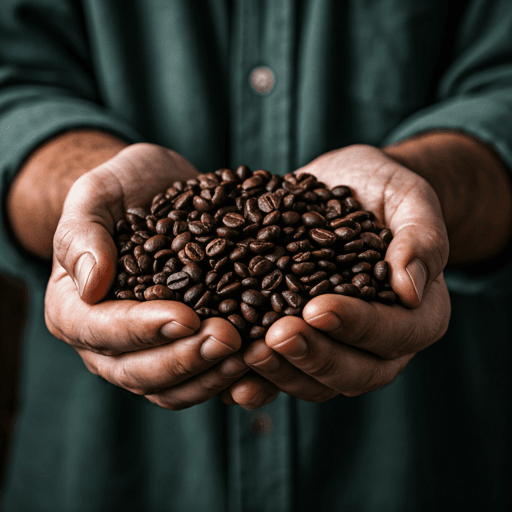
Ask a roaster to name the flavor of Kenyan coffee and you will hear the same word again and again: blackcurrant. That electric, slightly tart burst of dark fruit — layered over grapefruit-bright acidity and a savory, almost tomato-like sweetness — is one of specialty coffee's most recognizable signatures. And it is not an accident of soil or climate alone. It traces back, in large part, to two coffee varieties with unglamorous laboratory names: SL28 and SL34. Selected in Kenya nearly a century ago and still the genetic backbone of the country's finest lots, these two plants explain why a Kenyan cup tastes unlike anything else on the shelf. This guide unpacks where they came from, how they differ, and why growers keep planting them despite their frustrating fragility.
What SL28 and SL34 actually are
SL28 and SL34 are Arabica coffee varieties — single, hand-picked mother trees whose seed was propagated because the plants produced exceptional coffee. The cryptic "SL" is simply an abbreviation for Scott Laboratories, the research station in Kenya where the selections were made and catalogued. The numbers were catalogue references, not marketing; they stuck because the coffee proved worth remembering. Both belong broadly to the classic Bourbon-Typica family of Arabica, the two heirloom lineages from which most of the world's traditional cultivars descend. If you want the wider context on how these old bloodlines shape flavor, our overview of Arabica coffee beans sets the stage, and the Bourbon variety in particular sits close to the root of the SL story.
What makes these two special is a rare combination: they are tall, old-fashioned trees with modest yields and almost no disease resistance, yet at high altitude in Kenya's mineral-rich volcanic soils they deliver a cup of extraordinary clarity and structure. In the trade-off between agronomic convenience and flavor, SL28 and SL34 fall firmly, stubbornly, on the side of flavor.
Scott Agricultural Laboratories: where it began
The story runs through the Scott Agricultural Laboratories near Nairobi, a government research station that took shape in the early 1920s and carried the name of the late Dr. Henry Scott of the Church of Scotland Mission at Kikuyu. In the 1930s, staff there set out to identify coffee plants that would thrive in local conditions — resisting drought and disease — without giving up cup quality. Rather than crossbreeding, the early Scott approach was mass selection: comb through existing populations, find the standout individual trees, and multiply their seed.
Between roughly the mid-1930s and the 1940s the laboratory catalogued a series of numbered selections. Most were forgotten. Two were not. SL28 and SL34 were released to Kenyan farmers and gradually spread across the country's coffee belt on the slopes around Mount Kenya and the Aberdare range, where they remain the dominant traditional plantings today. Nearly a century on, the Scott name survives almost entirely through these two varieties — a quiet monument to a research program most coffee drinkers have never heard of.
SL28: the drought-tolerant blackcurrant bush
SL28 is the more famous of the pair, and the one most responsible for that signature blackcurrant note. It was selected around 1935 from a single tree within a population known as Tanganyika Drought Resistant. The backstory is part of coffee folklore: a senior Scott officer touring what is now northern Tanzania in the early 1930s noticed coffee that appeared unusually tolerant of drought, disease, and pests, collected seed, and brought it back to Kenya, where the drought tolerance was confirmed.
That resilience runs deep — literally. SL28 develops a strong root system that lets it pull through long dry seasons, and the variety is famously "rustic," meaning trees can be left semi-neglected for years, even decades, and coaxed back into production. Some SL28 trees in Kenya are reported to be sixty to eighty years old and still bearing fruit. Its exact ancestry is not fully settled; it is usually described as Bourbon-related, though researchers have long debated whether other lineages contributed to its distinctive character. What is not in doubt is the cup: intense cassis (blackcurrant), red and dark berries, bright citrus acidity, and a juicy, structured body that rewards careful roasting. It is exactly the kind of transparent, high-toned profile that has made the variety a benchmark for specialty buyers.
SL34: bred for altitude and rain
SL34 is SL28's constant companion in Kenyan fields, and the two are often planted and even sold together. It was selected in the late 1930s from a single tree on the Loresho Estate at Kabete, near Nairobi. That original tree was labeled "French Mission" — a Bourbon-derived lineage carried to East Africa by French missionaries in the nineteenth century — which is why SL34 has long been described as Bourbon-related. Interestingly, more recent genetic testing has complicated that tidy story, suggesting SL34 actually sits closer to the Typica side of the family. The honest answer is that its precise parentage remains somewhat uncertain, and it is best to hold the "French Mission" label lightly.
Agronomically, SL34's calling card is different from SL28's. Where SL28 leans on drought tolerance, SL34 is prized for performing at high altitude in areas with generous rainfall, and it tends to yield a little more reliably. The tall trees carry bronze-tipped young leaves and large beans. In the cup, SL34 is a close cousin of SL28 — the same broad Kenyan template of dark fruit and bright acidity — but usually a touch softer and more rounded, with the blackcurrant present yet less piercing and the body a shade lighter. Blended together in a lot, the two varieties flatter each other: SL28's intensity and SL34's roundness.
SL28 vs SL34 at a glance
| Trait | SL28 | SL34 |
|---|---|---|
| Selected at | Scott Agricultural Laboratories, Kenya (mid-1930s) | Scott Agricultural Laboratories, Kenya (late 1930s) |
| Origin tree | Tanganyika Drought Resistant population | "French Mission" tree, Loresho Estate, Kabete |
| Lineage | Bourbon-related (debated) | Historically Bourbon/French Mission; genetics suggest Typica-related |
| Key strength | Drought tolerance; deep roots; rusticity | Thrives at high altitude with good rainfall |
| Stature & yield | Tall; low yield | Tall; low-to-medium yield |
| Cup character | Intense blackcurrant, citrus, high crisp acidity | Similar but softer, rounder, slightly lighter body |
| Disease resistance | Low — susceptible to leaf rust, CBD, nematodes | Low — susceptible to leaf rust, CBD, nematodes |
Treat the finer agronomic points as tendencies rather than laws; real-world performance shifts with altitude, farm management, and season.
Why they define the Kenyan cup
Variety is only half the equation. The reason SL28 and SL34 taste the way they do in Kenya is a lucky alignment of plant, place, and process. The high-altitude terroir — cool nights, intense equatorial sun, and phosphorus-rich volcanic and lateritic soils — slows cherry maturation and concentrates the acids and sugars these varieties are genetically prone to express. Layer on Kenya's meticulous, quality-obsessed washed processing, often with an extended fermentation and clean-water soak, and you get the transparent, wine-like acidity that has made Kenyan coffee a benchmark for cuppers worldwide. To see how these varieties sit within the country's broader reputation, our guide to Kenyan coffee covers the growing regions, grades, and auction system in more depth.
Kenya's grading also amplifies the effect. Beans are sorted by size and density into grades — AA and AB being the most familiar — and the largest, densest lots, grown at the highest elevations, tend to concentrate the most vivid SL28 and SL34 character. Rounded peaberry beans are pulled out as their own grade, prized for a concentrated intensity. None of this creates flavor from nothing; it selects and showcases what the varieties already carry.
The great trade-off: quality over resistance
For all their brilliance, SL28 and SL34 are agronomic liabilities. Both are highly susceptible to the major threats of East African coffee: coffee leaf rust, the devastating coffee berry disease (CBD), and root-knot nematodes. Yields are modest at best. For a farmer, planting them is a genuine gamble — a bet that premium prices for exceptional cups will outweigh the cost of lost crop and heavy fungicide spraying.
This tension has driven decades of breeding work in Kenya. Disease-resistant varieties such as Ruiru 11 and Batian were developed specifically to relieve smallholders of that burden, and they succeed on resistance and yield. Yet many buyers and farmers still reach for the old SL selections because, at the very top of the quality ladder, nothing else quite replicates their cup. It is the classic specialty-coffee bargain: the most delicious plants are often the most difficult to grow. That fragility is part of why great Kenyan lots stand out — the flavor is earned against real agronomic odds.
Traveling beyond Kenya
Because their reputation preceded them, SL28 and SL34 did not stay put. SL28 in particular has spread well beyond Kenya, showing up across other African origins — Uganda, Malawi, Zimbabwe and beyond — and, more recently, in Latin America, where ambitious producers in countries like Colombia, Ecuador, and El Salvador have planted it in search of that famous acidity and blackcurrant lift. Results vary: the same genetics grown in different soils and at different latitudes rarely reproduce the exact Kenyan cup, which is a useful reminder that variety and terroir are partners, not substitutes.
Still, the migration speaks to the standing these two humble laboratory selections have earned. Nearly a century after a handful of trees caught the eye of researchers at a Kenyan research station, SL28 and SL34 remain shorthand for some of the most distinctive coffee on earth — living proof that a single well-chosen plant can define the taste of an entire country.