
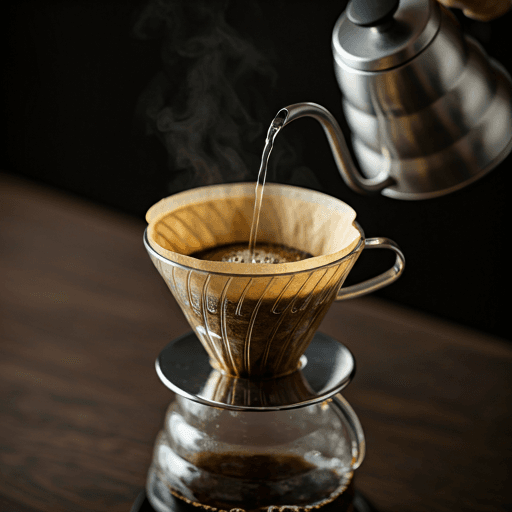
The heart of siphon vs drip coffee is a difference in how the water meets the grounds. A siphon — also called a vacuum brewer — uses a heat source and vapor pressure to push water up into an upper chamber, steep it with the coffee, then let a gentle vacuum draw the finished brew back down through a filter. Drip coffee does something far simpler: it lets hot water fall once, by gravity, through a bed of medium-ground coffee. One is a theatrical, full-immersion showpiece; the other is a dependable everyday workhorse.
The short answer: siphon vs drip coffee
In one line, the difference between siphon and drip coffee is a precise vacuum immersion versus a simple gravity pass. A siphon holds the water and grounds together in a sealed chamber for a set time, then filters the whole batch back down at once, which tends to make a clean, aromatic, almost tea-like cup. Drip coffee — whether it comes from an automatic machine or a manual cone — passes water through the grounds a single time and drains straight into the pot below, giving a balanced, familiar result with very little fuss. If you want the full definition of the gravity method, see what is drip coffee; here the focus is how the two approaches actually differ.
How each brewer works
How a siphon works
A siphon has two stacked chambers. Water sits in the lower globe over a heat source — an alcohol burner, a butane flame, or a halogen lamp. As the water heats, expanding vapor builds pressure and forces the water up a tube into the upper chamber, where the ground coffee waits. The coffee steeps there in near-boiling water, fully immersed, often for around a minute or so, usually with a gentle stir to wet the grounds evenly. When you remove the heat, the lower globe cools, the pressure drops, and the resulting vacuum pulls the brewed coffee back down through a cloth, paper, or metal filter into the globe below. It looks dramatic, and it is also a genuinely controlled brew.
How drip works
Drip coffee is gravity from start to finish. Hot water is dispersed over a bed of grounds held in a filter, soaks through them once, and drips into a carafe or mug below. There is no pressure and no vacuum — just water finding its way down. An automatic drip machine heats the water and showers it over the grounds for you; a manual pour-over cone does the same thing by hand. Because the water only passes through the coffee a single time, the contact is briefer and more one-directional than the full immersion of a siphon.
Grind size for siphon and drip
Both methods sit in similar territory: a medium grind, roughly the texture of table salt, is a sensible starting point for each. A siphon is often ground a touch finer than a standard drip because the immersion time is short and a slightly finer grind helps the extraction keep up. Drip favors a steady medium that lets water flow through the bed evenly without clogging or running too fast. As always, grind is something to adjust to taste — if a cup tastes thin or sour, go a little finer; if it tastes harsh or bitter, go coarser. Small changes here matter more than you might expect.
Flavor and clarity
This is where the two methods tend to part ways, though results always depend on the beans, the roast, and your technique. A siphon is prized for a bright, clean, aromatic cup — the full immersion plus filtration often yields a delicate, almost tea-like clarity that lets high-grown and lightly roasted coffees show off their florals and fruit. Drip coffee leans balanced, rounded, and familiar; it is the taste most people picture when they think of a regular cup, and it flatters a wide range of everyday beans. Neither is objectively better. A siphon tends to reward you with nuance and a bit of theater; drip gives you reliable, satisfying coffee without much thought. If you enjoy the siphon's clarity, you may also like how a siphon compares with pour-over, another method known for a clean cup.
Effort and gear
Here the gap is wide. A siphon asks for real involvement: a heat source, careful timing, a stir, and attention to the moment you pull the flame. The apparatus has more parts to set up, watch, and clean, and the payoff for that effort is both the flavor and the spectacle. Drip is close to effortless — an automatic machine is genuinely push-button, and even a manual cone is a straightforward pour. If you like a hands-on ritual and don't mind the cleanup, the siphon is a joy; if you want coffee while you're still half-asleep, drip wins on convenience. For a punchier, pressure-driven contrast, the siphon also stacks up interestingly against espresso in siphon vs espresso.
Consistency and volume
Drip is built for repeatable volume. An automatic machine will make much the same reliable pot morning after morning, and it scales easily to serve a group — several cups from one brew cycle. A siphon, by contrast, is a careful cup-or-two affair; most home models brew a modest batch and demand your attention each time, so results depend a little more on the person at the controls. When people weigh drip coffee vs siphon for a crowd, drip usually wins on sheer practicality; when they want a deliberate cup, the siphon's hands-on nature is the whole point. The same everyday-versus-considered split shows up when you line up the two gravity cousins in pour-over vs drip coffee.
Siphon vs drip coffee at a glance
| Feature | Siphon (vacuum) | Drip |
|---|---|---|
| Mechanism | Vapor pressure pushes water up, then a vacuum pulls it back down through a filter (full immersion) | Hot water passes once by gravity through a filter bed of grounds |
| Grind | Medium, sometimes a touch finer | Medium |
| Body & clarity | Light-bodied, clean, bright, almost tea-like | Balanced, rounded, familiar |
| Effort | High — heat source, timing, attention, more cleanup | Low — push-button or a simple pour |
| Best for | A hands-on, aromatic showpiece cup or two | A fuss-free, consistent everyday pot |
Which to choose, and when
Choose a siphon when the brewing is part of the pleasure — a weekend ritual, a cup to share with someone who will appreciate the show, or a bag of delicate, aromatic beans you want to hear speak clearly. Choose drip when you want dependable coffee with minimal effort: a full pot for the household, a hands-off machine for busy mornings, or a simple, consistent cup you never have to think about. Many coffee lovers keep both — the siphon for slow mornings and the drip machine for everything else. The vacuum coffee vs drip question is not a contest with a single winner; the two methods simply answer different questions. One asks how much you enjoy the making, and the other asks how little you want to fuss.
A quick word on strength: people sometimes assume one method is far stronger than the other, but the caffeine in your cup depends much more on your coffee-to-water ratio and the beans than on siphon versus drip as a mechanism. Responses to caffeine vary from person to person, so treat any strength as something to tune to your own taste — and this is general brewing information, not medical advice.