
Siphon vs pour over comes down to how the water meets the grounds: a siphon (or syphon) brewer uses vapour pressure and a heat source to push water up into an upper chamber, steep it with the coffee, then vacuum-pull it back down through a filter as the system cools — while a pour-over simply drips hot water by hand through a cone of grounds using gravity alone. Both are filter methods that make a clean, aromatic cup, yet the siphon tends to feel full-yet-clean and theatrical, while the pour-over stays simple, bright and endlessly controllable. Neither is objectively "better"; they suit different moods, kitchens and palates.
This guide compares the two side by side rather than teaching each from scratch — how the water moves, how each cup tends to taste, how much fuss is involved and which one fits your kitchen. We defer the full brew-by-brew mechanics to each method's own deep dive and point you to them below.
What a siphon is
A siphon (also spelled syphon, and often called a vacuum brewer) is a two-chamber glass contraption that brews over a flame or an electric or halogen heater. Water sits in the lower globe; as it heats, vapour pressure forces it up a tube into the upper chamber, where it mixes and steeps with the grounds in a full-immersion soak. When you remove the heat, the lower chamber cools, a partial vacuum forms, and the finished coffee is drawn back down through a cloth, paper or metal filter — leaving a bright, clean, slightly fuller-bodied cup and a fair amount of drama.
The appeal is part flavour, part spectacle: bubbling water, swirling grounds and a satisfying downward gush at the end. Because it combines a full soak with gentle vacuum filtration, a siphon often reads as aromatic and silky. We leave the step-by-step mechanics to how a siphon coffee maker works; here the point is simply what it is and how it feels next to a pour-over.
What pour-over is
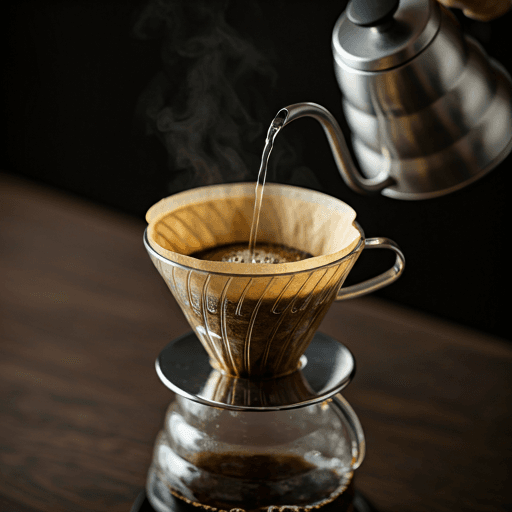
A pour-over is the opposite in spirit: no pressure, no vacuum, just hot water poured by hand over a bed of grounds sitting in a paper or metal cone, draining through by gravity. The classic devices are the Hario V60 (a ridged 60-degree cone with one big hole), the Chemex (a heavier all-glass carafe with a thick filter) and the Kalita Wave (a flat-bottomed basket with three small holes). You control the flow with your kettle, so the pour itself shapes the cup.
The result is famously clean and articulate — bright acidity, clear separation of flavours and a lighter body. It is inexpensive to start, portable and quick to clean. For the technique, see the pour-over coffee guide and, for the most popular cone specifically, how to brew with a V60.
Siphon vs pour over: the key difference
The heart of pour over vs siphon is the force that moves the water. A siphon uses vapour-pressure immersion plus vacuum filtration; a pour-over uses hand-poured gravity. That single mechanical fork drives almost every other contrast between them — body, control, gear, theatre and cleanup. If you want the difference between siphon and pour over coffee in one line: the siphon soaks then sucks, and the pour-over trickles.
Siphon vs pour-over at a glance
| Attribute | Siphon | Pour-over |
|---|---|---|
| Brewing force | Vapour pressure plus vacuum | Gravity only |
| Method type | Full immersion, then vacuum filtration | Hand-poured drip (percolation) |
| Heat source | Flame, halogen or electric burner | Separate kettle; no heat under the brewer |
| Typical gear | Two-chamber glass brewer, burner, filter | Cone (V60, Chemex, Kalita), paper, kettle |
| Body | Clean, but a touch fuller and rounder | Clean, crisper and brighter |
| What drives the cup | Heat and timing | Your pour |
| Fuss and fragility | Higher — delicate glass, more setup | Lower — simple and portable |
| Cleanup | More parts to rinse and dry | Toss the filter, rinse the cone |
| Theatre | High — a tableside spectacle | Low-key, meditative ritual |
| Best for | Showpiece brewing, silky aromatic cups | Everyday clarity, travel, tinkering |
Clarity and body
Both methods sit firmly in the "clean cup" camp — they filter out most of the oils and fines that make an immersion brew feel heavy. The nuance: a siphon's full soak plus vacuum draw can lend it a rounder, silkier body and a slightly fuller mouthfeel, while a pour-over usually lands crisper, more transparent and more sharply defined. These are tendencies, not laws — filter choice (cloth versus paper versus metal), grind size and recipe move both cups a long way, so treat any "always" claim with a little caution.
Control and skill
Neither is a push-button machine, but they ask for different skills. A pour-over lives or dies by your pour: water temperature, speed, height and the pattern of your circles all change extraction, which is why enthusiasts weigh everything and pour on a scale. A siphon shifts the variables to heat and timing — how hard you run the burner, how long the coffee steeps up top, and exactly when you pull the flame. Both reward practice and both punish inattention; the siphon simply hides more of the work inside the physics.
Equipment and fuss
Here the gap is wide. A pour-over kit can be a single plastic cone and a stack of filters, tossed in a bag for travel. A siphon is a fragile, gear-heavy affair: breakable glass chambers, a dedicated burner or heat source, a filter that may need soaking or clipping, and a small ritual to assemble. That fragility and setup are exactly why cafés wheel siphons out as a centerpiece — and why most people reach for a pour-over at home on an ordinary Tuesday.
Speed and cleanup
Per batch, the two are broadly comparable — most single-cup brews land in the same few-minute window. The difference is the wrapping around the brew. A pour-over is grab-and-go: lift the cone, bin the paper, rinse, done. A siphon needs assembly beforehand and disassembly after, with more parts to rinse and dry and hot glass to handle carefully. If speed and a clear sink matter most, pour-over wins on convenience even when the actual extraction times are similar.
Taste: vacuum coffee vs pour-over
On flavour, vacuum coffee vs pour over is a subtle contest rather than a blowout. A siphon tends to deliver a clean, deeply aromatic, silky cup — the immersion coaxes out sweetness and a rounded texture, and the vacuum keeps it tidy. A pour-over tends to be clean, bright and articulate, showing off high notes, acidity and origin character with real clarity. Many drinkers find the siphon a touch more "complete" and the pour-over more "vivid." Which you prefer is genuinely a matter of taste, bean and mood.
Is siphon coffee better than pour-over?
So is siphon coffee better than pour over? Not inherently. The siphon is the showpiece — captivating to watch, rewarding when it is dialled in, and lovely for aromatic, silky cups you want to make an occasion of. The pour-over is the daily driver — inexpensive, portable, forgiving of a small kitchen, and brilliant for bright, expressive single origins you brew every morning. If you love ritual and don't mind delicate glass, the siphon delights; if you want simple, repeatable clarity, the pour-over is hard to beat.
Still weighing filter styles? A useful third reference point is pour-over vs French press, which pits gravity-drip clarity against full-immersion body — worth a read once you understand how siphon and pour-over differ.
Which should you choose?
In the end, siphon and pour-over are cousins, not rivals: both chase a clean, aromatic cup, and both put the brewer in charge. Choose the siphon when you want theatre and a silky, rounded brew you can linger over; choose the pour-over when you want a bright, honest cup you can make almost anywhere with almost nothing. The most reliable answer, as ever, is to taste both and let your own palate settle the argument.