
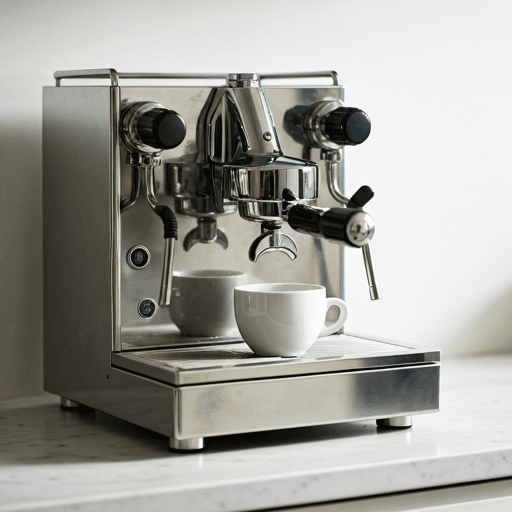
A siphon coffee maker — also spelled syphon, and often called a vacuum coffee maker — is a theatrical two-chamber brewer that uses heat and vapour pressure to push water up into an upper chamber where it steeps with the grounds, then lets a cooling vacuum pull the finished coffee back down through a filter. The payoff is an exceptionally clean, aromatic, full-flavoured cup that leans closer to tea-like clarity than to the heavy body of a French press. It is equal parts brewing method and tabletop spectacle, which is exactly why it has such a devoted following.
This guide explains how the method works, what the parts do, why people love it (and where it frustrates), and what to look for if you want to bring one home. For step-by-step method details of other brew styles, we point you to the sibling guides throughout.
What is a siphon coffee maker?
A siphon coffee maker is a manual brewer built from two stacked glass chambers and a filter, powered by a heat source underneath. The name comes from the way liquid travels between the chambers, though the physics is really about vapour pressure and vacuum rather than a true siphon. You will see the same device sold as a syphon coffee maker (the British spelling), a vacuum coffee maker, a vacuum pot, or a siphon coffee brewer — all names for the same idea. The design dates to the 1830s and 1840s in Europe and was later refined into the elegant tabletop and stovetop versions brewed in specialty cafes today, especially across East Asia where siphon bars turned it into a craft.
Unlike a drip machine you can walk away from, a siphon is a hands-on ritual. It rewards attention with a cup that is remarkably transparent in flavour: you taste the origin, the acidity and the delicate aromatics because full immersion is paired with a fine filter that keeps the cup from turning muddy.
How does a siphon coffee maker work?
Here is how a siphon coffee maker works, step by step. The whole cycle is driven by heating and then cooling the same body of water:
- Heat the water. You fill the lower globe (the bottom bowl) with water and apply heat from below. As the water warms, it expands and builds vapour pressure inside the sealed chamber.
- Water rises. That expanding pressure forces the hot water up through a narrow tube into the upper chamber, which holds your ground coffee. The lower globe is left with only a little water and vapour.
- The coffee steeps. Up top, the water and grounds mingle as a full immersion, much like a French press but at a controlled, near-simmer temperature. A gentle stir helps saturate the bed evenly. This steep usually runs about a minute or so.
- Remove the heat. You take the brewer off the burner (or switch it off). As the lower chamber cools, the vapour condenses and the pressure drops, creating a partial vacuum.
- The vacuum pulls it down. That vacuum draws the brewed coffee back down from the upper chamber, through the filter, and into the lower globe — leaving the spent grounds behind above the filter. The finished coffee is now ready to serve straight from the bottom bowl.
The magic moment is that final draw-down: watching the liquid sink through the filter is the theatre that makes the siphon a conversation piece as much as a coffee tool.
The parts and heat sources
A siphon is a small system of a few well-matched pieces. Knowing them makes buying and brewing much easier.
The chambers
Two chambers, almost always borosilicate glass so you can watch the show and so they tolerate heat. The upper chamber holds the grounds and has a tube that dips into the lower globe; the lower globe holds the water and becomes the serving vessel. Sizes are rated by cups, and a "cup" here is a small serving, not a full mug.
The filter
Sitting at the base of the upper chamber, the filter is what gives the siphon its clarity. Three common types:
- Cloth — the traditional choice; produces a rich yet clean cup, but must be rinsed, kept wet in the fridge between uses and replaced periodically.
- Paper — the cleanest, brightest cup and zero maintenance, but you buy consumables and fit sizes vary by model.
- Metal (mesh) — reusable and low-fuss with a touch more body and sediment; a practical everyday option.
The heat source
This is where models differ most, and it shapes the whole experience:
- Alcohol or butane burner — the classic look; cheap, portable and part of the ritual, but the flame is harder to control precisely.
- Halogen or "beam" heater — a focused lamp that heats fast and looks dramatic; steadier control at a higher outlay.
- Stovetop siphon — a metal-bodied version built to sit on a gas or induction hob, trading some of the glassy spectacle for durability and convenience.
Why people love it — and the downsides
Fans reach for a siphon for three reasons. First, clarity plus body: full immersion extracts a lot of flavour, while the filter strains out fines, so you get a cup that is clean and tea-like yet still full-bodied. Second, control: temperature stays high and steady, and you decide the grind, the stir and the timing, which makes the method a favourite for showcasing bright, complex single-origin coffees. Third, the spectacle — the rising water and the hypnotic draw-down turn brewing into a small performance for guests.
The downsides are just as real, so go in clear-eyed:
- Fragile. Thin glass chambers can crack or chip; they demand careful handling, washing and storage.
- Fiddly and slow. There are more steps and more variables than a push-button brewer, and it is not something you rush before work.
- More cleanup. You empty wet grounds, rinse two chambers and maintain the filter every time.
- Attention required. You cannot walk away mid-brew; the method wants you present for the heat, the stir and the timing.
In short, a siphon is a weekend-ritual brewer and a showpiece, not an everyday auto-drip. If hands-off convenience is your priority, weigh that trade-off before buying — our guide on how to choose a coffee maker walks through matching a brewer to how you actually drink coffee.
What to look for in a siphon coffee brewer
When comparing a siphon coffee brewer, focus on the few things that shape the cup and the day-to-day experience rather than on looks alone. The table below keeps cost strictly qualitative — a siphon setup generally sits at the higher, more specialist end of manual brewers, but that varies widely by materials and heat source.
| Aspect | What to consider on a siphon coffee maker | Why it matters |
|---|---|---|
| Chamber size / servings | Rated in small "cups" (commonly 3 to 5); match it to how many you brew at once | Siphons brew a fixed batch well; too large and a single serving under-extracts, too small and you re-brew |
| Filter type | Cloth, paper or metal — each with a different cup and upkeep | Sets clarity vs body and how much cleaning and consumables you sign up for |
| Heat source | Alcohol/butane burner, halogen beam heater, or stovetop-compatible body | A steady, controllable heat makes consistent brewing far easier |
| Glass quality | Borosilicate; check thickness and how well parts seat together | Better glass and a snug seal mean fewer cracks and a cleaner vacuum draw-down |
| Seal and fit | The gasket and tube must seal tightly between chambers | A poor seal weakens the vacuum and can leave grounds in the cup |
| Ease of cleaning | Wide openings, dishwasher-safe parts (glass usually hand-wash) | You clean after every brew, so awkward parts get old quickly |
| Relative cost | Qualitative: mid to premium among manual brewers | Beam heaters and cloth-filter classics cost more than a basic burner set |
How to brew a great cup
Once you have the gear, a few habits make the difference between a flat cup and a luminous one:
- Grind a bit coarser than drip. A medium grind — coarser than pour-over, a little finer than French press — suits the immersion-plus-filter design and helps the coffee draw down cleanly.
- Dial in a ratio. Start around 1 part coffee to roughly 15 parts water by weight and adjust to taste; a kitchen scale beats guessing.
- Wet the filter. Rinse and seat the filter before brewing so it sits flat and clean.
- Stir gently. Give the bed a light stir once the water is up top to saturate all the grounds evenly, and a final light stir before draw-down.
- Time the steep. Keep the immersion short — roughly a minute give or take — then pull the heat; the vacuum does the rest.
- Serve promptly. Siphon coffee is at its aromatic best fresh from the lower globe.
If bright clarity is what draws you to the siphon, a light-to-medium roast and a filter-friendly, terroir-driven coffee will show it off best.
Siphon vs other clean-cup brewers
The siphon is one of several ways to chase a clean, articulate cup, and it helps to know where it sits. For a paper-filtered, hands-on drip style with similar transparency but less theatre, see our pour-over coffee guide. The Chemex coffee maker uses a thick paper filter to deliver comparably bright, sediment-free coffee with far less fuss than a siphon. And do not confuse the vacuum-and-condensation cycle of a siphon with a percolator, which repeatedly cycles boiling water up through the grounds by percolation — a different mechanism that yields a much bolder, less delicate cup. Each has its place; the siphon simply trades convenience for clarity and a bit of ceremony.
Is a siphon coffee maker right for you?
Choose a siphon if you enjoy the process as much as the coffee, want a genuinely clean and aromatic cup, and do not mind a few extra minutes and a careful wash. Skip it if you want to press a button on a busy morning. Treated as a weekend ritual or a way to impress guests, few brewers are as rewarding to watch and to drink — a small piece of theatre that happens to make excellent coffee.