
To choose a coffee maker, start with the kind of coffee you actually want to drink, then match it to how much effort you want to put in, how many cups you brew at once, and your budget. There is no single best coffee maker for everyone. The right machine depends on whether you crave a quick mug before work, a slow weekend pour-over ritual, or a tiny, intense espresso. This guide gives you a simple framework so you can pick the right category with confidence.
Rather than re-reviewing every model, we will compare the main coffee maker types side by side, explain who each one suits, and point you to deeper guides on the methods that catch your eye.
How to choose a coffee maker: the four questions that decide it
Before you look at a single product, answer these four questions. They narrow the field fast and stop you buying a machine that ends up in a cupboard.
- Taste. Do you want a clean, light cup; a rich, full-bodied mug; or a short, concentrated shot that builds milk drinks like cappuccino and latte? Different brewers pull flavour out of coffee in very different ways.
- Effort. Do you want to press one button, or do you enjoy weighing beans, timing pours and dialling in your brew? Be honest with yourself. A fussy method you never actually use is wasted money.
- Volume. Are you brewing one cup for yourself, or a full pot for a household and a busy morning with guests?
- Budget. Coffee makers span an enormous range, from very affordable manual brewers to premium machines, and prices vary by country and retailer. Spend where it matters for the cup you want, and factor in running costs: pods and paper filters add up over the years, while a French press needs almost nothing beyond coffee.
Hold those answers in mind as you read the categories below. Most people find one or two types stand out quickly.
The main coffee maker types at a glance
Here is a quick comparison of the big categories. Use it to shortlist, then read the detailed sections for the ones you like.
| Type | Effort | Cup style | Best for |
|---|---|---|---|
| Drip / filter machine | Low | Clean, balanced, familiar | Daily pots, households, set-and-forget |
| Pod / capsule | Very low | Consistent, varied | Convenience, one cup at a time |
| Pour-over (dripper) | Medium-high | Bright, clean, nuanced | Hands-on brewers, single cups |
| French press | Low-medium | Rich, full-bodied, textured | Bold flavour with little gear |
| Espresso machine | Medium-high | Intense shots, milk drinks | Cappuccino and latte fans |
| Moka pot | Medium | Strong, espresso-style | Stovetop intensity on a budget |
| Percolator | Low-medium | Strong, old-school | Camping, large batches |
| Cold brew maker | Low (but slow) | Smooth, low-acid, iced | Iced coffee lovers |
Drip and filter machines: the easy daily workhorse
A drip machine, sometimes called a drip brewer, is the classic countertop coffee maker. You add water to a reservoir and ground coffee to a filter basket. The machine heats the water and showers it over the grounds, and the brewed coffee drips down into a carafe below. A pot typically takes about five to ten minutes, and many drip coffee makers have a timer so a fresh batch is waiting when you wake up.
This is the right pick if you value convenience and want to brew several cups at once. The cup is clean and familiar rather than dramatic, which most people love for everyday drinking. Look for a model with a decent showerhead that wets the grounds evenly, a thermal carafe if you want coffee to stay hot without stewing on a hotplate, and a brew-strength or bloom setting if you like a little control.
Pod and capsule machines: maximum convenience
Pod machines brew one cup from a sealed capsule. You drop in a pod, press a button, and a fresh cup arrives in under a minute with almost no cleanup. Consistency is the headline: every cup tastes the same, and you can switch between coffee styles by changing pods.
They suit people who want speed and zero fuss, or households where everyone drinks something different. The trade-offs are ongoing pod costs and less control over strength and freshness than grinding your own beans. Some systems offer reusable capsules you fill yourself, which cuts cost and waste. Capsule platforms vary, so it is worth understanding how the main ones differ, in terms of pod range, drink size and milk options, before you commit.
Pour-over: control and clarity
Pour-over uses a cone-shaped dripper and a paper filter. You pour hot water over the grounds in stages, and gravity does the rest. Because you control the water temperature, the pour pattern and the timing, you get a clean, bright, nuanced cup that really shows off a good single-origin coffee.
This method rewards attention. A gooseneck kettle and a small scale help a lot, and most people brew one or two cups at a time rather than a big pot. If you enjoy a short hands-on ritual and want clarity in the cup, pour-over is hard to beat. A steady kettle with good pour control and a precise temperature makes the technique far easier to repeat.
French press: bold and forgiving
The French press is an immersion brewer: coarse grounds steep in hot water for about four minutes, then you press a metal mesh plunger down to separate the grounds from the liquid. Because the mesh lets oils and fine particles through, the result is a rich, full-bodied, textured cup with real weight.
It is a great choice if you want bold flavour with very little equipment and no paper filters to buy. It is forgiving, easy to scale up for a few people, and inexpensive. The main catch is grind: you need a consistent coarse grind to avoid sludge, so a decent grinder helps. Learn the full method in our French press guide.
Espresso machines: short, intense shots and milk drinks
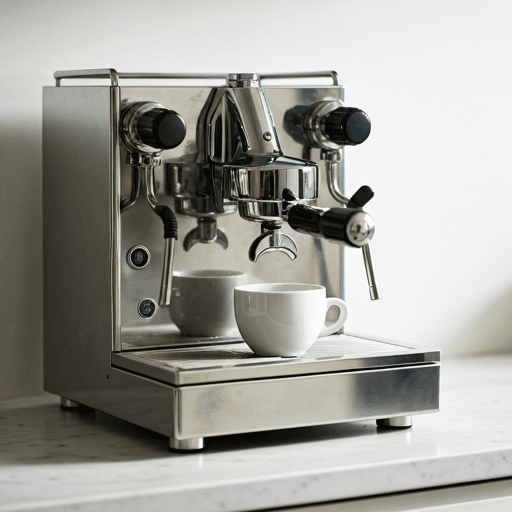
An espresso machine forces hot water through finely ground, tightly packed coffee at high pressure, around nine bars, in roughly 25 to 30 seconds. The result is a small, intense shot topped with crema, and it is the base for cappuccino, latte, flat white, macchiato and Americano. If milk-based coffee bar drinks are your goal, this is the category to look at.
Espresso asks more of you than most methods. You will likely want a quality grinder, and there is a learning curve to dialling in the grind, dose and tamp. Machines range from manual lever models to semi-automatic, automatic and super-automatic bean-to-cup machines that grind and brew at a touch. Because there is so much to weigh up, espresso has its own decision framework: see how to choose an espresso machine.
Moka pot: stovetop intensity
The moka pot is a stovetop brewer that uses gentle steam pressure to push hot water up through a bed of coffee into a top chamber. It does not reach true espresso pressure, but it makes a strong, concentrated, espresso-style coffee that is excellent on its own or with milk. It is compact, durable and very affordable.
A moka pot suits people who want intensity without the cost or counter space of an espresso machine, and who do not mind a slightly hands-on routine on the hob. Watch the heat to avoid a burnt, bitter brew, and pull it off the stove as soon as the top chamber fills.
Percolators: strong, old-school batches
A percolator cycles boiling water repeatedly up through the grounds until the brew reaches the strength you want. It makes a strong, robust cup and is a favourite for camping and large gatherings because some models brew big batches over a campfire or stovetop. The downside is that it can over-extract and boil the coffee, which tastes bitter if you are not careful with timing.
Choose a percolator if you value ruggedness, big volumes and a bold, traditional cup over delicate flavour. The trick is to watch the strength and stop the cycle before the coffee starts to taste scorched.
Cold brew makers: smooth and iced
Cold brew steeps coarse grounds in cold or room-temperature water for many hours, often 12 to 18, then filters out the grounds. Because cold water extracts slowly and gently, the result is smooth, naturally sweet and low in acidity, and it keeps well in the fridge for days. It is ideal for iced coffee and hot-weather drinking.
A dedicated cold brew maker is usually just a vessel with a fine filter, so it is inexpensive and easy. The only real cost is patience, since the brew needs an overnight steep. If iced coffee is your main reason for buying, this is a low-effort, low-cost way to make it well at home.
Matching the maker to you: a quick decision guide
Bring it back to your four answers. These shortcuts cover most people:
- You want easy daily coffee for a household: a drip brewer.
- You want one quick cup with no cleanup: a pod machine.
- You love nuance and a short ritual: pour-over.
- You want bold flavour cheaply: a French press or moka pot.
- You live for cappuccino and latte: an espresso machine.
- You drink iced coffee all summer: a cold brew maker.
- You camp or brew big batches: a percolator.
Whichever route you take, two upgrades improve almost any coffee maker more than the machine itself: fresh, well-stored beans and a decent burr grinder so your grind matches the method. A pour-over needs a medium grind, a French press a coarse one, and espresso a fine one. Our coffee grinder guide explains why grind matters so much.
The bottom line
Choosing a coffee maker is really about choosing a cup and a routine. Decide on taste, effort, volume and budget first, then let those answers point you to the right category. Once you know the type that fits your life, you can dig into the specific method or brand with far less guesswork. From here, keep exploring the wider world of brewing in our coffee hub, and compare grind and bean choices to get the most from whichever maker you pick.