
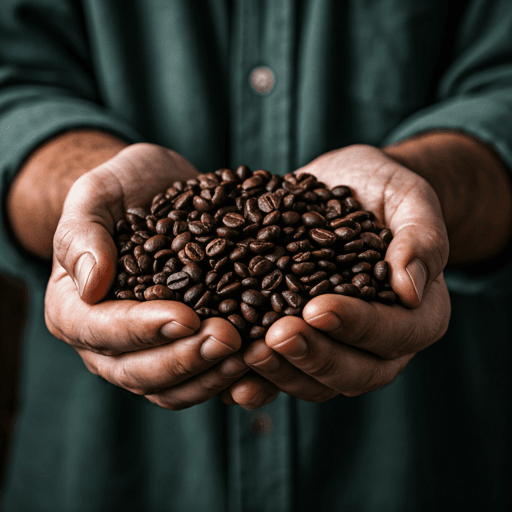
Single origin vs blend comes down to one thing: where the beans come from. A single-origin coffee is sourced from one place — a single country, region, farm or lot — so it showcases that origin's distinctive character, while a blend mixes beans from several origins to build a balanced, consistent cup you can repeat year-round. Neither is objectively "better"; they simply serve different goals, and knowing the difference makes it easier to pick the bag that suits how you brew and what you like to taste.
Single origin vs blend: the short answer
If you only remember one thing, make it this: single origin is about place and personality, while a blend is about balance and consistency. A single-origin bag lets one origin speak clearly, quirks and all. A blend is a roaster's recipe — several coffees combined so the result is rounder, more dependable and the same from one batch to the next. When people ask whether it should be single-origin or blend for their morning cup, they're really asking whether they want to explore or want reliability.
What "single-origin" means
Single-origin means the coffee in the bag traces back to one defined source. That can be as broad as a country — a Colombian or an Ethiopian coffee — or as narrow as a single region, cooperative, farm or even one specific lot within a farm. The common thread is traceability: because the beans share one place of birth, they carry the fingerprint of that origin, its climate, altitude, soil and local processing traditions, sometimes summed up as terroir.
The reward is a distinctive, often more expressive flavour: think the bright, floral, citrusy lift of a washed Ethiopian, or the mellow chocolate-and-nut roundness of a classic Colombian. Because a single-origin reflects one harvest, its character can also shift from season to season. For the full deep dive on how origin shapes the cup, see our guide to single-origin coffee explained.
What a blend is
A blend is a mix of beans from two or more origins, combined by a roaster to hit a target flavour. Rather than letting one place dominate, the roaster balances components — perhaps a chocolatey base bean for body, a brighter coffee for lift, and a third for sweetness or crema — to build something steadier than any single lot. Most everyday coffee on supermarket shelves and the vast majority of café espresso is blended for exactly this reason. For more on how roasters build these recipes, read our explainer on blended coffee.
The key difference: one source vs many
The core of single origin coffee vs blend is source count and intent. Single-origin means one source, distinctive character and more natural variation. A blend means many sources, balanced character and more consistency. A single-origin roaster is trying to show you where a coffee is from; a blender is trying to deliver a specific, repeatable taste regardless of which harvests happen to be available that month. That single distinction ripples through almost everything else — flavour, availability and the way each is usually brewed.
How they taste
Taste is where the contrast is easiest to notice. Single-origins tend to be more unique and expressive — the whole idea is to let the origin speak, so you will often meet brighter acidity, unusual fruit or floral notes, and a clear sense of "this tastes like somewhere." Blends usually aim for a rounded, familiar, crowd-pleasing profile: balanced, smooth, and built to taste good with milk and sugar as well as black.
That does not make blends boring — a well-built blend can be complex and delicious — nor does it make every single-origin dramatic. But if you are chasing a standout, one-of-a-kind cup, single origin is the usual home for it. If you want something that never surprises you in a bad way, a blend is the safer bet. Which you prefer often comes down to whether you drink to explore or drink for comfort.
Consistency and the harvest
Consistency is a blend's superpower. Because a roaster can swap or re-balance components as crops change, a good blend tastes broadly the same in January and July, year after year. That reliability is why cafés lean on signature blends: a regular's flat white should taste the same on every visit, whatever the market is doing behind the scenes.
Single-origins move with the seasons. Coffee is an agricultural product, and a farm's lot this year may taste a touch different from last year's, then sell out until the next harvest comes in. Many drinkers see that as a feature — a chance to taste a fresh crop at its peak — rather than a flaw, but it is worth knowing that your favourite single-origin may not be on the shelf forever.
Espresso vs filter
There is a loose, much-debated convention here, so hold it lightly. Blends are especially popular for espresso and milk drinks, because their balance, body and forgiving nature stand up well under pressure and behind steamed milk — many classic espresso blends even combine arabica and robusta beans for extra body and crema. Single-origins are often prized for filter methods — pour-over, drip and black coffee — where their clarity and distinctive notes have room to shine without milk masking them.
None of this is a rule. Plenty of roasters pull gorgeous single-origin espresso, and plenty of blends make a lovely pour-over. Treat it as a starting point, not a boundary, and brew whatever you enjoy in whatever way you like.
Price and rarity
Some single-origins are highly sought-after. Micro-lots, rare varieties and competition-winning coffees can be limited in supply and command a premium simply because so little of them exists. Blends, drawing on more widely available beans, tend to be the more economical and dependable everyday choice. That is a tendency rather than a law — there are humble single-origins and premium blends too — and it says nothing about which will taste better to you. Rarity is about scarcity, not quality.
How to tell which one you're buying
The label usually gives it away. A single-origin bag tends to name a specific place and often much more: the country plus a region, farm, cooperative, altitude, variety and processing method such as washed, natural or honey. A blend more often carries a brand or roaster's name for the recipe — "House Blend," "Breakfast Blend," "Espresso Blend" — and may list the origins that go into it or simply describe the flavour. As a quick rule, if a bag names one place and one harvest it is single-origin; if it lists several origins or a proprietary blend name, it is a blend.
Single origin vs blend at a glance
| Attribute | Single-origin | Blend |
|---|---|---|
| Source | One country, region, farm or lot | Beans from several origins |
| Roaster's goal | Showcase distinctive origin character | Balance and a repeatable flavour |
| Flavour | Unique, expressive, "let the origin speak" | Rounded, balanced, crowd-pleasing |
| Consistency | Shifts with the harvest and season | Steady year-round |
| Availability | Can be seasonal or limited | Widely and reliably available |
| Often brewed as | Pour-over, drip, black coffee | Espresso and milk drinks |
| Best for | Exploring and tasting terroir | A dependable daily cup |
Is single origin better than blend? Which to choose
Is single origin better than blend? Honestly, no — the "better" one is the one that fits the moment. Reach for a single-origin when you are curious, want to taste where a coffee is from, and enjoy a little variety from bag to bag. Reach for a blend when you want a consistent, no-surprises daily cup, especially for espresso and milk drinks. Many coffee lovers simply keep both: a dependable house blend for weekday mornings and a rotating single-origin for slow weekend brewing.
If you are still getting your bearings on beans in general, our overview of coffee bean varieties and types is a natural next stop.
Single origin or blend is not a contest with a winner — it is a choice between two pleasures. One invites you to travel through a cup and meet a place; the other offers the comfort of a familiar, well-made brew you can count on. Learn what each does well, taste widely, and let your own palate settle the debate.