
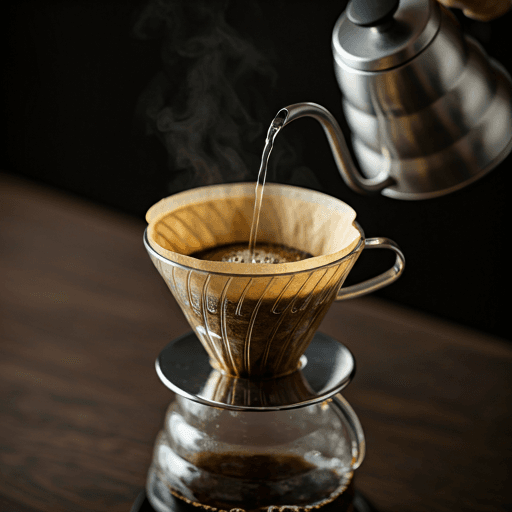
Pour over vs espresso comes down to two variables: pressure and time. Pour over is a slow, gravity-driven method — you hand-pour hot water through a paper filter over medium grounds to make a clean, light, aromatic full cup. Espresso, by contrast, forces hot water through a finely packed puck of coffee under high pressure in seconds, producing a tiny, intense, concentrated shot crowned with crema. One fills a mug; the other fits in a demitasse. Almost everything else — taste, body, strength, gear — flows from that single difference.
Pour over vs espresso: the short answer
If you only remember one thing about pour over vs espresso, make it this: pour over relies on gravity pulling water slowly through a paper filter, while espresso relies on pressure (around nine bars) pushing water fast through a tight puck. That gravity-versus-pressure split shapes the cup you end up with. Pour over gives you a larger, lighter, tea-like drink with paper-filtered clarity. Espresso gives you a small, syrupy, concentrated shot with a layer of crema on top. Neither is inherently better — they are different tools for different moments, and plenty of coffee lovers keep both on the counter.
What pour over is
Pour over is a manual filter method. You place a paper filter in a dripper — a cone-shaped V60, a flat-bottomed Kalita Wave, or a larger Chemex — add medium-ground coffee, and pour just-off-the-boil water over the bed in stages. Gravity does the rest, drawing the water down through the grounds and the paper into the cup below. The paper filter traps most oils and fine sediment, which is why a good pour over tastes clean, bright and aromatic, with a clarity people often compare to tea. You typically brew a full mug at a time, not a concentrated shot.
Because the method is slow and hands-on, pour over rewards attention to grind, water temperature and pour rate — but we will leave the step-by-step to the pour over coffee guide. For this comparison, the key point is that pour over is a gentle, gravity-fed filter brew that produces a light, articulate cup.
What espresso is
Espresso is a pressure-brewed concentrate. An espresso machine heats water and forces it — at roughly nine bars of pressure — through a bed of very finely ground, tamped coffee in about 25 to 30 seconds. The result is a small shot, usually around one ounce (about 30 ml), that is intense, viscous and topped with crema, the golden-brown foam that forms as pressurized water emulsifies coffee oils and dissolved gases. Espresso is also the base of most milk drinks: lattes, cappuccinos, flat whites and mochas all start with a shot. We will not re-tell the whole story here — the espresso explainer covers the definition in depth. For this piece, the takeaway is that espresso is fast, pressurized and highly concentrated.
The key difference: gravity vs pressure
The heart of espresso vs pour over is how water meets coffee. Pour over uses gravity: water trickles slowly through a paper filter over medium grounds, often for two to four minutes in total. Espresso uses mechanical pressure: water is driven through a fine, tamped puck in well under a minute. That single distinction — a slow gravity pour through paper versus a fast pressurized push through a puck — drives everything downstream, from grind size to strength to mouthfeel. The difference between pour over and espresso is not really about which beans you use (you can brew the same coffee both ways); it is about the physics of extraction.
Strength and concentration
Is espresso stronger than pour over? By concentration, yes — and it is not close. Espresso packs a lot of dissolved coffee solids into a very small volume, so per milliliter it is far more concentrated and tastes much more intense than pour over. A pour over, spread across a full mug, is a larger and lighter drink sip for sip.
But concentration is not the same as total caffeine or total coffee — it simply describes how much is packed into each milliliter. A one-ounce espresso shot is dense; an eight- to twelve-ounce pour over is diluted across far more liquid. So espresso wins on intensity per sip, while a big pour over can deliver more actual coffee over the whole drink. Keep that distinction in mind — it is where a lot of the "which is stronger" confusion comes from.
Taste and body
The two methods taste distinctly different. Pour over, thanks to its paper filter, is clean, bright and aromatic; the paper strips out oils and fine particles, leaving a light body and a crisp, articulate cup that showcases delicate, floral and fruity notes. Espresso sits at the opposite end of the spectrum: intense, syrupy and full-bodied, with a heavier mouthfeel and that signature crema. Because espresso concentrates everything, it tends to amplify sweetness, bitterness and body all at once, while pour over leans toward clarity and nuance. If you love tasting the subtle character of a single-origin coffee, pour over often flatters it; if you want a bold, rich hit, espresso delivers.
Caffeine: concentrated is not the same as more
Caffeine is where the "stronger" question gets slippery. A single espresso shot is often quoted around 63 to 80 mg of caffeine, while a full mug of pour over frequently lands somewhere around 80 to 150 mg or more — figures that vary a lot with beans, dose, roast and volume, so treat them as rough ranges, not fixed values. The counterintuitive result: a shot of espresso usually holds less total caffeine than a large pour over, even though it tastes far stronger per sip. Concentration and total caffeine are two different things. If you are watching your intake, the size of the drink matters as much as the method, responses to caffeine vary from person to person, and this is general information rather than medical advice — anyone with concerns about caffeine should ask their own healthcare provider.
Equipment and effort
The gear gap is large. Pour over is famously low-cost and low-tech: a dripper, a stack of paper filters, a kettle (ideally a gooseneck for pour control) and a way to grind. There are no pumps or boilers to maintain. Espresso, on the other hand, needs a machine capable of generating around nine bars of pressure plus a quality grinder that can hit a very fine, consistent grind — espresso is unforgiving of grind inconsistency. Pour over asks for patience and a steady hand; espresso asks for equipment and a bit of dialing-in. For many home brewers, that difference in cost and complexity is the deciding factor.
Grind size
Grind follows directly from the method. Pour over uses a medium grind — roughly the texture of table salt — so water can flow through at a sensible pace under gravity alone. Espresso uses a very fine grind, closer to powdered sugar, so the tightly packed puck offers enough resistance for high-pressure water to build proper extraction and crema. Swap the grinds and both brews fail: a fine grind chokes a pour over into a bitter trickle, while a coarse grind lets espresso water gush through in seconds, thin and sour.
Pour over vs espresso at a glance
| Attribute | Pour over | Espresso |
|---|---|---|
| Driving force | Gravity | Pressure (~9 bars) |
| Filter | Paper | Fine metal screen under the puck |
| Brew time | ~2-4 minutes | ~25-30 seconds |
| Grind | Medium (table-salt-like) | Very fine (powdered-sugar-like) |
| Serving size | A full mug (~8-12 oz) | A ~1 oz shot |
| Concentration | Light, diluted | Very high per ml |
| Body & texture | Clean, light, tea-like | Syrupy, full, with crema |
| Taste | Bright, aromatic, nuanced | Intense, rich, bold |
| Total caffeine | Often higher (bigger drink)* | Often lower per shot* |
| Gear | Dripper, filters, kettle | Machine + fine grinder |
| Best for | A slow, clean cup to sip | A quick shot or milk-drink base |
*Caffeine figures are rough and depend on beans, dose and volume; responses to caffeine vary from person to person.
Which should you choose?
Choose pour over when you want a clean, aromatic, full-sized mug to sip slowly — a relaxed morning brew that highlights a coffee's finer notes, made with inexpensive gear. Choose espresso when you want a quick, intense shot or a base for milk drinks like lattes and cappuccinos, and you do not mind investing in a machine and grinder. Many people simply keep both: pour over for a leisurely black cup, espresso for a fast pick-me-up or a flat white. If you are still weighing brew styles, it helps to see how each stacks up against everyday drip too — read espresso vs drip coffee and pour over vs drip coffee for the fuller picture.
Pour over or espresso is not a contest with a single winner. One is a slow, gravity-fed filter brew built for clarity and calm; the other is a fast, high-pressure shot built for intensity and versatility. Once you understand that pressure-and-time split, you can pick the right method for the cup you actually want — and, more often than not, learn to appreciate both for what they each do best.