
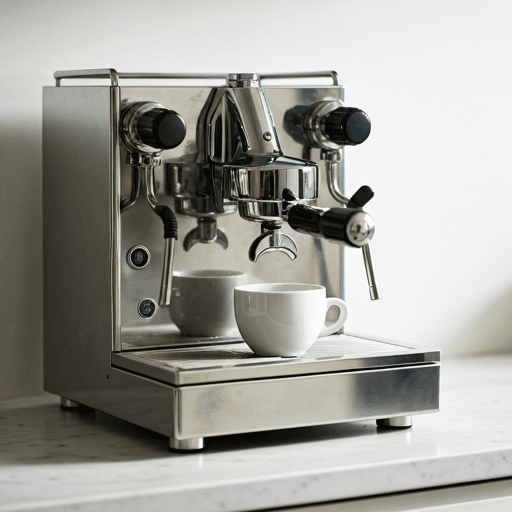
A Philips espresso machine almost always means one of the brand's fully automatic bean-to-cup Series — a countertop machine that grinds fresh beans, tamps and pulls a shot of espresso, and, on milk models, froths milk for a cappuccino or latte at the touch of a button. The line is graded roughly from the entry 1200 and 2200 up through the 3200, 4300, 5400 and 5500, and the main things that change as you climb are how many drinks you get at one touch, how the machine froths milk, and how much of the fiddly work it automates.
This guide walks the Series ladder, explains the milk systems — the tube-free LatteGo versus a carafe or a manual wand — and lays out what to actually look for. For the wider brand story, including Philips Senseo pod machines, drip filter coffee makers and the premium Saeco range, see our Philips coffee machines guide; here we stay focused on the automatic espresso machines.
What a Philips espresso machine actually is
Every Philips automatic espresso machine shares the same core design: a hopper of whole beans, a built-in burr grinder, a brew unit that doses and tamps the grounds, and a pump that pushes hot water through them to build a shot with crema. Because the machine grinds, doses and tamps for you, there is no portafilter to lock in and no loose grounds to weigh — you press a button and it brews. On milk models, a frothing system whisks milk and air for cappuccinos, lattes and flat whites; on the plainest models you steam milk yourself with a wand, or skip milk altogether.
That "grind, brew and froth in one" approach defines the whole bean-to-cup category, not just Philips. If you want to weigh it against pod machines and manual espresso setups first, our bean-to-cup coffee machine guide is the place to start. Within that category, Philips competes mainly on ease of cleaning — thanks to its LatteGo milk system — and on a wide, clearly numbered Series ladder that makes it easy to buy up or down by budget.
The Philips espresso Series, from entry to top
Philips numbers its automatic espresso machines by Series, and higher numbers generally add more one-touch drinks, a nicer display, extra customization and a few convenience features. Every Series still grinds fresh beans and pulls real espresso, so you are mostly paying for menu size and automation rather than a better shot. Model line-ups and exact drink counts vary by market and revision, so treat the tiers below as a map rather than a fixed spec sheet.
1200 Series — the simplest way in
The entry 1200 Series keeps things minimal: espresso and regular coffee, adjustable strength and volume, and a manual "classic" milk frother (a steam wand) on many versions for anyone who wants to froth by hand. It is aimed at people who mostly drink black coffee but want the freshness of grinding beans per cup. There is no one-touch milk automation here, which is exactly why it is the most affordable rung.
2200 Series — the entry LatteGo model
The Philips 2200 is where one-touch milk arrives. It comes in a classic steam-wand version and, more notably, a Philips LatteGo version — making the Philips 2200 the entry point to the brand's signature milk system. On the LatteGo 2200 you get espresso, coffee and one-touch cappuccino or latte macchiato from a simple icon display. It is the natural first machine for a household that wants proper milk drinks without paying for a large menu.
3200 Series — more drinks, still simple
The Philips 3200 broadens the menu, typically adding drinks such as caffè crema and, on milk models, one-touch cappuccino and latte macchiato, and it appears in both LatteGo and classic-carafe variants depending on the model. You also get more grind and aroma-strength steps to dial in your beans. It suits households that want a couple of milk drinks and a little more control without stepping up to a display-driven machine.
4300 Series — a fuller menu
The 4300 Series pushes the one-touch list further — often around eight drinks, including milk options and sometimes an iced-coffee setting — with a clearer, more guided display and easy menu navigation. It is a comfortable middle rung for a mixed household where different people order different things.
5400 Series — variety and saved profiles
The 5400 Series widens the menu again, commonly to a dozen or so one-touch recipes including several milk drinks, adds a colour display and lets you save personalized drink settings. This is the tier for coffee fans who want real variety and the ability to store their preferred strength and cup length.
5500 Series — the fullest café menu
At the top, the 5500 Series offers the widest one-touch menu — up to around twenty drinks on some models — plus a colour touch display, a ceramic grinder and Philips's AquaClean water filter. It is for people who want the closest thing to a café menu at the press of a button, with the most automation and the least daily fuss.
Philips espresso Series at a glance
Cost rises with the Series number; the comparison below is qualitative only, and drink counts are approximate because they shift by market and model year.
| Series | Drinks / milk | Stand-out | Best for |
|---|---|---|---|
| 1200 | Espresso, coffee; manual milk wand on many | Simplest, most affordable way into bean-to-cup | Black-coffee drinkers who want fresh grinding |
| 2200 | Espresso, coffee, plus one-touch cappuccino / latte on LatteGo versions | Entry LatteGo model | A first milk-drink machine on a budget |
| 3200 | A few more one-touch drinks; LatteGo or carafe options | More drinks and settings, still simple | Homes wanting cappuccino and latte without fuss |
| 4300 | Around eight one-touch drinks; guided display | Bigger, easy-to-read menu | Mixed households with varied tastes |
| 5400 | ~12 one-touch drinks incl. milk; saved profiles | Colour display and customization | Coffee fans who want variety and stored preferences |
| 5500 | Widest one-touch menu (up to ~20 on some models) | Touch display, ceramic grinder, AquaClean | Anyone who wants the fullest café menu at one touch |
LatteGo vs carafe vs steam wand — the milk question
The single biggest choice with a Philips espresso machine is how it handles milk, because that drives both which drinks you can make at one touch and how long you spend cleaning afterwards. Philips offers three approaches.
LatteGo
Philips LatteGo is the brand's headline feature: a two-part, tube-free milk container that clips onto the front of the machine. Milk and air mix in a chamber and pour straight into the cup, and because there are no tubes or spouts to clog, the two parts snap apart and rinse — or go in the dishwasher — in seconds. If easy cleaning is your priority, a Philips LatteGo model is the one to look for, and the Philips 2200 LatteGo is the cheapest way to get it.
Classic milk carafe
Some Series, often the 3200 and up, offer a carafe instead: an insulated jug of milk that clicks into the machine and can be lifted out and stored in the fridge between drinks. It is handy for keeping milk cold, but it has more internal parts and tubing to rinse than LatteGo does.
Manual steam wand
The plainest models use a "classic" manual frother — a steam wand you hold the jug under yourself. It gives you hands-on control (and a little latte-art practice) but it is not one-touch, and it is the least expensive milk option of the three.
What to look for in a Philips espresso machine
Beyond the Series number, these are the features that actually shape your daily experience. Match them to how you drink rather than buying the biggest menu by default.
| What to check | Why it matters |
|---|---|
| Number and type of drinks | Milk drinkers need at least a LatteGo or carafe model; black-coffee drinkers can save money with a plainer Series. |
| Milk system | LatteGo cleans fastest, a carafe keeps milk cold, and a manual wand is the cheapest but hands-on. |
| Grind and strength settings | More steps let you dial in different beans and adjust how strong each cup brews; higher Series offer more. |
| Grinder burrs | Philips fits ceramic flat burrs across much of the range; ceramic stays cooler and resists wear over time. |
| Water filter (AquaClean) | The AquaClean filter reduces limescale; Philips claims many cups before a descale if you change filters on schedule. |
| Cleaning and maintenance | The brew unit pops out on every model for rinsing; a dishwasher-safe LatteGo saves the most day-to-day time. |
| Display and profiles | Icon displays are simplest; colour and touch screens on the 5400 and 5500 make a big menu and saved profiles easier. |
Which Philips espresso machine is right for you?
Start with milk. If you only drink espresso, americano or plain black coffee, an entry 1200 will grind and brew everything you need at the lowest price. If you want cappuccinos and lattes at one touch, begin at the Philips 2200 LatteGo and step up only for more drink variety, a nicer display or saved profiles — not for a better shot, since the core brewing is much the same across the range.
From there, let household size and taste decide: a busy, varied household leans toward the 4300 or 5400 for a broader menu and stored preferences, while the 5500 is for anyone who wants the fullest café menu and a touchscreen. If you are still weighing Philips against rival brands, our guide to fully automatic espresso machines compares the field, and how to choose an espresso machine walks through the wider decision between automatic, pod and manual setups.
The bottom line
The appeal of a Philips espresso machine is honesty of purpose: it grinds, brews and — on most models — froths with as few steps as possible, and it makes cleaning genuinely quick thanks to LatteGo, which is usually the reason bean-to-cup machines get abandoned in the first place. Choose the milk system first, pick the Series for the size of menu you will actually use, and you will have a fresh, café-style cup without the daily effort.