
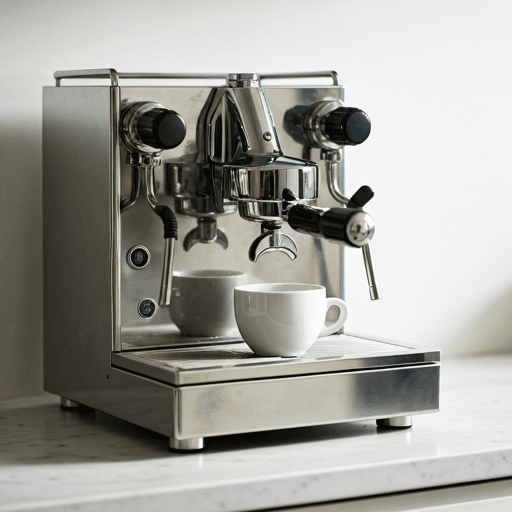
A fully automatic espresso machine pulls a real espresso shot at the touch of a button: it grinds the beans, doses and tamps them inside the machine, and extracts the shot automatically, and most models then steam or auto-froth milk so you can build a cappuccino or a one-touch latte without a barista's skill. The whole appeal is cafe-style espresso drinks made fast, with consistency you do not have to fight for. This guide explains what these machines actually do, how they differ from a semi-automatic, the features that matter, the trade-offs, and how to choose one for your kitchen.
What is a fully automatic espresso machine?
A fully automatic espresso machine, also called a super-automatic espresso machine, is a single appliance that turns whole beans into a finished espresso drink in one sequence. You keep three things topped up: beans in the hopper, water in the reservoir, and (for milk drinks) milk in a jug or carafe. You press a drink, and the machine does the rest.
Under the hood, the steps mirror what a barista does by hand:
- Grind: a built-in burr grinder measures out a dose of beans at an espresso-fine setting.
- Dose and tamp: the grounds drop into an internal brew unit, which compacts them automatically.
- Extract: a pump pushes hot water through the puck at espresso pressure (around 9 bar at the puck), then stops at a pre-set volume.
- Milk (optional): a steam wand or automatic milk system froths and adds milk for cappuccinos, flat whites and lattes.
Because the grind, dose, tamp and shot all happen behind a closed panel, there is no portafilter to lock in and no puck to knock out. That is the defining feature: an automatic espresso machine removes the manual handling, and in return it removes a lot of the learning curve.
Fully automatic vs semi-automatic: the key difference
This is the distinction that matters most, so it is worth being precise. On a semi-automatic espresso machine you are the barista: you grind, you dose into a portafilter, you tamp by hand, and you start and stop the shot yourself. The machine only controls the pump. That hands-on workflow is exactly why enthusiasts love semi-autos, and it is also why they take practice.
A fully automatic (super-automatic) machine deletes that manual portafilter step entirely. You never touch a tamper or lock in a basket. The trade is simple and honest: you give up fine-grained, shot-by-shot control in exchange for speed, repeatability and almost no skill requirement. A good semi-auto plus a quality grinder still has a higher flavor ceiling in skilled hands, but a super-auto will out-consistency most beginners and serve a family far faster on a busy morning.
Rule of thumb: if pulling and dialing in shots sounds like a fun hobby, look at semi-autos. If you just want a reliable cappuccino before work, a fully automatic machine is built for you.
For the full breakdown of every machine type, see our guide on how to choose an espresso machine.
How it differs from a bean-to-cup "coffee" super-auto
You will see two overlapping labels: "fully automatic coffee machine" and "fully automatic espresso machine." Mechanically they are the same family of bean-to-cup super-autos. The difference is mostly emphasis and how the maker pitches the machine.
A broad bean-to-cup or "coffee" super-auto is sold around variety and long drinks: a tall mug of crema coffee, americanos, sometimes hot water for tea. An espresso-focused super-auto is pitched around the espresso shot itself and milk-based espresso drinks, so it tends to lead with cappuccino, flat white and one-touch latte menus, milk-system quality and shot programmability. If your daily order is a milk-based espresso drink, the espresso-framed models put those front and center. If you want the widest drink menu and longer cups too, read our broader fully automatic coffee machines guide and the bean-to-cup coffee machine guide, which cover the same hardware from the category angle.
The features that matter
The built-in grinder and strength control
Every super-auto has an integrated grinder, almost always conical burrs (ceramic or steel). Look for an adjustable grind setting so you can dial finer or coarser, plus a separate strength/dose control that changes how many grams the machine uses per shot. Some models add a bypass chute for pre-ground coffee or decaf. A grinder you can adjust is what lets the machine adapt to different beans instead of locking you into one taste.
Programmable volume and pre-infusion
Good machines let you set and save the shot volume (a short ristretto-style pull versus a longer lungo) and remember it per drink or per user profile. Many also offer pre-infusion, a brief gentle wetting of the puck before full pressure, which helps even extraction. Temperature stability matters too: consistent brew temperature is a big part of why super-autos taste repeatable cup after cup.
The milk system: steam wand vs auto carafe vs Pannarello
This is the feature that most shapes daily life with the machine, because milk is where the convenience (or the cleaning) lives. Broadly there are three approaches:
- Manual steam wand: the machine pulls the shot automatically, but you froth milk yourself with a steam wand, like at a cafe. Most control over foam texture, more hands-on, and you rinse the wand after each use.
- Automatic milk carafe / circuit: you fill a milk container or drop a tube into your own milk, and the machine froths and pours into the cup automatically. This is the true one touch espresso machine experience: press "cappuccino" and walk away. It is the easiest to use and the most important part to keep clean.
- Pannarello wand: a steam wand with a frothing sleeve that aerates milk semi-automatically. A middle ground, common on entry-level models, easier than a bare wand but with less microfoam finesse.
If milk method is your main decision point, our guide to espresso and latte machines compares these frothing styles in more depth.
Espresso quality: what you can and cannot tune
Be realistic about flavor. A super-auto can make a genuinely good, crema-topped espresso, but you steer it differently from a manual machine. You cannot change the tamp, and the brew pressure is fixed by the pump, so your levers are grind setting, dose/strength, shot volume, brew temperature and bean choice. That is usually enough to get a balanced shot, but it caps how far you can chase a single perfect extraction. Two things move the needle most: a grinder you are allowed to adjust, and fresh, good-quality beans. Stale or oily dark-roast beans can also clog an internal grinder and brew unit, so most makers steer you toward non-oily beans.
Cleaning, descaling and milk hygiene
Convenience has a maintenance bill. Super-autos run automatic rinse cycles at startup and shutdown, and prompt you to descale on a schedule to manage mineral buildup. Hard water speeds up scale, so many machines accept an inline water filter or let you set water hardness to stretch the descale interval. The milk circuit is the part that needs the most discipline: auto milk systems must be rinsed after every session and deep-cleaned regularly, or they turn sour. Removable brew units (common on Philips, Saeco and Gaggia models) are easy to rinse under a tap; sealed brew groups (as on many Jura machines) rely on cleaning tablets instead. Factor this routine in before you buy, because it is daily, not occasional.
Feature comparison: what to look for
| Factor | What to look for |
|---|---|
| Grinder | Adjustable burr grind setting plus a separate strength/dose control; bypass chute for decaf is a bonus |
| Milk system | Decide first: manual steam wand (control), auto carafe (true one-touch), or Pannarello (middle ground) |
| Drink menu | The espresso drinks you actually order, with savable shot volume and per-user profiles |
| Ease of cleaning | Removable brew unit, dishwasher-safe milk parts, clear descale and rinse prompts |
| Temperature & pre-infusion | Stable brew temperature and adjustable pre-infusion for even extraction |
| Water care | Inline water filter or adjustable hardness setting to slow scale buildup |
| Footprint & tanks | Counter and cupboard clearance, plus bean hopper and water reservoir sized to your volume |
| Build & support | Reputable brand, available descaling/cleaning supplies, accessible servicing |
Well-known examples across this category include De'Longhi, Jura, Philips and Saeco, Gaggia, and Breville (sold as Sage in some regions). We name them as factual illustrations of the category, not as endorsements or ranked picks.
The honest trade-offs
A fully automatic machine buys you push-button espresso, one-touch milk drinks and reliable consistency with almost no technique. Those are real, daily benefits. The costs are equally real:
- Lower flavor ceiling: a skilled user with a good semi-auto and a dedicated grinder can usually extract a more nuanced shot. Super-autos optimize for "very good and repeatable," not "best possible."
- Less control: grind range, tamp pressure and shot timing are set by the machine, so you tune within its limits rather than freely.
- Price and upkeep: as a category these are mid-range to premium appliances, and they need ongoing descaling, milk-circuit cleaning and eventual servicing. Treat the maintenance routine as part of ownership.
Who it suits and who should skip it
A super-automatic espresso machine suits people who want cafe-style espresso and milk drinks quickly, with minimal skill, especially busy households where several people each want a different drink. If "press and walk away" is the goal, this is the right category, and the best automatic espresso machine for you is simply the one whose milk method and drink menu match how you actually drink coffee.
Skip it if you are a hands-on enthusiast chasing ultimate shot control, latte-art practice and the ritual of dialing in beans, those readers are better served by a semi-automatic and a separate grinder. You can compare options in our roundup of the best espresso machines.
How to choose a fully automatic espresso machine: a quick checklist
- Pick your milk method first. Auto carafe for true hands-off ease, steam wand for control, Pannarello as a compromise. This decision narrows the field fastest.
- Match the drink menu to your order. If you live on flat whites and lattes, prioritize the milk drinks and savable shot sizes.
- Check the grinder controls. Adjustable grind and strength matter more than a long list of preset drinks.
- Weigh the cleaning routine. Removable brew unit and easy milk-part cleaning will determine whether you keep using the machine.
- Mind water and scale. A filter or hardness setting cuts how often you descale, which matters more in hard-water homes.
- Measure the space. Mind the height for the hopper lid and bean/water capacity for your household volume.
- Set a realistic budget band. Think entry-level, mid-range or premium, and remember to leave room for descaler and milk-system cleaner.
A fully automatic espresso machine is the most convenient way to get genuine espresso and milk drinks at home, as long as you go in clear-eyed about the trade between push-button ease and hands-on control. Decide on your milk method, match the menu to your habits, and budget for the upkeep, and the machine rewards you every morning. If you are still weighing categories, browse more equipment explainers and brewing guides on our coffee hub.