
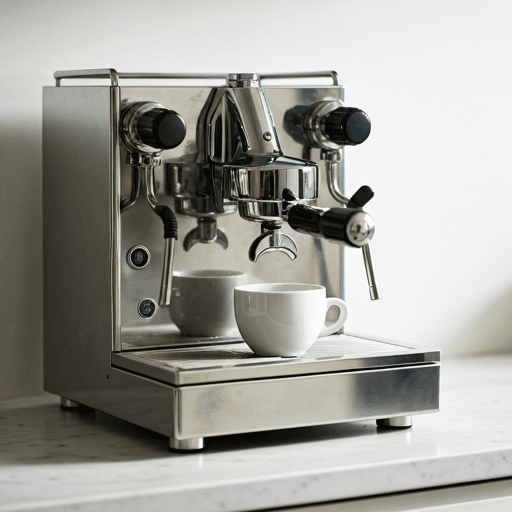
The best espresso machine is not one model on a list. It is the type that matches how you actually make and drink coffee at home. Someone who wants a one-touch flat white before work needs a very different machine from someone who wants to dial in single shots on a weekend. So instead of ranking gadgets, this guide sorts espresso machines by category and use case, then helps you pick. We name real, well-known models as factual examples only, not as endorsements.
If you want the deeper buyer framework, see how to choose an espresso machine. If your budget is tight, the companion guide to the best budget espresso machines covers entry-level and beginner options. This page is the by-type, by-use-case map of the whole landscape.
What "best espresso machine" really means
Every espresso machine does the same core job: it forces hot water through a compact puck of finely ground coffee at roughly nine bars of pressure to pull a small, concentrated shot. What changes between categories is how much of that process you control and how much the machine handles for you. That single trade-off, control versus convenience, is the spine of this entire decision.
Before you compare any models, answer three questions. Do you mostly drink milk drinks (lattes, cappuccinos, flat whites) or straight shots? Do you want to learn and tinker, or do you want a button and a great cup with no fuss? And how much counter space and time can you give it on a busy morning? Your honest answers point straight at one of the categories below.
The truth that decides your cup: the grinder
Here is the single most important thing in this guide, and it is not a machine at all. A good grinder is at least half of your espresso result. Espresso lives or dies on grind consistency, and a pricey machine paired with a cheap blade grinder will lose to a modest machine paired with a quality burr grinder every time. If you have to split your budget, lean toward the grinder. For espresso-specific, fine, low-retention models, see the best espresso grinders. Some machines, like the Breville Barista Express, build a grinder in, which simplifies this for beginners but ties the two together.
The five types of espresso machine, and who each suits
1. Semi-automatic: the enthusiast standard
Semi-automatic machines are the most popular choice for home baristas and the best balance of control and daily usability. You grind, dose, and tamp the coffee yourself; the machine handles temperature and pumps the water, and you decide when to start and stop the shot. The ceiling is very high. You can pull cafe-quality espresso once you dial things in, and you steam your own milk with the wand. The trade-off is a learning curve and a few minutes of attention per cup.
Long-popular examples include the Breville (sold as Sage in some regions) Barista Express and Barista Pro, the Gaggia Classic, and the Rancilio Silvia. They are widely regarded as the natural starting point for people who want to genuinely learn espresso. If you want milk drinks and you enjoy the craft, this is usually the category to live in. See how to make espresso at home for the actual workflow.
2. Automatic and super-automatic (bean-to-cup): one-touch convenience
A super-automatic, often called bean-to-cup, grinds, doses, tamps, brews, and froths at the press of a button. You add beans and water, choose a drink, and walk away. There is almost no learning curve and excellent shot-to-shot consistency for the everyday drinker. The trade-offs are a higher upfront cost, less hands-on control over the final taste, and more internal parts to clean and eventually service.
De'Longhi is widely seen as the value-forward, broad-budget choice, Philips (with its LatteGo milk system) sits in a similar everyday space, and Jura is positioned as the premium, polished one-touch experience. This is the category for a household that wants a great latte or cappuccino on a weekday morning without thinking about grind settings. If convenience is your top priority, a bean-to-cup is often the best home espresso machine for your life, even if it is not the most hands-on cup.
3. Manual lever: full control, no electronics required
A manual lever machine is the purist's tool. You manage the pressure profile and pre-infusion by hand, pressing a lever or piston to push water through the puck. Some models, like the Cafelat Robot, have no boiler or heating element at all, so they need no electricity; you supply hot water yourself. Others, such as the iconic La Pavoni Europiccola and the hobbyist-focused Flair line, give you intimate command of every variable. The reward is total control and a beautiful, low-tech object that can last decades. The trade-off is the steepest learning curve and the most effort per shot.
Lever machines suit the tinkerer, the small-kitchen dweller, and anyone who values process as much as result, including travelers and campers who want espresso off-grid. They are not the easy morning choice, but they are deeply rewarding.
4. Pod and capsule: the simplest possible espresso maker
Pod systems such as Nespresso trade flexibility for sheer ease. You drop in a sealed capsule, press a button, and get a consistent espresso-style shot in under a minute with almost nothing to clean. There is no grinder, no dosing, no skill required. The trade-offs are limited control over taste, ongoing cost and waste from capsules, and a flavor ceiling set by the pod maker rather than by you.
A pod machine is the right call for tiny kitchens, offices, occasional drinkers, and anyone who values guaranteed speed and consistency over craft. It is the most foolproof espresso maker you can buy.
5. Dual-boiler and prosumer: milk and shot at once
At the top of the semi-automatic world sit heat-exchanger and dual-boiler machines built for people who want to brew a shot and steam milk simultaneously, with rock-steady temperature. This matters most if you make milk drinks back to back or entertain. A single boiler must switch between brewing and steaming and cool down in between; a heat exchanger lets you do both near-simultaneously at a lower cost, though brew temperature is a touch less precise; a dual boiler dedicates a separate boiler to each, giving the most precise, stable temperature. PID temperature control, which holds the brew temperature to a tight target, is a feature worth prioritizing across all of these.
This prosumer tier is premium and aimed at committed home baristas, not first-timers. If you are not yet sure espresso is your hobby, start in the semi-automatic or bean-to-cup tier first.
Which espresso machine is best for you?
Use this table as a quick map. Match the "best for" column to your real morning, then read the trade-off honestly.
| Type | Best for | Trade-off |
|---|---|---|
| Semi-automatic | Enthusiasts who want milk drinks and to genuinely learn espresso | Learning curve; a few minutes of hands-on time per cup |
| Super-automatic / bean-to-cup | Households wanting one-touch lattes on a busy weekday | Higher upfront cost; less taste control; more parts to clean |
| Manual lever | Tinkerers, small kitchens, off-grid use; people who love the process | Steepest learning curve; most effort per shot; no electric heating on some |
| Pod / capsule | Tiny kitchens, offices, occasional or speed-first drinkers | Ongoing capsule cost and waste; flavor ceiling set by the pod |
| Dual-boiler / prosumer | Committed baristas brewing and steaming back to back | Premium price; overkill if you are not yet sure espresso is your hobby |
How to choose an espresso machine: a checklist
Run through these before you commit to a category or a model. The best-rated espresso machine for a forum stranger may be wrong for your counter.
- Milk drinks or straight shots? Heavy milk-drink users want a strong steam wand or an automatic frother; straight-shot drinkers can simplify.
- Control or convenience? Be honest about whether you will tinker. If "press a button" sounds better than "dial it in," lean bean-to-cup or pod.
- Budget the grinder first. If you choose a machine without a built-in grinder, set aside real money for a quality burr grinder. It matters more than the machine.
- Counter space and plumbing. Prosumer machines are large and thirsty; pod and lever machines are compact. Measure before you fall in love.
- Temperature control. On semi-automatic machines, PID and a stable boiler architecture do more for your cup than a higher pressure number.
- Pressure, demystified. Espresso extracts well at around nine bars. A "15-bar" or "19-bar" rating on the box is pump capacity, not a quality score, so do not chase the biggest number.
- Maintenance appetite. Bean-to-cup machines need regular cleaning cycles; lever machines need almost none; pods need the least of all.
Common questions when picking a machine
Is an espresso coffee machine the same as a drip coffee maker?
No. An espresso coffee machine uses pressure to pull a small, concentrated shot, while a drip machine simply lets gravity pass water through a larger bed of coarser coffee. They make different drinks. If you mostly want a mug of regular coffee, a drip maker may serve you better; espresso is the base for cappuccinos, lattes, and Americanos.
Do I really need to spend more to get good espresso?
Not necessarily. Cost matters, but fit matters more. A well-chosen entry-level semi-automatic plus a good grinder will outperform an expensive machine used carelessly. Think in qualitative tiers, entry-level, mid-range, and premium, and pick the tier that matches your commitment, not the most expensive box you can stretch to.
The bottom line
The best home espresso machine is the one whose trade-offs you happily live with every morning. Start from your use case: one-touch convenience points to bean-to-cup, hands-on craft points to semi-automatic or lever, pure speed points to pods, and serious milk-drink volume points to dual-boiler. Then remember the recurring truth of this whole hobby, a good grinder is half the result. From here, deepen the decision with the full how to choose an espresso machine framework, or browse more equipment guides on the coffee hub.