
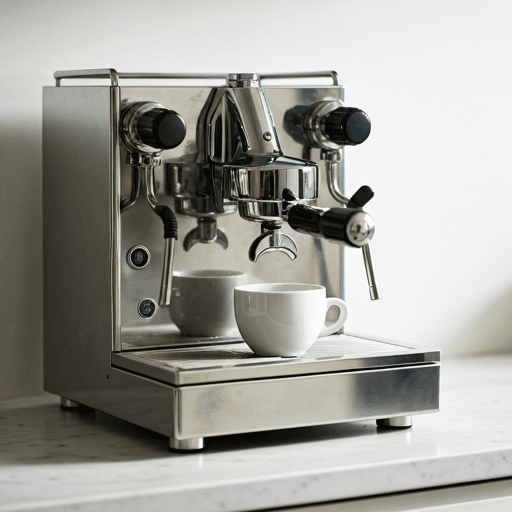
To make lattes at home you need a machine that does two jobs at once: brew a shot of espresso and texture milk to pour over it. That is the whole idea behind an espresso latte machine — and because the espresso side is fairly standard across price tiers, the real question when you shop is how the machine handles the milk. Get the milk method right for your habits and everything else falls into place.
This guide sorts espresso and latte machines into four types by how they froth milk, lays them out in a comparison table, and finishes with a plain checklist for choosing. We name real machines only as factual examples, not recommendations, and we keep cost qualitative — no prices, no ranked picks.
What an espresso machine for lattes actually has to do
A latte is espresso plus a larger volume of steamed milk with a thin layer of foam on top. A cappuccino uses the same two ingredients in different proportions, with more foam. So an espresso and cappuccino machine and a latte machine are the same appliance described two ways: an espresso brewer with a way to heat and aerate milk.
That second job is where machines diverge. Brewing espresso means forcing hot water through finely ground, tamped coffee under pressure. Almost every pump or capsule machine can do this competently. Frothing milk is the part that ranges from a metal wand you control by hand to a sealed carafe that does everything for you. Because the milk step is where the skill, the convenience and a lot of the cleaning live, it is the feature worth deciding on first.
The four types of espresso latte machine
Here are the main categories, grouped by milk method rather than by brand. Most machines on the market are a variation on one of these four.
1. Semi-automatic machines with a manual steam wand
These are pump espresso machines with a steam wand — a metal arm that releases pressurised steam into a milk jug. You pull the shot, then steam and pour the milk yourself. This gives you the most control: you decide the texture, the temperature and the foam, which is what makes poured latte art possible. The trade-off is a learning curve. A Breville Barista Express, for example, grinds, brews and steams with a manual wand, so the milk quality is up to your technique. This category rewards people who enjoy the craft and want to improve over time.
2. Machines with an automatic milk system or carafe
Here a built-in auto-frother or a detachable milk carafe heats and froths the milk for you, then dispenses it. You press a button for a latte or cappuccino and the machine handles the milk in one touch. De'Longhi's Lattissima line, for instance, uses a removable milk container to pour milk drinks in quick succession. This is the convenience middle ground: more consistent than a beginner's hand-steaming, less hands-on than a wand. The milk system has more parts to rinse, but you skip the technique.
3. Bean-to-cup super-automatics
A super-automatic grinds fresh beans, brews the espresso and froths the milk at the press of a button, with minimal input from you. You add whole beans and water, choose a drink, and it does the rest. A De'Longhi Magnifica is a familiar example: it handles grinding through frothing automatically. These are the set-and-forget option, ideal when several people want different drinks quickly. They cost more up front and have an internal brew unit and milk circuit to keep clean, but day to day they are the lowest effort.
4. Pod and capsule machines with a milk add-on
Capsule machines brew espresso from a sealed pod under pressure. Many add a milk solution — either an automatic milk carafe built into the machine or a separate frothing accessory you use alongside it. This is the simplest and most compact route to a latte: pop in a capsule, froth the milk, combine. You trade some flavour control, since you brew from capsules rather than fresh grounds, for speed, small footprint and very easy cleanup. A pod machine with a milk frother suits small kitchens and people who value simplicity over tinkering.
Espresso and latte machine types compared
| Type | How it makes milk | Control / skill | Best for |
|---|---|---|---|
| Semi-automatic + steam wand | Manual steam wand you steam and pour by hand | High control, real learning curve | Hands-on home baristas who want latte art |
| Automatic milk system / carafe | Built-in auto-frother or detachable milk carafe, one touch | Low effort, consistent results | One-touch lattes without a full super-auto |
| Bean-to-cup super-automatic | Grinds, brews and froths automatically at a button | Minimal skill, set-and-forget | Busy households making several drinks |
| Pod / capsule + milk add-on | Capsule espresso plus a milk carafe or separate frother | Very low effort, simplest | Small spaces and maximum convenience |
The core trade-off: manual steam wand vs automatic milk
Almost every decision comes down to one axis. A manual steam wand gives you control, the ability to dial in microfoam and the path to latte art — but it asks for practice, and your first lattes will look rough. An automatic milk system, whether a carafe, a built-in frother or a super-automatic's internal circuit, gives you convenience and repeatable results with little skill, but you give up that hands-on control and the satisfaction of pouring your own.
Neither is better in the abstract. If you find the ritual relaxing and want to keep getting better, the wand wins. If you want a reliable latte before work without thinking about it, the automatic milk system wins. It is also worth knowing about the in-between options: a pannarello attachment fits over a wand and adds air automatically, making frothing easier than a bare wand but less controllable. If the milk gadget matters most to you, our guide to coffee machines with a milk frother goes deeper on the milk side, and a dedicated milk frother guide covers standalone frothers you can pair with any machine.
How to choose an espresso latte machine
Run through this checklist before you commit. It moves from the biggest decision to the practical details.
- Manual wand or automatic milk? This is the first fork. Decide whether you want control and craft, or convenience and consistency. Everything else follows from it.
- Do you want latte art? If pouring patterns matters to you, you need a proper manual steam wand. Automatic systems froth fine milk but pre-mix it, so freehand pours are not really on the table.
- How many drinks, and how often? For one or two morning lattes, any type works. For a household making several drinks back to back, a super-automatic or a carafe system keeps up better than hand-steaming jug by jug.
- How much cleaning will you tolerate? A bare steam wand wipes and purges in seconds. Carafes and internal milk circuits have tubes and parts that need regular rinsing and periodic deeper cleaning, or milk residue builds up. Match the maintenance to how fussy you are willing to be.
- Counter space and footprint. Semi-automatics and super-automatics are larger; pod machines are the most compact. Measure your space, including height under cabinets for the bean hopper or water tank.
- Built-in grinder or not? Some espresso machines for lattes include a burr grinder so you go from beans to shot in one appliance, while others expect ground coffee or a separate grinder. Fresh grinding noticeably improves espresso. See our espresso machine with grinder guide for that specific trade-off.
- Budget, in broad terms. Entry-level pump and pod machines are the most affordable; mid-range covers most carafe systems and capable semi-automatics; super-automatics and prosumer machines sit at the premium end. Spend where the feature you care about lives — usually the milk system or the grinder.
A few realities worth knowing
Milk hygiene is non-negotiable on any automatic system. Carafes and milk circuits must be rinsed after each session and cleaned thoroughly on a schedule, or they sour and clog. A manual wand is simpler here: purge it and wipe it immediately after steaming.
Capacity also shapes the experience. Larger water tanks and bigger bean hoppers mean fewer refills, which matters more than it sounds when you make drinks daily. And remember that a great latte is mostly good milk texture and a sound shot — an expensive machine does not rescue stale beans or skipped cleaning.
For the wider question of espresso machine categories beyond milk drinks — boilers, pressure, manual versus automatic brewing — our broader how to choose an espresso machine guide is the companion to this one. Between the two, you can match a machine to both your coffee and your milk habits.
The bottom line
Choosing an espresso and latte machine is really choosing a milk method. Decide first whether you want the control of a manual steam wand or the ease of an automatic milk system, then narrow by household size, cleaning tolerance, counter space and whether you want a grinder built in. Name-brand examples are just illustrations of those categories — the type, not the logo, is what determines your daily cup. From here, keep exploring brewing and milk technique, and you will have everything you need to pour lattes you actually look forward to.