
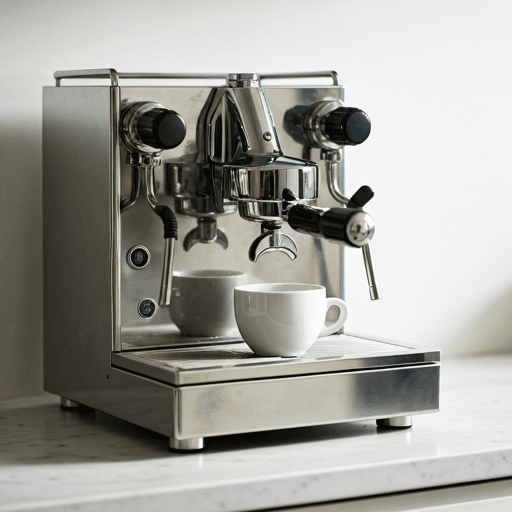
An espresso machine with grinder is a single appliance that pairs a built-in burr grinder with the brewing group, so it grinds fresh beans on demand and feeds the grounds straight into the portafilter (or internally) before pulling a shot. Instead of buying a separate grinder, you get a true bean-to-espresso setup in one footprint. That convenience is real, but the built-in grinder is also where these machines make their biggest compromises. This guide explains what an all-in-one is, the main types, the honest pros and cons, and how to decide whether one is right for you.
What an espresso machine with grinder is
The defining feature of an espresso machine with grinder is exactly what it sounds like: a grinder lives inside the same body as the brew unit. You load whole beans into a hopper on top, the machine grinds a dose for each shot, and you brew without ever touching a bag of pre-ground coffee. Because freshly ground beans are the single biggest lever on espresso quality, grinding seconds before brewing is a genuine advantage over scooping stale, pre-ground coffee.
You will see these sold under a few names: an espresso machine with built in grinder, an all in one espresso machine, an espresso maker with grinder, or a bean to cup machine. They are not all the same, though. Some grind into a portafilter that you then tamp and lock in yourself; others grind, tamp, brew, and froth internally at the press of a button. What unites them is that grinding and brewing are integrated rather than split across two devices on your counter.
One detail matters more than the marketing: the grinder should use burrs, not blades. Burr grinders crush beans between two ridged discs to a consistent particle size, which is essential for even espresso extraction. Blade grinders chop unevenly and are not suitable for espresso. Almost every reputable all-in-one uses a conical (or sometimes flat) burr grinder, so check the spec, but it is rarely the problem on a real espresso machine.
The two main types
All-in-ones split into two broad families. The right one depends on how much you want to do by hand.
Semi-automatic all-in-ones
Here the machine grinds and doses for you, but you still tamp the grounds, lock in the portafilter, and steam milk with a manual wand. You control the shot and the milk texture, which means you can learn latte art and dial in flavor over time. The Breville (sold as Sage in some regions) Barista Express family is the best-known example: it grinds straight into the portafilter from a hands-free cradle, with a grind dial that runs roughly 1 to 16 plus an adjustable inner burr for finer tuning. De'Longhi's La Specialista line is similar in spirit, using a conical burr with sensor-based dosing and a small set of grind settings. These suit people who want hands-on control without owning a separate grinder.
Super-automatic (bean-to-cup) machines
A super-automatic, often called a bean to cup espresso machine, does almost everything at a button: it grinds, doses, tamps, brews, and (on most models) froths milk through an automatic system. There is no portafilter to handle. De'Longhi's Magnifica range is a familiar example, with a conical burr grinder offering around 13 grind settings, adjustable strength, and one-touch drinks. You trade fine control for sheer ease, making these popular for households that want a quick, repeatable cup with minimal fuss. For a deeper look at this category, see our bean-to-cup coffee machine guide.
| Feature | Semi-automatic all-in-one | Super-automatic (bean-to-cup) |
|---|---|---|
| Grinding | Grinds into portafilter; you dose and tamp | Grinds, doses, and tamps internally |
| Shot control | You control tamp, volume, and timing | Pre-set programs; limited manual control |
| Milk | Manual steam wand (latte art possible) | Automatic frother or carafe (one-touch) |
| Learning curve | Moderate; rewards practice | Very low; push and go |
| Cleaning | Portafilter, basket, drip tray, wand | Brew unit and milk system; more automated cycles |
| Best for | Hands-on hobbyists, milk-drink fans | Convenience-first households |
The pros of an all-in-one
There are good reasons these machines are so popular for first-time espresso setups.
- Fresh grind for every shot. Coffee starts to lose aroma within minutes of grinding. Grinding on demand, right before you brew, is the core habit good espresso depends on.
- Saves counter space. One body instead of two. An integrated unit is typically smaller than a machine and a separate grinder sitting side by side.
- Integrated dosing. The machine measures the grind for you, so a beginner is not guessing at gram weights from day one.
- Simpler workflow. Fewer moving pieces to coordinate. For someone new to espresso, that lower barrier matters and keeps you actually using the machine.
- Often better value to start. A capable all-in-one frequently costs less than buying a comparable standalone machine plus a good dedicated grinder, which makes entry-level espresso more reachable.
The trade-offs to weigh
An espresso maker with grinder is a bundle, and bundling always involves compromise. Know these before you buy.
- The built-in grinder is the weak link. To fit inside the machine, built-in burrs are often smaller (commonly in the 40 to 50 mm range) than the burrs on a dedicated grinder at a similar total spend. They also tend to offer fewer grind steps, which can make dialing in espresso's narrow window harder.
- Hard to upgrade. With an all-in-one, you cannot improve just the grinder later. With separate components, you can upgrade the grinder — usually the most impactful change — on its own.
- Switching beans is fussy. The hopper and grind chamber hold residual beans, so moving from a dark blend to a light single origin (or to decaf) means grinding through or emptying the leftovers first. Single-bean households barely notice; bean-switchers will.
- More to clean in one place. Grinder, brew path, and (on super-autos) milk system all need maintenance. If one part fails, you may be down a whole appliance rather than just a grinder.
How to choose an espresso machine with grinder
Run through this checklist before deciding. It separates the specs that matter from the marketing.
- Confirm it is a burr grinder. Conical or flat burrs, never blades. This is non-negotiable for espresso.
- Check the number of grind settings. More steps (and ideally an adjustable inner burr) give you a better chance of hitting the right fineness. Very few settings can leave you stuck between too fast and too slow a shot.
- Decide how much control you want. Semi-automatic if you want to tamp, steam, and refine; super-automatic if you want one-touch drinks. Be honest about how much you will actually fiddle.
- Look at the milk system. A manual steam wand rewards practice and makes latte art possible; an automatic frother or carafe is faster and more consistent. Decide whether milk drinks or straight espresso matter more to you.
- Measure your footprint. Check height with the hopper on and the clearance you need to fill the water tank and bean hopper. All-in-ones are space-savers, but they still need headroom.
- Plan for one bean at a time. If you love rotating coffees, factor in the hopper-emptying hassle, or keep a small bag and run the hopper near-empty.
- Ask whether separate gear suits you better. If grind quality and upgradeability matter most, a standalone machine plus a dedicated grinder may serve you longer (more on that below).
When a separate machine and grinder make more sense
An all-in-one is not always the best path. If you are chasing the highest cup quality, want to upgrade piece by piece, or regularly switch between very different beans, a standalone espresso machine paired with a dedicated grinder gives you bigger burrs, finer adjustment, and the freedom to replace either component on its own. To compare standalone grinders, see our coffee grinder guide; to weigh machines in general, start with how to choose an espresso machine and our roundup of the best espresso machines. For many home drinkers, though, the convenience and value of an integrated unit win out — and a fresh grind from a built-in burr beats a great standalone grinder you never get around to buying.
The bottom line
An espresso machine with a built-in grinder turns whole beans into espresso in one appliance, which is the single best starting point for fresh, consistent shots at home. Choose a semi-automatic if you want to learn the craft and steam your own milk, or a bean-to-cup super-automatic if you want a reliable drink at the push of a button. Just go in knowing the built-in grinder is the part you cannot upgrade later — so weigh it against your patience for switching beans and your appetite for separate gear, and pick the setup you will actually enjoy using every morning.