
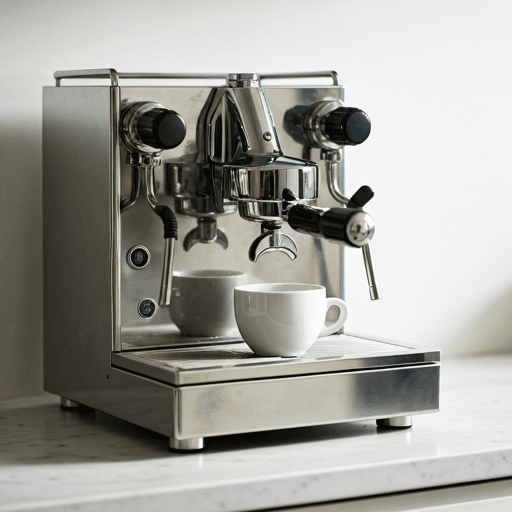
A coffee machine with milk frother does two jobs in one appliance: it brews your coffee and it foams the milk for cappuccinos, lattes and flat whites, so you do not need a separate frothing gadget on the counter. But "froths milk" can mean three very different things, and they suit very different people. Some machines hand you a steam wand and let you texture the milk yourself; some do the whole thing automatically at the push of a button; and some simply come bundled with a small standalone frother. This guide explains how each approach works, what it is good at, and how to pick the right one for the drinks you actually make.
What a coffee machine with milk frother actually means
The phrase covers any machine that can both make coffee and turn cold milk into warm foam, rather than leaving you to heat and whip the milk separately. A standalone frother is a different product entirely, which we cover in our milk frother guide. Here we are talking about the milk system that is part of the coffee machine itself.
That milk system shows up in three broad forms. The first is a steam wand, the metal arm on an espresso machine that you use by hand. The second is an automatic milk system, a carafe or tube that draws milk and foams it for you at one touch, common on bean-to-cup and some pod machines. The third is a coffee machine that ships with a separate bundled frother in the box, so the two stay physically distinct but arrive together. Knowing which form you are buying matters far more than the brand on the front, because the control, the cleaning and the results are completely different.
The three ways a coffee machine froths milk
Almost every coffee maker with milk frother on the market uses one of these three methods. Here is how each one works and who it suits.
1. A manual steam wand
The steam wand is the classic, cafe-style approach. It is a nozzle that blasts pressurized steam into a jug of milk; you control the angle, the depth and the timing yourself. Done well, it produces true microfoam, the dense, glossy, paint-like milk that pours latte art and defines a proper flat white. Nothing else gives you this much control or this good a texture.
The catch is the learning curve. You are texturing the milk by hand, so your first few jugs will be too bubbly or too hot until you get the feel for it. Wands come in two types: a bare professional wand gives the most control, while a panarello (or "frothing aid") wand has a sleeve that pulls in air automatically and makes foam more forgiving for beginners, at the cost of that finest microfoam. A steam wand makes the most sense if you want to learn the craft and you are buying an espresso machine anyway. Our guide to how to choose an espresso machine covers the brewing side that pairs with the wand.
2. An automatic milk system (one-touch)
An automatic, or "one-touch," milk system does the whole job for you. You fill a carafe or dip a tube into a milk container, press the button for a cappuccino or latte, and the machine heats, froths and pours the milk straight into the cup. It is the headline feature of most bean-to-cup super-automatics and a handful of premium pod machines. The appeal is obvious: it is fast, it needs no skill, and it gives you the same result every single time.
The trade-off is control and, on cheaper units, texture. Automatic carafes tend to build a stiffer, slightly airier foam rather than the silky, integrated microfoam latte art needs, the milk is sometimes a little cooler than a good wand delivers, and you cannot fine-tune it the way a barista can. For most households that just want a reliable milky coffee with zero fuss, that is a fair deal. If a button-press latte is your priority, read our bean-to-cup coffee machine guide, since that category is where one-touch milk systems are most common.
3. A machine bundled with a separate frother
The third route is a coffee machine and milk frother that arrive together but stay separate. The most familiar example is a pod or capsule machine sold with a small electric frothing jug in the box, such as a pod system bundled with an Aeroccino-style frother; you brew the coffee in the machine, foam the milk in the jug, then combine them. Because the frother is its own device, it heats and foams independently of the brew, which keeps the coffee machine simpler and cheaper to build.
This is a flexible, low-stress option: the frother usually makes both hot and cold foam, and replacing it later is easy and inexpensive. The downside is that it is two steps and two things to wash, not one integrated flow. It also blurs the line with buying a standalone frother yourself, so if you already own a brewer you like, a separate frother may make more sense than a whole new bundle.
Frothing type compared: control versus ease
The honest way to choose is to trade control against convenience. More control means better texture but more effort and skill; more automation means consistency and speed but less ability to tweak. This table lays out where each method sits.
| Frothing type | Control vs ease | Foam quality | Cleaning effort | Best for |
|---|---|---|---|---|
| Manual steam wand | Most control, real skill needed | True microfoam, latte-art grade | Quick wipe and purge after each use | Aspiring home baristas who want cafe texture |
| Panarello / aided wand | Some control, more forgiving | Good, airier foam | Wipe and purge; sleeve needs cleaning | Beginners who still want a hands-on wand |
| Automatic carafe (one-touch) | Least control, easiest | Consistent, stiffer and airier | Highest; needs rinsing and deep cleans | Convenience seekers and busy households |
| Bundled separate frother | Moderate, two-step process | Reliable, jug-style foam | Wash the jug like any frother | Pod-machine owners who want flexibility |
Start with the drinks you actually want
Before you compare machines, decide what goes in your cup, because the drink dictates the milk and the milk dictates the frother. A cappuccino wants a thick, airy layer of foam sitting proudly on top, which almost any method can manage. A latte or flat white wants silky microfoam that blends into the espresso, which is where a steam wand pulls clearly ahead. If you mostly drink long black coffee with just a splash of milk, you may not need a serious milk system at all.
Be honest about volume and patience, too. If you make one or two milk drinks on a slow weekend morning, a wand is a pleasure to learn. If you are turning out several coffees before the morning rush, a one-touch carafe earns its keep every day. Match the machine to the drinks you reach for most, not to the longest spec sheet.
Cleaning the milk system: the real chore
This is the part buyers underestimate, and it is the single biggest reason people stop using a milk system. Milk is unforgiving: it dries fast, turns sour and clogs narrow tubes, so whatever you buy, you will be cleaning it daily. How hard that is depends entirely on the design.
- Steam wands are the simplest to keep clean. Purge a short burst of steam to clear the tip, then wipe it with a damp cloth straight after frothing. Do it every time and it never builds up.
- Automatic carafes are the most demanding. Milk travels through internal tubes and valves you cannot see, so the best designs include an auto-rinse cycle that flushes the lines after each drink, plus a removable carafe you can pop in the fridge between uses and into the dishwasher for a deep clean. If an automatic machine lacks both of those, cleaning becomes a real daily nuisance.
- Bundled frothers are washed by hand like any jug: empty it immediately, wipe the inside before milk bakes onto the non-stick coating, and never submerge the powered base.
When you shortlist an automatic coffee maker and milk frother, treat "auto-rinse and a removable, fridge-safe carafe" as a near-essential feature rather than a luxury. It is the difference between a machine you use for years and one that gathers dust.
Dairy versus plant-milk frothing
The milk you pour in matters as much as the machine. Whole dairy milk is the easy benchmark: its protein and fat build a stable, creamy foam on any system. Skim milk foams bigger but drier and collapses faster. Plant milks are fussier, because ordinary oat, almond or soy lacks the protein structure dairy relies on and can foam weakly or split.
The fix is to buy a barista edition, reformulated with extra fat and stabilizers specifically so it holds foam. Barista oat in particular froths beautifully and is the reason your cafe's oat latte looks as good as the dairy one. This matters most with automatic systems: some carafes handle plant milk well and others struggle, so if you drink oat or soy daily, check that the machine is rated for it, and reach for a barista blend either way.
How to choose a coffee machine with milk frother
Pull it together with a short checklist. Match the machine to how you really drink, not to the most impressive spec sheet.
- Decide your drinks first. Microfoam lattes and latte art point to a steam wand; effortless daily cappuccinos point to a one-touch carafe.
- Choose your control level. Manual wand for craft and texture, automatic carafe for speed and consistency, bundled frother for flexible, lower-cost simplicity.
- Prioritize the cleaning design. On automatics, insist on auto-rinse and a removable, fridge-safe carafe. On wands, accept the daily wipe. On bundles, pick a frother that is easy to hand-wash.
- Check plant-milk compatibility if you do not drink dairy, and plan to use barista blends.
- Think in cost tiers, not figures. Bundled-frother pod machines tend to be entry-level, capable one-touch bean-to-cup machines sit mid-range to premium, and a quality steam-wand espresso setup spans budget to high-end depending on build.
- Count the counter space and the routine. An all-in-one keeps the kitchen tidy; a brewer-plus-frother bundle is two devices to store and wash.
Where this fits among the other machine guides
A coffee maker with milk frother is just one slice of the home-machine landscape. If you are still deciding between drip, pod, bean-to-cup and pump espresso in the first place, start with our broader coffee machines for home overview, which links the deep dives for each type. If you want one box that also brews regular filter coffee alongside espresso, drip-and-espresso combo machines solve a related but different problem.
The bottom line is simple: a built-in milk frother is only as good as the method behind it and the cleaning routine you will actually keep up. Choose the texture you want, be realistic about the daily wash, and the right machine will reward you with cafe-style milk drinks for years.