
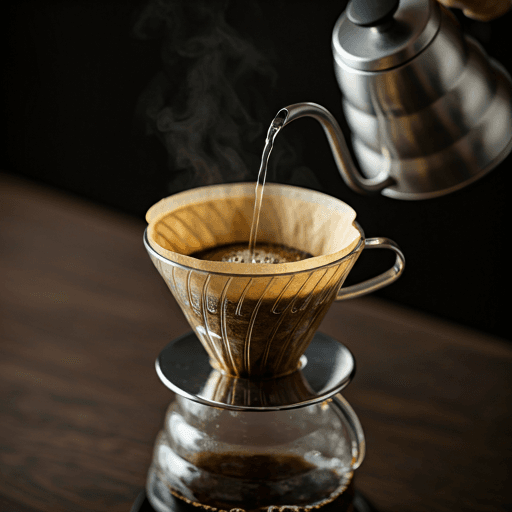
Philippine coffee comes from one of the very few countries on earth that commercially grows all four cultivated coffee species — arabica, robusta, liberica and excelsa — and its signature cup is kapeng barako, a bold, smoky liberica from the lowlands south of Manila. Most origins tell a one-species story. This one tells a four-species story, and the reason why is a piece of agricultural history that still shapes the map.
This is an origin story rather than a botany lesson. Below: where these beans grow and why the land matters, the regions and what each is known for, the history that explains the strange species mix, what it all tastes like, and how the country compares with its Southeast Asian neighbors.
What Philippine Coffee Is
Philippine coffee is grown across an archipelago that happens to offer almost every altitude band coffee can use: hot, humid lowlands at around 300 m (roughly 1,000 ft), and cool volcanic highlands reaching about 1,800 m (roughly 5,900 ft). The general harvest window runs from around October to March. Soils are frequently volcanic, rainfall is generous, and the country sits comfortably inside the tropical coffee belt.
Scale is the surprise. Despite that geography and a genuine 19th-century export history, national output has been modest in recent decades — official statistics have put green coffee production in the range of roughly 25,000 to 35,000 metric tons a year, which places the country well outside the world's top producing tier. Domestic demand, meanwhile, has been estimated in the low hundreds of thousands of metric tons. The arithmetic only resolves one way: the Philippines drinks far more coffee than it grows, and is a net importer, buying green and processed coffee from Vietnam and Indonesia. An origin that once shipped coffee to the world now buys most of what it brews.
The Four-Species Fact
Only a handful of countries grow all four cultivated Coffea species as commercial crops. The Philippines is one of them, and it is the single most interesting thing about the origin.
It is worth being precise, because the "four species" line rests on a taxonomic question that has moved twice. Excelsa was described as Coffea excelsa from tropical Central Africa in 1903. In 2006, a major revision of the genus folded it into liberica as C. liberica var. dewevrei — at which point a purist could argue the Philippines really grew three species and two varieties. Then in 2025, genomic work led by researchers at the Royal Botanic Gardens, Kew split liberica into three distinct species and restored excelsa to full species rank as C. dewevrei. On current science, the four-species claim stands on firmer ground than it did for most of the past two decades.
Each species is a deep subject in its own right, and each has its own home here: the highland crop is arabica, the volume crop is robusta, and the famous one is liberica, with excelsa grown in smaller quantities in the same lowlands. What matters for the origin is not what the species are, but why this particular country ended up with all of them at once.
Barako Coffee: The Signature Liberica
Kapeng barako is liberica (Coffea liberica), grown mainly in the provinces of Batangas and Cavite, south of Manila, at roughly 300 to 500 m. It is the coffee the country is known for, even though it is emphatically not the coffee the country mostly grows.
The beans are unmistakable. Where an arabica seed is a neat oval half-moon, a barako bean is strikingly large, asymmetric and almond- to teardrop-shaped, often with a small hooked point at the tip. The trees are among the largest in commercial coffee cultivation, reported to reach around 20 m (about 66 ft) if left unpruned — which makes hand-picking genuinely laborious and is one reason the crop has struggled against tidier, higher-yielding alternatives.
The cup is powerful: full-bodied, smoky and woody, with low, mellow acidity and a heady tropical aroma most often compared to jackfruit. The descriptor that comes up again and again, and that rarely appears in liberica writing elsewhere, is aniseed — a faintly savory, almost licorice-like top note that people either love or find bewildering. It is a polarizing coffee, and its drinkers consider that the point.
The name carries the identity. Barako colloquially means "stud" — with connotations of a wild boar, of toughness and machismo — and the association is not incidental marketing. In Batangas the drink is bound up with regional character, taken strong and unfussy, and it functions as a marker of Batangueño identity as much as a beverage. No other coffee in the country carries that kind of cultural weight.
It is also a heritage crop that came close to vanishing, and the statistics are startling once you see them. Liberica accounts for roughly 1% of national coffee production — recent figures cluster somewhere around 0.7% to 1.1% — which means the coffee the country is famous for is the rarest thing it grows. Excelsa, its close relative and near-anonymous by comparison, out-produces it several times over. Declining plantings, pest and disease pressure, and replacement by higher-yielding varieties pushed barako far enough that Slow Food listed it in the Ark of Taste, its catalog of endangered heritage foods. Revival is now an active project: agricultural research agencies and the Philippine Coffee Board have supported propagation, demonstration farms and farmer training in Batangas, and a generation of local cafes has put barako back on menus. The trajectory is genuinely uncertain, but it is no longer simply downward.
The History That Explains the Species Mix
This is the spine of the article, and it is also where most writing about this origin repeats a myth. The honest version is better.
Coffee arrived in the 1700s — tradition credits a Franciscan friar with planting the first trees at Lipa, in Batangas, with the date most often given as 1730 and sometimes placed a decade or so later. Through the 19th century Lipa boomed. At its peak the town supplied the overwhelming majority of the country's coffee exports, and coffee wealth reshaped the local elite.
Here is the correction. That boom was arabica, not barako. Popular accounts routinely assume the coffee that made Lipa rich was liberica, because barako is what Batangas is famous for now — but the historical record does not support it. A 1928 issue of the Philippine Agricultural Review refers to Lipa plainly as a place "where Arabian coffee was once an export crop," noting its altitude of about 304 m. Barako's association with Batangas is a 20th-century development, and it exists precisely because the arabica died.
Two other claims deserve hedging. The country is widely said to have ranked fourth in the world for coffee exports around 1880, and — more dramatically — to have been the world's only coffee source for a stretch of the late 1880s while rust ravaged everyone else. Both are repeated everywhere and both are hard to pin down. A scholarly reassessment of Lipa's coffee history, explicitly framed as demythologising it, concludes that much of what passes for the standard account is apocrypha and half-truth. Something real happened. It was not the fairy tale.
The collapse was messier than the usual telling, too. Accounts differ on the order of events: coffee leaf rust (Hemileia vastatrix) is generally dated to around 1889, alongside worsening insect damage, while some local histories place the worst province-wide attack of a wood-boring pest — remembered as bayongbong — at the very end of the century, with rust finishing off the trees that tried to regrow. Either way the outcome was the same and it was fast: production is reported to have fallen to roughly a sixth of its late-1880s peak within a few years. Discouraged landowners ploughed the plantations under and planted sugar, rice and corn instead. Barely any of the old coffee land stayed in coffee.
Then the replanting. In the early 1900s, under American colonial administration, the Bureau of Agriculture tested rust-tolerant alternatives — including liberica brought from Java. It took. Plantings at the Roxas estate in Lipa became the principal seed source as liberica spread across Batangas. Robusta, similarly rust-tolerant and suited to the lowlands, later became the country's volume crop. Arabica survived by retreating uphill, into the cool Cordillera highlands where rust pressure is lower.
That is the whole causal chain, and it is why the map looks the way it does today: rust sorted the species by altitude. Arabica in the mountains, liberica and robusta in the lowlands. The Philippines grows four species because a fungus rewrote its agriculture and the country replanted with whatever would survive.
Where Philippine Coffee Grows
Batangas and Cavite (CALABARZON), roughly 300–500 m. The historic heartland and barako country. Lowland, warm, and the cultural home of liberica — with excelsa and robusta grown alongside it.
The Cordillera highlands, roughly 1,000–1,800 m. Benguet, Sagada in Mountain Province, Kalinga and Ifugao. This is the country's arabica country — high, cool, volcanic, often shade-grown on smallholdings and interplanted with vegetables or grown around the region's famous rice terraces. Typica, Bourbon, Caturra and Mundo Novo all turn up here, and Sagada in particular has a name among specialty drinkers.
Mindanao, roughly 700 m to over 1,200 m. The modern center of gravity. Sultan Kudarat, Bukidnon, Davao del Sur and the slopes of Mount Apo around Bansalan carry the bulk of national production — robusta at lower elevations, arabica higher up. The shift is real and recent: on recent official statistics Sultan Kudarat has overtaken the historic Luzon provinces to become the top coffee-producing province in the country, and the Soccsksargen region alone has accounted for roughly a third of national output. The story of Philippine coffee started in Batangas, but its production now lives in Mindanao.
Northern Luzon (roughly 300–900 m) and the Visayas (roughly 500–1,000 m) fill in the rest, at smaller scale.
At a Glance
Philippine coffee beans, summarized by species — where each grows, roughly how much of the crop it represents, and what it puts in the cup. Shares vary by year and by source; treat them as approximate.
| Species | Where it grows | Typical altitude | Share of national output | Character in the cup |
|---|---|---|---|---|
| Robusta (C. canephora) | Mindanao — Sultan Kudarat, Bukidnon, Davao; Northern Luzon; CALABARZON | ~300–900 m | The large majority; commonly reported around 70–75% | Heavy body, grainy, dark chocolate, low acidity |
| Arabica (C. arabica) | Cordillera — Benguet, Sagada, Kalinga, Ifugao; Mount Apo slopes | ~1,000–1,800 m | Roughly a fifth — commonly reported around 20–24% | Sweeter, floral, caramel, brighter acidity |
| Excelsa (C. dewevrei) | Batangas, Cavite, Quezon; Mindoro, Palawan and scattered lowland plots | Lowland | Small — commonly reported around 6% | Tart, fruity, dark berry, savory depth |
| Liberica (C. liberica) — kapeng barako | Batangas, Cavite | ~300–500 m | Tiny — around 1% or less | Powerful, smoky, woody, jackfruit and aniseed aroma |
Read the last two rows together and you have the origin's central irony: the famous coffee is the scarcest one, and its overlooked cousin outgrows it by a wide margin.
How It Compares to Its Neighbors
Set beside Vietnam, the contrast is scale and direction. Vietnam is a robusta superpower producing on an industrial scale for export; the Philippines produces a fraction of that, mostly for its own cups, and ends up importing Vietnamese beans to close the gap. Same dominant species, opposite economics.
Set beside Indonesia — Sumatra, Java, Sulawesi — the contrast is processing signature. Indonesian coffees carry the earthy, herbal, low-acid stamp of wet-hulling, a distinctive regional method. Philippine coffees have no single equivalent processing fingerprint; the origin is defined by its species range rather than by one shared technique.
And nowhere else in the region does a liberica hold the position barako holds here. Liberica is grown in Malaysia and Indonesia, but there it is a curiosity or a kopitiam blending component. In the Philippines it is the national coffee identity — a cultural fact rather than an agricultural one, given how little of it is actually planted.
The Bottom Line
Philippine coffee is worth knowing for one reason above all: it is the clearest example anywhere of history writing itself into a country's species map. A fungus arrived, the arabica died, the lowlands replanted with liberica and robusta, the arabica climbed into the mountains, and the result is an origin growing all four cultivated coffee species at once.
Approach it accordingly. Cordillera and Sagada arabicas are the accessible entry point, clean and sweet. Barako is the one to seek out for the experience — brew it strong, expect smoke and jackfruit and that odd aniseed lift, and understand that you are drinking a heritage crop that nearly disappeared and is being deliberately brought back. It will not taste like your usual cup. That is the entire point of it.