
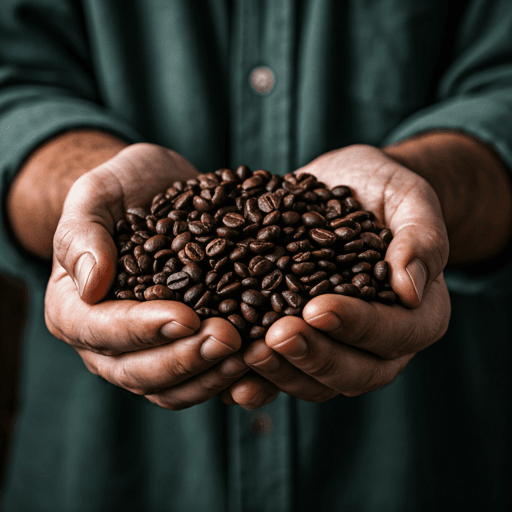
Liberica (Coffea liberica) is the third or fourth commercially grown coffee species after Arabica and Robusta, prized for an unusually large, irregular bean and a bold, smoky, fruit-forward cup. Native to the forests of West and Central Africa, it is grown today most notably in the Philippines, where it is known as kapeng barako, along with Malaysia, Indonesia and pockets of Africa. It accounts for only a small share of world output, which is exactly why most drinkers have never tasted it.
If you already know your Arabica from your Robusta, Liberica is the wild third option that behaves like neither. This guide explains what it is, how it tastes, its caffeine, where it grows, why it stays rare, and how its fruity cousin Excelsa fits in.
What Is Liberica Coffee?
Liberica is one of the roughly 130 species in the Coffea genus, but only a handful are ever grown for drinking. Arabica dominates specialty and everyday cups; Robusta powers most instant coffee and espresso blends; and Liberica is the distant third, first documented in Liberia in the 19th century, which gave the species its name. For a broader map of how these beans relate, see our coffee bean varieties overview.
The most striking thing about coffee Liberica is the bean itself. Where an Arabica seed is a neat, oval half-moon, a Liberica bean is large, asymmetric and almond- to teardrop-shaped, often with a little hooked point and a crooked center furrow. The trees are dramatic too: left unpruned they can grow into tall, spreading plants many meters high, with big glossy leaves and comparatively large cherries. If you want the fundamentals on the seed inside the fruit, our explainer on what coffee beans actually are covers the basics that apply across every species.
How Liberica Tastes and How It Differs From Arabica and Robusta
Liberica coffee has a flavor unlike anything in the Arabica-Robusta mainstream. Roasters and drinkers reach for words like bold, smoky, woody and earthy, wrapped around a distinctly tropical, almost floral aroma. The signature descriptor is jackfruit, a heady, ripe-fruit note some people also compare to dark stone fruit or even a faint hint of dark chocolate and tobacco. The body is typically full and syrupy, and acidity tends to read low and mellow rather than bright.
That profile sits well apart from its siblings:
- Arabica is the elegant one, generally sweeter and more aromatic, with brighter acidity and clean notes of berry, citrus, caramel or chocolate depending on origin.
- Robusta is the punchy, bitter, high-caffeine workhorse, heavier and more rubbery or grainy, valued for crema and body in blends.
- Liberica is the outlier: less refined than fine Arabica and less harsh than Robusta, but far more polarizing than either thanks to that funky, fruity, smoky character.
Because the flavor is so assertive, Liberica is often enjoyed strong and dark, and in its home markets it is frequently blended with Robusta or served as a bold morning brew. We keep the full head-to-head of the two big species on our dedicated Arabica versus Robusta comparison, so here the focus stays on what makes Liberica its own thing.
The Coffee Species Compared
A quick side-by-side helps place Liberica among the beans you are more likely to have met. Caffeine here is relative rather than exact, because published measurements vary a lot by sample and method.
| Species | Typical taste | Caffeine (relative) | Share of world output | Signature notes |
|---|---|---|---|---|
| Arabica (C. arabica) | Sweeter, aromatic, brighter acidity | Moderate | Roughly 60-70% | Berry, citrus, caramel, chocolate |
| Robusta (C. canephora) | Bitter, punchy, heavy body | Highest | Roughly 30-40% | Nutty, grainy, rubbery, big crema |
| Liberica (C. liberica) | Bold, smoky, woody, full body | Moderate; varies by study | Small (a low single-digit percent at most) | Jackfruit, floral, dark fruit, smoke |
| Excelsa (a Liberica variety) | Tart, fruity, lighter | Moderate to lower | Tiny (a fraction of a percent) | Tart fruit, dark berry, savory depth |
Caffeine in Liberica
Liberica's caffeine is a genuinely gray area. It is commonly described as falling between Arabica and Robusta, yet laboratory analyses disagree: some studies measure Liberica lower than both, roughly in or under the Arabica range, while others place it clearly above Arabica but below Robusta. The honest takeaway is that it is generally not the caffeine bomb that Robusta is, and that any single number should be treated as an estimate.
What ends up in your cup depends on far more than the species anyway, including the dose of grounds, grind size, brew method and strength you pull. If you are chasing a specific caffeine level, brew ratio and method matter more than whether the bean is Arabica, Robusta or Liberica.
Where Liberica Grows and Why It Is Rare
Liberica originated in the lowland tropical forests of West and Central Africa and spread across the equatorial belt during the colonial era. Its most famous stronghold today is the Philippines, where the local Liberica, kapeng barako (literally "stud" or "macho" coffee), is a cultural icon associated with the Batangas and Cavite regions. It is also grown in Malaysia and Indonesia, where it turns up in traditional kopitiam blends, and in scattered plantations across Africa and Southeast Asia.
So why is such a hardy, characterful coffee so scarce? A few reasons stack up:
- Yield and handling. The large cherries ripen unevenly and cling to the tree, and the thick pulp is harder to process than Arabica or Robusta.
- Tree size. Traditional Liberica trees can grow very tall, which makes hand-picking labor-intensive unless they are kept pruned.
- Market taste. The global market was built around Arabica's sweetness and Robusta's cheap strength, so Liberica was long dismissed as a curiosity.
Add it up and Liberica represents only a small slice of what the world drinks, often cited at a low single-digit percentage of production, and Excelsa a tiny fraction on top of that. That rarity is now part of the appeal, with specialty roasters increasingly treating Liberica as a story worth telling rather than a bulk commodity.
Excelsa: Liberica's Fruity Cousin
You cannot talk about Liberica for long without meeting Excelsa coffee. Once considered its own species, Excelsa was reclassified around 2020 as a variety of Coffea liberica after genetic work showed how closely related they are. It shares the family's teardrop bean shape but tends to run smaller, and the cup leans tart and fruity, with dark-berry and savory depth, rather than Liberica's heavier smoke and jackfruit.
Excelsa is rarer still, an estimated sliver of global production, and it is increasingly talked up as a hardy, flavorful bean that could matter more as growers look for climate-resilient options. Together, Liberica and Excelsa make the case that there is a whole flavor world beyond the two beans that fill most bags.
Growing Traits and Climate Resilience
Part of what keeps interest in Liberica alive is toughness. The species thrives in hot, humid lowlands where Arabica would struggle, tolerates poorer soils, and is widely regarded as more resistant to some pests, diseases and weather stress than delicate Arabica. That resilience is one reason Liberica and Excelsa come up in conversations about the future of coffee farming as the climate shifts, even if their flavor divides opinion.
Like every coffee, Liberica starts as a fruit, the coffee cherry, with the beans as the seeds inside. If the plant-to-cup journey interests you, our guide to the coffee cherry fruit shows what happens before roasting turns any green seed into something drinkable.
Should You Seek Out Liberica?
Liberica will never dethrone Arabica or Robusta, and it does not need to. It is the coffee for the curious, the drinker who wants to taste how strange and wonderful the Coffea genus can get. If you spot a single-origin Liberica or an Excelsa on a roaster's shelf or a cafe menu, it is worth trying at least once, ideally brewed strong so those jackfruit-and-smoke notes have room to sing. Expect something bold, a little wild and completely different from your daily cup, which is precisely the point.