
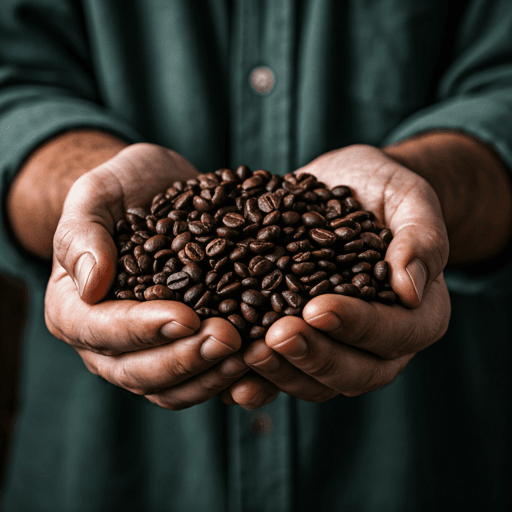
Coffee grows on a tree as a fruit, and that fruit is the coffee cherry. What we call a coffee bean is really the seed inside it — usually two seeds tucked face to face in the middle. Get to know the coffee cherry, the coffee fruit behind every roast, and a lot about flavour suddenly makes sense: why ripeness matters, why picking is slow work, and why two coffees from neighbouring farms can taste worlds apart.
This guide walks the cherry from skin to seed: how it ripens, how growers turn fruit into the dried green beans that get roasted, and what happens to the rest of the fruit, including the lightly caffeinated husk tea called cascara.
What is a coffee cherry?
A coffee cherry is the small, round fruit of the coffee plant (Coffea). It is sometimes called a coffee berry, or loosely cherry coffee, but botanically it is a drupe — a fleshy fruit wrapped around seeds, the same family of structure as a real cherry or olive. Each tree carries clusters of them along its branches, and they ripen slowly over months.
The name "cherry" comes from the look of the ripe fruit: about the size of a small grape or cranberry, glossy, and usually deep red. Inside, instead of a single stone, there are normally two green seeds. Those seeds are the part that gets dried, roasted and ground. Everything else — skin, pulp, and the slippery layer around the seeds — is fruit that has to be removed first.
Anatomy of the coffee cherry, layer by layer
Cut a coffee cherry in half and you find a tidy set of layers, each with a job. Here is the coffee cherry from the outside in.
Outer skin (exocarp)
The skin, or exocarp, is the cherry's tough outer coat. It starts green and turns red, yellow, orange or even pink as the fruit ripens, depending on the variety. The skin protects the fruit and is the first thing pickers read to judge ripeness.
Pulp and mucilage (mesocarp)
Under the skin sits the pulp, or mesocarp — sweet, soft fruit flesh. Closest to the seed is the mucilage, a sticky, sugary, gel-like layer. These sugars are the engine of flavour during processing: how much of this fruit is left on the seed, and for how long, pushes the final cup toward bright and clean or heavy and fruity.
Parchment (endocarp) and silverskin
Each seed is wrapped in a papery hull called parchment (the endocarp), and under that clings a thin membrane called the silverskin. Parchment is removed by hulling once the beans are dry; the silverskin mostly flakes off during roasting and collects as "chaff".
The seeds — two beans, or one peaberry
At the centre are the seeds, the future coffee beans. A normal cherry holds two seeds with one flat side each, sitting face to face. Sometimes only one seed develops and grows round instead of flat: that is a peaberry, prized by some roasters and often sorted out as its own lot. For more on the seed itself, see our guide to what coffee beans are.
| Cherry layer | What it is | Why it matters |
|---|---|---|
| Skin (exocarp) | Outer coat; green when unripe, red or yellow when ripe | Tells pickers when the fruit is ready |
| Pulp (mesocarp) | Sweet fruit flesh | Removed in washed coffee; left on for fruitier styles |
| Mucilage | Sticky, sugary gel around the seed | Sugars drive fermentation and sweetness |
| Parchment (endocarp) | Papery hull around each seed | Protects the seed; hulled off once dry |
| Silverskin | Thin membrane on the bean | Flakes off in roasting as chaff |
| Seeds | Usually two flat beans, or one round peaberry | The part that is dried, roasted and brewed |
From green to red: how a coffee berry ripens
A coffee berry starts hard and green. Over several months it swells and changes colour — most varieties ripen to deep red, while some yellow-fruited types ripen to gold or orange. Ripe fruit is sweeter and denser in sugars, and ripe-picked cherries make noticeably better coffee, so colour is the grower's main ripeness cue.
That is why picking method matters. On the same branch you can find green, ripe and overripe cherries at once, because they do not all mature together. Selective hand-picking — returning to the same trees several times to take only the ripe fruit — gives the cleanest, sweetest lots, which is one reason high-end specialty coffee is so labour-intensive. Strip-picking or machine harvesting is faster but sweeps up unripe and overripe fruit together, which then has to be sorted out.
How the cherry shapes flavour: washed, natural and honey
Once cherries are picked, the fruit has to come off the seed and the seed has to dry. How a farm does this is called processing, and it is one of the biggest levers on flavour — sometimes bigger than the variety itself. Three broad methods dominate.
- Washed (wet): the skin and pulp are removed first, the seeds ferment briefly to loosen the mucilage, then they are rinsed and dried. Washed coffees tend to taste clean, bright and acidic, letting the bean's origin character show.
- Natural (dry): the whole cherry is dried intact, fruit and all, before the dried husk is hulled off. Natural coffees are typically fruitier, heavier and sweeter, with berry or wine-like notes from long contact with the pulp.
- Honey (pulped natural): the skin comes off but some sticky mucilage stays on the seed as it dries. The result sits between the two — some fruit and sweetness, with more clarity than a full natural.
None is "best"; they are different styles, and the same cherry processed three ways gives three different cups. After drying and hulling, the green seeds are graded and shipped, ready for the roaster — which is where the next big flavour decisions happen, covered in our guide to what coffee roasting is.
Beyond the bean: cascara and coffee flour
For a long time the fruit stripped from the seed was treated as waste. Increasingly it is not. The best-known second life is cascara — Spanish for "husk" — the dried skin and pulp of the coffee cherry, steeped in hot water like a tea.
Cascara brews into a sweet, fruity infusion with notes of raisin, hibiscus, cherry and rose hip. It is lightly caffeinated: a cup carries roughly 20 to 25 mg of caffeine, well below a cup of brewed coffee (often well over 100 mg) and in the same ballpark as a light tea. To make it, steep a few teaspoons of dried cascara in hot water for several minutes, then strain. Because it comes from the fruit and not the roasted seed, it tastes nothing like a cup of coffee.
The dried husks of the coffee fruit are also milled into coffee flour, a fibrous, slightly tart, fruity ingredient used in baking. Both are reminders that the whole cherry, not just the bean, can find a use.
Why the coffee cherry matters to your cup
Every bag of beans starts as fruit. The colour the cherry reached before picking, how carefully it was sorted, and which processing method dried it are all decided long before roasting — and together they set the ceiling on how good the coffee can be. Knowing the coffee cherry is really a fruit, and the bean its seed, is the quiet backstory behind tasting notes like "berry", "clean" or "wine-like" printed on a bag.
From here it is worth following those green seeds onward: read up on coffee bean varieties and types to see how the fruit you have just met becomes the beans you grind and brew.