
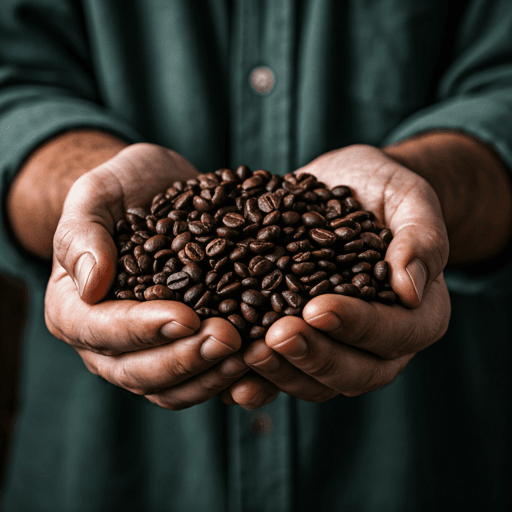
Vietnamese coffee beans are, overwhelmingly, Robusta — bold, low-acid, chocolatey-bitter and high in caffeine — grown across Vietnam's Central Highlands. That single fact explains almost everything about the cup: why it tastes so intense and syrupy, why it stands up to sweetened condensed milk, and why the country is the world's largest Robusta producer and its second-largest coffee producer of any kind. If you have ever wondered what makes a glass of Vietnamese coffee taste the way it does, the answer starts with the bean.
What Are Vietnamese Coffee Beans?
Vietnamese coffee beans are the seeds of coffee cherries grown in Vietnam, and the vast majority of them belong to the species Coffea canephora — better known as Robusta. Robusta accounts for well over 90% of the national crop, which is unusual: most famous coffee origins are prized for Arabica, the more delicate and aromatic species. Vietnam flipped that script. Rather than chasing the floral, fruity profile of high-grown Arabica, its industry leaned into what Robusta does best: a thick body, a deep roast-forward bitterness, notes of dark chocolate and toasted nut, and roughly twice the caffeine of a comparable Arabica.
The result is a coffee culture built around strength and sweetness in balance. A short, potent brew from the metal phin filter is cut with condensed milk, or poured long over ice, so the bean's punchy bitterness becomes the backbone of the drink rather than a flaw to hide. Understanding Vietnamese coffee beans really means understanding why Robusta rules here.
Why Robusta Dominates
Robusta's grip on Vietnam comes down to a mix of climate, economics and taste — and the three reinforce each other.
Climate and yield
Robusta is the hardier of the two main species. It tolerates lower elevations, higher temperatures and more humidity than Arabica, and it resists coffee leaf rust and pests that devastate more fragile trees. It also yields more cherries per hectare and is generally cheaper to farm. For Vietnam's warm, monsoon-fed lowlands and plateaus, Robusta was simply the plant that thrived and produced volume — a decisive advantage once the country scaled up coffee farming through the late twentieth century and became a global powerhouse almost overnight.
Flavour that fits the ritual
Just as important, Robusta's flavour suits the way the coffee is drunk. Where Arabica leans bright and acidic, Robusta coffee beans from Vietnam are earthy, heavy-bodied and dark-chocolate bitter, with a grainy or nutty edge and a lingering finish. That intensity is a feature, not a bug: it is exactly what you want when the brew is going to be sweetened with condensed milk or diluted over a tall glass of ice. A softer, more acidic bean would get lost. If you want the full technical comparison of the two species, our guide to Robusta versus Arabica digs into caffeine, acidity, crema and body in detail.
The Growing Regions
Almost all of Vietnam's coffee comes from the Central Highlands (Tây Nguyên), a band of red-soil plateaus in the country's south-central interior where the elevation, volcanic earth and distinct wet-and-dry seasons suit Robusta beautifully.
Buon Ma Thuot and Dak Lak
The city of Buon Ma Thuot, capital of Dak Lak province, is the undisputed heart of the trade — often called the coffee capital of the country. The plateaus around it produce the lion's share of the nation's Robusta, and the region hosts a biennial coffee festival that celebrates its status. When people talk about classic Vietnam coffee beans, they are usually picturing a Dak Lak Robusta: robust, chocolatey and built for the phin.
Da Lat and Cau Dat
Higher up, the cooler hill town of Da Lat and the nearby Cau Dat area in Lam Dong province tell a quieter, more Arabica-focused story. At elevations that reach well above a thousand metres, growers can coax out the milder acidity and gentler sweetness that Arabica is known for. It is a small slice of the national output, but a growing specialty scene has put Da Lat Arabica on the map for drinkers who want something lighter than the standard Highlands Robusta.
The Traditional Vietnamese Roast
Beyond the species, part of the signature Vietnamese flavour is how the beans are roasted. The traditional style runs dark — sometimes very dark — pushing the beans well past the point where origin nuance survives and into bittersweet, smoky, molasses-like territory. This is a legacy of the coffee's arrival during the French colonial era, when dark-roast habits took root and were then adapted to local taste.
The most distinctive twist is the finishing. Many traditional roasters glaze the beans in the roaster with additions such as butter or a little oil, plus a touch of sugar and occasionally a splash of alcohol or vanilla. The fat and sugar caramelise onto the bean's surface, deepening the body, taming some of Robusta's harsher edges and giving the brew that famous glossy, syrupy character. Modern specialty roasters increasingly offer cleaner, lighter, additive-free roasts too, so a bag of Vietnamese beans today might be an old-school buttered dark roast or a bright single origin — worth checking the label if the flavour matters to you.
Beyond Robusta: Other Vietnamese Beans
Robusta is the headline, but it is not the whole story. A handful of other beans round out what Vietnam grows.
- Arabica — the minority crop, concentrated around Da Lat and Cau Dat, prized for softer acidity and a lighter, sweeter cup.
- Peaberry ("culi") — not a species but a natural quirk: when a cherry forms a single rounded seed instead of two flat-sided halves. These rarer beans are often sorted out and sold on their own for a more concentrated, intense pour.
- Liberica ("mit") — a third, unusual species (Coffea liberica), locally nicknamed "mit" after the jackfruit tree. It is grown in small quantities and carries a woody, smoky, almost fruity funk that is very much an acquired taste.
Here is how the main types compare at a glance:
| Bean type | Taste profile | Best for |
|---|---|---|
| Robusta (the standard) | Bold, bitter, dark chocolate, heavy body, high caffeine | Phin brews with condensed milk; iced coffee |
| Arabica (Da Lat / Cau Dat) | Softer, milder acidity, gently sweet, lighter body | A smoother black cup; pour-over or drip |
| Peaberry "culi" | Concentrated, intense, extra-punchy Robusta character | Strong single-serve phin pours |
| Liberica "mit" | Woody, smoky, fruity-funky, unusual | Curious drinkers and blends |
| Traditional buttered dark roast | Very dark, syrupy, molasses-sweet, glossy | The classic sweetened milk-coffee ritual |
Buying and Using Vietnamese Coffee Beans at Home
You do not need to travel to enjoy these beans — they are widely available worldwide as whole beans, pre-ground, or as ready-blended dark roasts. A few things are worth knowing before you brew.
Whole bean versus pre-ground
Whole beans give you the freshest cup and let you control the grind, but they need a grinder at home. Pre-ground is convenient and traditional — plenty of classic Vietnamese coffee is sold ready-ground — just expect it to lose aroma faster once the bag is open. Either way, check the roast date if there is one, buy in quantities you will finish within a few weeks, and store the beans in an airtight container away from heat and light.
Grind and brewing at home
The traditional maker is the phin, and it likes a medium-coarse grind — roughly the texture of coarse sand, similar to what you would use for drip. Grind too fine and the water stalls or drips bitter and slow; too coarse and it rushes through weak. If you do not own a phin, these beans also brew well in a French press, a moka pot or a simple drip machine, though the phin remains the most authentic route. For the gear side of the equation, our overview of Vietnamese coffee makers walks through phin materials, sizes and the electric alternatives, and the phin's own guide covers the brew step by step.
One note on strength: because Robusta packs so much more caffeine than Arabica, a single small glass can hit harder than you expect. Sweetened condensed milk, a scoop of ice, or simply a smaller pour all help tame it into an easy, everyday drink.
The Takeaway
Vietnamese coffee beans are a case study in playing to your strengths. Instead of imitating the Arabica origins it could never out-compete on delicacy, Vietnam built a whole coffee identity on bold, chocolatey, high-caffeine Robusta from the Central Highlands — and then dressed it up with dark roasting, buttery finishing and a genius pairing with condensed milk. Whether you reach for a classic buttered dark roast, a rarer peaberry, or a lighter Da Lat Arabica, the beans reward drinkers who like their coffee to make a statement.