
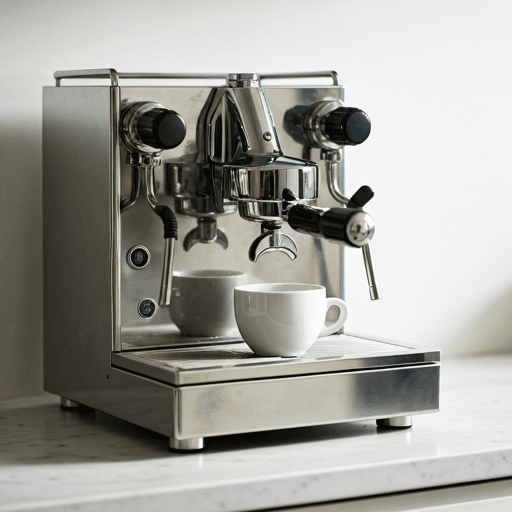
A Nespresso machine is a single-serve coffee maker that brews from sealed capsules instead of loose ground coffee. You drop in a pod, press a button, and the machine pushes hot water through it to produce a small, crema-topped cup. The big decision before you buy is which of the two Nespresso systems you want — OriginalLine or VertuoLine — because they brew differently, take different pods, and suit different drinks. This guide explains how each one works and how to choose the right model for your kitchen.
Nespresso is a brand owned by Nestle. For the wider story of the brand, its pricing model and how it grew, see our Nespresso brand guide. For everything about the capsules themselves, see Nespresso pods and capsules explained. This page focuses on the machines.
How a Nespresso machine works
Every Nespresso coffee machine follows the same basic idea: a sealed capsule of pre-ground, pre-dosed coffee goes in, the machine heats water and forces it through, and a clean shot comes out the spout. There is no grinding, no tamping, and no loose grounds to clean up. What differs is the extraction method, and that split defines the whole range.
OriginalLine: pressure extraction
OriginalLine machines work like a simplified espresso machine. A pump drives hot water through the small capsule at high pressure — up to around 19 bar — which is in the same ballpark as a full-size espresso machine. That pressure is what builds the layer of crema on top of the shot. Original capsules are small and cup-shaped, and the system is built around espresso-size drinks: a tiny ristretto (around 25 ml), a standard espresso (around 40 ml) and a longer lungo (around 110 ml). Not every model offers all three sizes, but they all sit in that espresso family. If your daily cup is a short, intense shot or the base for a milk drink, OriginalLine is the natural home. To see how that shot relates to the wider espresso world, our espresso explainer is a useful companion read.
VertuoLine: centrifusion
VertuoLine uses a different method Nespresso calls Centrifusion. Instead of only pushing water through with pressure, the machine spins the capsule at high speed — up to around 7,000 rotations per minute — while injecting hot water, so the brew is forced out by centrifugal force. Each Vertuo capsule carries a barcode that the machine reads as it locks in; the barcode tells the machine the right water volume, temperature and brew time for that specific blend. The practical payoff is range of cup sizes. Vertuo brews everything from an espresso up through a double espresso, a gran lungo, a full mug of coffee, and very large "Alto" servings. The trade-off is that Vertuo pods are larger and dome-shaped, and the crema is a thick foam created partly by the spinning.
OriginalLine vs VertuoLine: which Nespresso machine system to choose
The single most important thing to understand before buying any Nespresso machine: the two systems are completely incompatible. Original capsules will not work in a Vertuo machine, and Vertuo capsules will not work in an Original machine. You are not just choosing a machine — you are choosing which capsule range you will buy for years. Pick the system first, then the model.
| Feature | OriginalLine | VertuoLine |
|---|---|---|
| Extraction | High-pressure pump (up to ~19 bar) | Centrifusion — spinning capsule plus water |
| Pod shape | Small, cup-shaped | Larger, dome-shaped, with a barcode |
| Cup sizes | Ristretto, espresso, lungo | Espresso up to large mug ("Alto") coffees |
| Best for | Espresso and milk-based drinks | Big mugs of black coffee, plus espresso |
| Crema | Pressure-formed, espresso-style | Thick foam from the spinning action |
| Pod choice | Wide, including many third-party pods | Narrower, mostly Nespresso's own |
Put simply: if you mainly drink espresso, flat whites, cappuccinos and other short milk drinks, OriginalLine is the classic choice and gives you the widest pod selection. If you want a generous mug of black coffee with one button press — closer to a drip-coffee habit — VertuoLine is built for that, though its capsule range is narrower and largely Nespresso-only. For a fuller breakdown of intensities, flavours and pod recycling, see the pods and capsules guide.
The main Nespresso machine families
Within each system, Nespresso sells several model families. They mostly differ by size, water-tank capacity, and whether milk frothing is built in. Naming and availability vary by country, so treat these as the recurring families rather than a fixed catalogue.
Compact OriginalLine: Essenza Mini and Pixie
The Essenza Mini is the smallest machine in the range — a tiny footprint with a modest water tank, aimed at people who want espresso without giving up counter space. The Pixie is a small step up: a durable, scratch-resistant aluminium body, a slightly larger tank, and a no-fuss reputation. Both are espresso-only machines with no built-in milk system, so you would pair them with a separate frother for lattes. A standalone milk frother handles that job well.
CitiZ
The CitiZ is the larger of Nespresso's compact OriginalLine machines, with a roughly 1-litre water tank — among the biggest in the mid-range Original family — and a tall, retro-styled body designed to take taller cups. If you like the simplicity of the Pixie but want fewer refills, the CitiZ is the obvious move. Like its smaller siblings, the standard CitiZ is espresso-focused without integrated milk, though some versions ship bundled with a separate Aeroccino frother.
Lattissima: milk built in
The Lattissima family is OriginalLine with an integrated milk system. A milk container clips onto the machine, and one-touch buttons make cappuccinos, lattes and similar drinks automatically — no separate frothing step. The range runs from a compact entry model with a small milk container up to larger versions with bigger tanks, more milk capacity and preset recipes on a display. If your household drinks a lot of milk-based coffee and values convenience over hands-on control, a Lattissima is the with-milk answer.
Vertuo: Next, Plus and beyond
On the Vertuo side, the recurring models are the Vertuo Next and Vertuo Plus. The Vertuo Next is the slim, lightweight, budget-friendly entry into the system, with a small footprint and connectivity features in some versions. The Vertuo Plus is a slightly larger workhorse with a bigger, movable water tank. Both deliver the same range of cup sizes through Centrifusion; the differences come down to size, tank capacity and small conveniences. As with Original, these are black-coffee and espresso machines — for milk drinks you would add a separate frother.
With milk or without?
This is the practical fork most buyers hit. A machine with built-in milk (the Lattissima line) makes a one-touch cappuccino but costs more, takes more space, and adds a milk container to clean. A machine without milk (Essenza Mini, Pixie, CitiZ, the Vertuo models) is cheaper and simpler, and you froth milk separately with a standalone frother or steam wand. Many people find a non-milk machine plus a separate frother more flexible and easier to keep clean. If you are weighing pod machines against other formats entirely, our guide on how to choose a coffee maker sets Nespresso alongside drip, espresso and other pod systems like the one covered in our Keurig coffee maker guide.
Upkeep: descaling and cleaning
Pod machines are low-maintenance, but they are not no-maintenance. The main task is descaling — running a descaling solution through the machine to clear the mineral scale that builds up from heating water. Nespresso generally recommends descaling roughly every three months, or after a few hundred capsules, and more often if you live with hard water. The button sequence to enter descaling mode differs between models, so follow the descaling guide for your exact machine. Beyond that, empty and rinse the used-capsule container and drip tray regularly, and wipe the spout. Lattissima owners should rinse the milk system after every use to keep it hygienic.
Pods, cost and recycling
The capsules are the ongoing cost of any Nespresso machine, so factor them in, not just the machine price. Pod prices vary widely by country and retailer, and per cup they sit well above buying your own ground coffee — that is the convenience trade-off. OriginalLine has a large third-party and refillable-pod market, which can lower the running cost; VertuoLine's barcode system makes compatible third-party pods scarcer. On waste: Nespresso capsules are aluminium, which is recyclable, and the company runs a dedicated recycling program with collection points and return options that differ by region. Aluminium is easier to recycle than mixed plastic, but you still need to route used pods through that program rather than general rubbish.
So which is the best Nespresso machine for you?
There is no universal best Nespresso machine — the best one is the system and size that matches how you drink. Choose OriginalLine if you live on espresso and milk drinks and want the widest pod choice; start with an Essenza Mini or Pixie for compactness, a CitiZ for a bigger tank, or a Lattissima if you want milk built in. Choose VertuoLine if you want big mugs of coffee at the touch of a button, with a Vertuo Next for a small space or a Vertuo Plus for more capacity. Decide the system first, because the pods lock you in.
If a pod machine still feels like the right fit, the next read is our pods and capsules guide to choose your blends and understand recycling. And if you are not yet sure pods are for you, step back to how to choose a coffee maker and compare the whole field before you commit.