
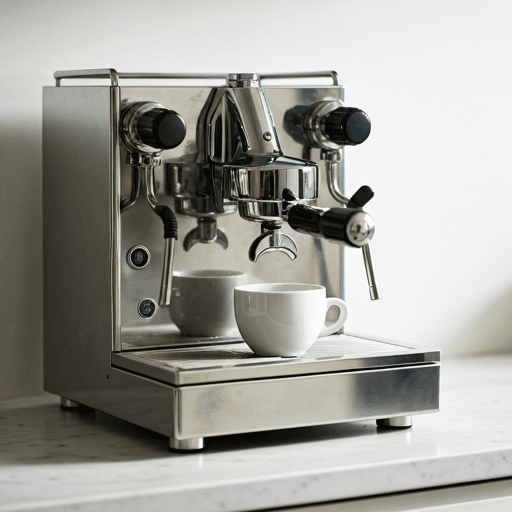
A Keurig is a single-serve pod coffee maker: you drop in a sealed pod, close the lid, press a button, and the machine pierces the pod, forces hot water through the grounds, and brews one cup in under a minute. It is the brand that turned single-cup brewing into a household habit. This guide explains how a Keurig coffee maker works, the main model families, how to keep yours running with the right cleaning and descaling routine, and the honest pros and cons of pod coffee, including what to do about the pods.
What is a Keurig and how does it work
Keurig is an American single-serve brewing system invented by John Sylvan and Peter Dragone, who founded the company in 1992. Green Mountain Coffee Roasters began selling its coffee in the patented "K-Cup" pod in the late 1990s, and the system spread first through offices, then into homes. Today the brand sits inside Keurig Dr Pepper, formed by a 2018 merger.
The mechanics are simple and clever. A K-Cup is a small plastic cup holding ground coffee, sealed with a foil lid and a paper filter inside. When you close the brewer's handle, a needle punctures the top of the pod and a second needle pierces the bottom. The machine heats water in an internal tank, then pumps it under pressure through the top needle, through the grounds, and out the bottom into your cup. Most Keurig coffee makers brew at roughly 192 degrees F (about 89 degrees C), just below boiling, which is a sensible extraction temperature for ground coffee.
That is the whole trick: pre-measured grounds, a sealed pod for freshness, hot water on demand, and almost no cleanup. You are trading the ritual and control of manual brewing for speed and consistency. If you want to understand how Keurig fits against other pod systems, our guides to the Nespresso brand and Dolce Gusto pod machines cover the main alternatives.
Single needle vs MultiStream extraction
Not all Keurig brewers extract the same way. Entry-level models use a single central needle that injects water in one spot. Newer premium models use what Keurig calls MultiStream technology, with five needle points that saturate the grounds more evenly. The practical result is a slightly fuller, more even-tasting cup from the same pod. It is not a night-and-day difference, but it is real, and it is the main reason to step up a tier.
Keurig coffee maker model families
Keurig has released dozens of machines over the years, but most fall into a handful of recognisable families. Here is how the popular Keurig coffee brewers compare so you can match a machine to your kitchen and habits.
| Model family | Best for | Reservoir | Notable features |
|---|---|---|---|
| K-Mini | Tiny kitchens, one coffee at a time | Single cup (fill per brew) | About 5 inches wide, very portable, strong-brew option, 6-12 oz cups |
| K-Classic | Simple, no-fuss everyday use | Medium, multi-cup | Single-needle extraction, three cup sizes, dependable workhorse |
| K-Elite | Coffee lovers who want control | Large (around 75 oz) | Strong and temperature controls, iced setting, hot-water dispense, high-altitude mode, LCD |
| K-Supreme | Better flavour in a compact body | Medium, movable tank | MultiStream 5-needle extraction, strength settings, repositionable reservoir |
| K-Duo | Households that want pods and a pot | Large (carafe up to ~60 oz) | Brews single K-Cups or a full 12-cup carafe of ground coffee with a reusable filter |
A few practical notes. The K-Mini is the smallest footprint Keurig makes and a favourite for dorms, offices and travel, but you refill the water for each cup. The K-Classic is the no-frills choice. The K-Elite is the feature-rich flagship, with the iced-coffee mode and hot-water-on-demand being genuinely useful. The K-Supreme brings MultiStream extraction down to a smaller, smarter body. The K-Duo is the hybrid for anyone who is not ready to give up a full carafe of drip coffee.
How to choose between them
Think about three questions. How many people drink coffee, and do you ever need more than one cup at once? How much counter space do you have? And do you care about brew strength, temperature and an iced option, or do you just want a fast hot cup? A solo drinker with little space is well served by a K-Mini or K-Supreme; a multi-person household that still loves a pot leans K-Duo; a coffee enthusiast who wants to fine-tune goes K-Elite. For a wider view across every brewer type, see our guide to how to choose a coffee maker.
Reusable pods and your own coffee
You are not locked into buying pods forever. Keurig sells a reusable filter, the My K-Cup, that fits in place of a disposable pod. You fill it with your own ground coffee, brew, then empty and rinse it. It cuts the per-cup cost dramatically and lets you use any coffee you like, including freshly ground beans, which almost always taste better than pre-filled pods.
A few tips for reusable pods: grind a touch coarser than espresso, do not overfill past the line, and tamp lightly so water can still pass through. If your coffee comes out weak, use a smaller cup size or the strong-brew setting rather than packing in more grounds. Freshly ground beans make the biggest difference of all, so grind right before you brew if you can.
Keurig cleaning solution and descaling
Maintenance is where most Keurig owners go wrong, and it is the single biggest factor in how long the machine lasts and how good the coffee tastes. There are two separate jobs: regular cleaning and periodic descaling.
Routine cleaning
Every week or two, wipe the exterior, lift out the drip tray and pod holder, and wash them with warm soapy water. Pull out the water reservoir, empty it, and rinse it; never let old water sit for days. Check the entrance and exit needles for grounds and clear them with a paperclip or the cleaning tool if your model includes one. On a MultiStream model there are five needle openings to clear, not one. A dedicated Keurig cleaning solution or pod-cleaning rinse pod can flush oils from the brew path, but warm soapy water and fresh rinse cycles do most of the work.
Descaling step by step
Descaling removes the mineral scale that hard water leaves inside the heater and pump. Keurig recommends descaling every three to six months, or sooner if you have hard water or the descale light comes on. You can use Keurig's own descaling solution or a 1:1 mix of white vinegar and water.
- Empty the reservoir and remove any water filter and pod.
- Pour in the Keurig descaling solution, then refill the empty bottle with water and add that too (a 1:1 ratio). For vinegar, fill the reservoir halfway with white vinegar and halfway with water.
- Place a large mug on the drip tray, run the largest brew size with no pod, and pour out the liquid. Repeat until the "add water" light appears.
- Let the machine sit for around 30 minutes so the solution can work.
- Rinse thoroughly: refill with fresh water and run several pod-free cycles until there is no vinegar or solution smell or taste. Do not skip this step.
A descaled machine heats faster, brews at the right temperature, and lasts years longer. If your Keurig is brewing slowly, dispensing a half-cup, or making loud pump noises, scale is the usual culprit, and a descale fixes it more often than not.
Pros and cons of a Keurig
Pod brewing is a genuine convenience, but it is a trade-off. Here is the balanced view.
- Pros: very fast, almost no cleanup, consistent cup to cup, no measuring or grinding, a huge variety of flavours and brands in pod form, and great for households where people drink different things.
- Cons: ongoing pod cost is higher than buying ground coffee, the cup quality rarely matches a good manual brew, you have less control over strength and extraction, and the pods create waste.
If flavour and control matter more to you than speed, a manual method may suit you better; compare the experience with our French press guide. Many people keep a Keurig for busy mornings and a second method for the weekend.
What about the pods and sustainability
The most common criticism of pod machines is waste, and it is fair. Since 2020 Keurig has made K-Cups from #5 polypropylene, which is recyclable in theory, but only if you peel off the foil lid, empty the grounds, and your local facility actually accepts that plastic. Many do not, so a lot of pods still go to landfill. The cleanest way to cut waste is the reusable My K-Cup with your own coffee. If you do use disposable pods, peel, empty, and recycle where you can, and compost the grounds. Cost varies by country and retailer, but reusable pods almost always work out cheaper over time than disposables.
The bottom line
A Keurig earns its place when speed and simplicity matter most: one button, one cup, no mess. Pick the model family that matches your space and how much control you want, run your own coffee through a reusable pod to save money and improve the cup, and descale every few months so the machine keeps performing. If you are weighing pod systems against each other, read on about the Nespresso brand next, or browse the wider coffee hub to keep exploring brewing methods.