
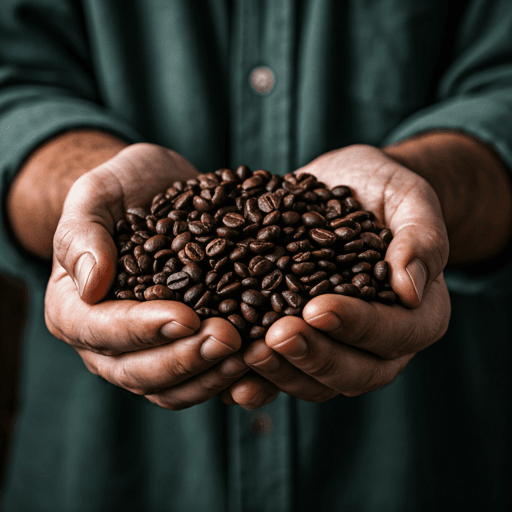
Natural process coffee is coffee that has been dried inside its whole fruit — the entire cherry laid out in the sun until it shrivels around the seed — before the dried husk is stripped away. It is widely regarded as the oldest way humans have ever prepared coffee, and it produces some of the most intensely fruity, berry-driven cups in the world. If a coffee has ever reminded you of blueberry jam, ripe strawberry, or a splash of red wine, there is a very good chance it was a natural.
What is natural process coffee?
Natural process coffee — also called the dry process — refers to a method of turning a fresh coffee cherry into a green, roastable seed without ever pulping or washing off the fruit. Instead of stripping the cherry immediately after harvest, producers dry the whole fruit intact, letting the sugary flesh slowly raisin around the bean. Only once the cherry is bone-dry is the brittle, papery husk hulled off in a mill to reveal the green coffee inside.
That single decision — to dry the seed inside its own fruit rather than clean it first — is what gives natural process coffee its reputation. The bean spends weeks in intimate contact with fermenting sugars, and it drinks in flavor the whole time. The result is a cup that tastes less like a clean, transparent tea and more like fruit itself.
Where the dry process comes from
Drying whole cherries is generally considered coffee's original processing method, and it traces back to the plant's birthplace. In Ethiopia, where coffee is thought to have first grown wild, and in neighboring Yemen across the Red Sea, growers dried cherries on rooftops, patios, and mats long before wet mills and water-hungry fermentation tanks existed. The method survived because it is simple, cheap, and forgiving of places with little water but plenty of sun.
Today the dry process remains dominant in exactly those conditions. It is the traditional style across much of Ethiopia — think of the famous naturals from the eastern highlands and from Yirgacheffe — and it is the backbone of coffee production in Brazil, where vast, sun-drenched farms make patio and raised-bed drying practical at enormous scale. Yemen, Harrar, and several other historically dry-farmed origins round out the map.
How natural process coffee is made, step by step
The dry process looks deceptively simple, but every stage carries risk. Because the sugary fruit stays on the bean for weeks, the whole batch is essentially a slow, open-air fermentation that the producer must steer carefully.
- Selective harvest. Naturals reward ripe fruit. The riper and sweeter the cherry, the more concentrated the fruity flavors it will pass into the seed, so careful picking matters more here than in almost any other method.
- Float-sorting. Freshly picked cherries are tipped into water. Ripe, dense fruit sinks; underripe, damaged, and insect-bored cherries float and are skimmed off. This float sort removes defects that would otherwise taint the whole drying batch.
- Drying on beds or patios. The sorted whole cherries are spread out to dry — on raised beds (often called African beds), on concrete or brick patios, or on tarps. Raised beds are prized in specialty coffee because air circulates underneath the fruit, giving more even drying.
- Raking and turning. Workers rake and turn the cherries many times a day for weeks. Turning prevents mold, stops the bottom layer from bruising or over-fermenting, and keeps drying uniform. Thin layers dry faster and more safely than deep piles.
- The long dry-down. Whole cherries typically take around three to six weeks to dry, far longer than washed coffee, because the moisture has to escape through the intact fruit. Producers dry the cherry down to roughly 10–12% internal moisture.
- Resting and hulling. Once dry, the cherries usually rest in storage to stabilize. Finally they go to a dry mill, where machines hull off the shriveled, hardened fruit and parchment in one pass to release the green bean.
The flavour signature: why naturals taste so fruity
The defining trait of natural process coffee is fruit — a lot of it. Because the bean ferments and dries inside the sugary cherry, it absorbs fruity, jammy, and wine-like character that a washed coffee simply never encounters. Cupped side by side, naturals read as sweeter, heavier, and wilder.
Typical descriptors include:
- Berry and stone fruit: blueberry, strawberry, blackberry, and ripe cherry are the classic natural notes, especially from Ethiopia.
- Tropical and jammy fruit: mango, pineapple, and cooked-fruit or "fruit leather" sweetness.
- Winey and boozy tones: a fermented, red-wine or even rum-soaked quality from the sugars breaking down during the long dry.
- Heavy body and low perceived acidity: naturals tend to feel syrupy and full in the mouth, with a rounder, softer acidity than the bright, citric snap of a washed coffee.
Brazilian naturals show a different, gentler face of the method — often nutty, chocolatey, and smooth rather than berry-loud — which is why they anchor so many espresso blends. The same dry process, applied to different varieties, altitudes, and drying discipline, can land anywhere from mellow cocoa to explosive fruit bomb.
Natural vs washed vs honey processing
The clearest way to understand natural process coffee is to contrast it with its siblings. In the washed process, all the fruit and sticky mucilage are removed before drying, so flavor comes almost entirely from the seed — clean, bright, and transparent. The honey (or pulped natural) process sits in between: the skin is removed but some sweet mucilage is left on the bean to dry, giving moderate body and fruit. Natural leaves everything on and delivers the boldest fruit of the three.
| Trait | Natural (dry) | Honey (pulped natural) | Washed (wet) |
|---|---|---|---|
| Fruit removed before drying? | None — whole cherry dries on the bean | Skin off, sticky mucilage left on | Skin and mucilage fully removed |
| Water needed | Very little | Little | A great deal |
| Typical flavour | Intense berry, tropical, winey, fermented sweetness | Balanced sweetness, moderate fruit | Clean, bright, floral, citric acidity |
| Body | Heavy, syrupy | Medium to full | Lighter, tea-like |
| Acidity (perceived) | Lower, rounder | Medium | Higher, crisper |
| Consistency / risk | Higher risk, more variable | Moderate | Most consistent, cleanest |
The trade-offs of the dry process
Naturals are thrilling but demanding. Leaving fruit on the bean for weeks is essentially a controlled fermentation, and the line between gorgeous and spoiled is thin. The main challenges are:
- Over-fermentation and off-flavors. Push the process too far and "wild and fruity" tips into boozy, medicinal, or barnyard funk. Some drinkers love a little of this; too much is a defect.
- Mold and spoilage. Thick piles, humidity, or rain during the long dry-down can cause mold and rot, ruining a lot. This is why constant raking and thin layers matter.
- Unevenness. Cherries dry at different rates, so a batch can finish inconsistently unless it is turned diligently.
- Sun, space, and labour. The method needs reliably dry, sunny weather, large drying areas, and a lot of hands to turn the fruit — which is why it thrives in arid highlands and struggles in wet climates.
When those conditions and that labour come together, the dry process yields extraordinary coffee for very little water. When they do not, the same method produces some of coffee's most notorious defects. That high ceiling and low floor is exactly what makes naturals polarizing.
Naturals worth knowing
Two Ethiopian names anchor the natural tradition. Harrar coffee, dry-farmed and sun-dried in the eastern highlands, is a textbook heavyweight natural — big-bodied, wine-like, and often carrying blueberry and dried-fruit notes that made it legendary long before the specialty era. Yirgacheffe naturals, from the south, lean brighter and more floral but still deliver that unmistakable berry sweetness. Both showcase how much the dry process can amplify a region's character.
Brazilian coffee represents the other pole: naturals produced at scale, generally nutty, chocolatey, and smooth, forming the sweet backbone of countless espresso blends. Between these poles sit fruit-forward naturals from Yemen, Central America, and beyond, plus a wave of modern "extended fermentation" naturals engineered for even louder tropical intensity. The variety of results speaks to how much the same broad method depends on the cherry, the climate, and the producer's hand. For more on how seed genetics interact with processing, see our guide to coffee bean varieties.
Brewing and buying naturals
Because natural process coffee is sweet, fruity, and low in perceived acidity, it is forgiving and rewarding to brew. A few pointers:
- Filter and pour-over let the fruit sing — expect an almost juice-like cup, so grind a touch coarser and avoid over-extracting, which can drag out the fermented edge.
- Espresso from naturals can be spectacular but temperamental; the fruit intensity and heavier body reward slightly lower brew temperatures.
- Roast level matters. Lighter roasts preserve the berry and floral top notes; medium roasts trade some fruit for cocoa and roundness. Very dark roasting buries the fruit that makes a natural worth seeking out.
- What to look for on the bag. Terms like "natural," "dry process," "sun-dried," or "whole cherry" all point to this method. Freshness helps: naturals can lose their most volatile fruit aromatics faster than washed coffees, so choose recently roasted bags and drink within a few weeks.
The editorial takeaway
Natural process coffee is where coffee began and, in many ways, where it is most alive. It is not automatically "better" than the crisp, transparent washed style — the two are different pleasures, and the best coffee people happily keep both on the shelf. What the dry process offers is a direct line to the fruit itself: berry, wine, and jam pulled straight from a sun-dried cherry, at the cost of a little consistency and a lot of careful labour. Understand that trade-off and the "natural" label stops being a buzzword and becomes a genuinely useful clue about what will be in your cup.