
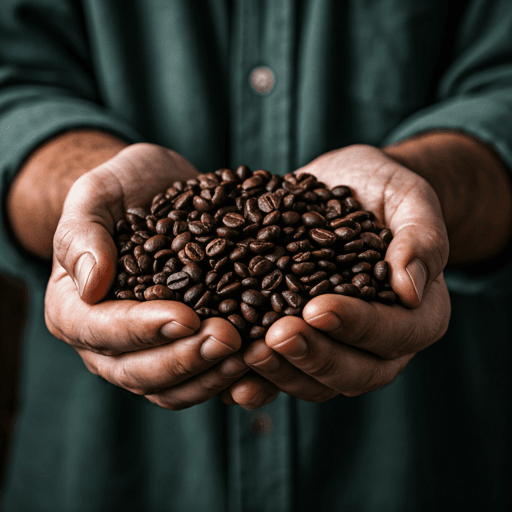
Brazilian coffee comes from the world's largest coffee producer and exporter by a wide margin, a single country that grows roughly a third of all the coffee on earth. The classic Brazil cup is low in acidity, full-bodied, and nutty and chocolatey with sweet caramel notes, which is exactly why these beans form the backbone of so many espresso blends and make such a forgiving everyday brew. This guide explains the main growing regions, the flavor, how the beans are processed, and what a label like "Brazilian Santos" actually means.
Why Brazilian coffee rules the world
Brazil has led global coffee production for over 150 years, and the scale is hard to overstate: in a typical year it accounts for around a third of the world's beans and is the top exporter on the planet. No other origin comes close on volume. That dominance is partly geography and partly method. Much of the growing land sits on vast, gently rolling plateaus rather than steep mountainsides, so farms can be enormous and largely flat. That flatness allows mechanized harvesting, where machines strip the cherries from the trees instead of teams hand-picking them bean by bean. Combine huge estates, a favorable climate, and mechanization, and you get the cost and consistency that make Brazil the default base for blends and instant coffee around the globe.
Because Brazil supplies so much of the market, its harvest also moves prices. A frost or a drought in the Brazilian growing belt can ripple through coffee costs worldwide. If you are curious how green beans become the cup in front of you, our explainer on what coffee beans are covers the basics first.
The main Brazilian coffee regions
Brazil is a continent-sized country, and its coffee comes from several distinct states. The growing belt sits mostly in the southeast and south, where altitude, dry harvest weather, and rich soil line up well for coffee.
Minas Gerais
Minas Gerais is the heartland, producing close to half of all Brazilian coffee. It splits into well-known sub-regions: Sul de Minas (South of Minas), a large producer of balanced, sweet arabica grown on countless small and mid-size farms; Cerrado Mineiro, a high savanna plateau with clearly defined wet and dry seasons that was Brazil's first region to earn a protected designation of origin; and Chapada de Minas, a newer mechanized area. Together these give the smooth, chocolatey, medium-bodied profile most people picture when they think of Brazil.
Sao Paulo (Mogiana)
The Mogiana region straddles the border of Sao Paulo and Minas Gerais, named for an old railway that once carried the coffee out. Its hilly terrain, mild temperatures, and good altitude tend to produce especially sweet, balanced, full-bodied cups that are prized for blending.
Bahia
Bahia, in the northeast, is a more modern, technology-driven origin. Some areas use irrigation and precision agriculture to grow clean, consistent arabica, including a number of high-scoring specialty lots.
Espirito Santo
Espirito Santo is Brazil's robusta stronghold. The lower, warmer coastal zones here grow most of the country's conilon (the local name for robusta), the hardy bean used for blends and instant coffee, while the cooler highlands grow arabica.
| Region | Mostly grows | What it is known for |
|---|---|---|
| Sul de Minas (Minas Gerais) | Arabica | Balanced, sweet, chocolatey; the classic Brazil profile |
| Cerrado Mineiro (Minas Gerais) | Arabica | Defined dry season, protected origin, clean and full-bodied |
| Mogiana (Sao Paulo) | Arabica | Very sweet, balanced, popular in blends |
| Bahia | Arabica | Irrigated, modern farms; consistent and specialty lots |
| Espirito Santo | Conilon (robusta) + some arabica | Backbone of blends and instant coffee |
The Brazilian coffee flavor profile
If there is one signature taste, it is comfort. A typical Brazil coffee is low in acidity, full in body, and sweet, leaning on nutty, chocolatey, and caramel notes rather than the bright, fruity, floral character you find in many East African or Central American origins. Think roasted peanut, milk chocolate, brown sugar, and a smooth finish.
That profile is the reason Brazilian beans are everywhere in espresso. Their heavy body and gentle acidity build a thick, sweet crema and a rounded base that other, brighter origins can be blended on top of. It also makes Brazilian coffee a forgiving, easygoing daily drinker that takes milk well and rarely tastes harsh, even at a darker roast. To understand where this sits among the world's beans, our guide to arabica vs robusta coffee beans is a useful companion.
Processing: natural and pulped-natural
How a coffee is processed shapes its flavor as much as where it grew, and Brazil's dry harvest climate favors methods that build sweetness and body.
- Natural (dry) process: the whole cherry is dried in the sun with the fruit still on the bean. This is Brazil's traditional method, helped by reliable dry weather at harvest, and it adds sweetness, body, and those heavy chocolate-and-nut notes.
- Pulped natural (semi-washed): the skin is removed but some of the sticky fruit (mucilage) is left on during drying. This Brazilian-pioneered style keeps much of the sweetness while making the cup a little cleaner and more consistent.
- Washed: less common in Brazil but used for some specialty lots, giving a cleaner, slightly brighter cup.
Arabica vs conilon: Brazil grows both
Brazil is one of the few origins that grows large amounts of both main coffee species. Arabica makes up the majority of the crop and supplies everything from everyday blends to award-winning specialty microlots. Conilon, the Brazilian name for robusta, is grown mostly in the warmer lowlands of Espirito Santo and the north; it is hardier, higher in caffeine, and heavier-bodied, which makes it valuable for blends and instant coffee. This two-species output is a big part of why Brazil can feed both the commodity market and the specialty scene at once.
What "Santos coffee" means on a bag
You will often see beans sold as Brazilian Santos or simply Santos coffee, and it confuses a lot of people. Santos is not a growing region. It is the port of Santos near Sao Paulo, historically the world's biggest coffee-shipping harbor, through which a huge share of Brazil's beans leaves the country. Over time "Santos" became a trade and grading name for the green coffee exported through it, much of it arabica from Sao Paulo and southern Minas Gerais. So "Brazilian Santos" tells you roughly where the coffee shipped from and a general quality tier, not a single farm or estate. Higher grades are labeled by screen size and defect count, such as Santos 17/18, but the name is a historic shorthand more than a precise origin.
From commodity to microlot: the quality range
Because Brazil produces such enormous volume, its quality spans the entire spectrum. At one end sits commodity-grade coffee destined for supermarket blends and instant jars. At the other end, dedicated farms produce traceable single-estate beans and competition-winning microlots that score highly and sell at a premium. The same country gives you the dependable, affordable base in your morning blend and some of the cleanest, sweetest specialty naturals you can buy.
If you want to explore that higher end, read our explainer on what specialty coffee is, and our overview of what coffee roasters do to see how a roaster turns these green beans into the cup you brew. Brazil tends to be sold by quality grade, screen size, and process rather than by a romantic farm story, though that is changing fast as more estates market their own lots.
How to read and enjoy Brazilian coffee
When you are choosing a Brazil coffee, a few simple cues help:
- Process tells you the style. A natural or pulped-natural Brazil will lean sweet, nutty, and chocolatey; a washed lot will taste a touch cleaner and brighter.
- Roast matters. Brazilian beans take medium and medium-dark roasts gracefully, which is why they shine in espresso and milk drinks.
- Region or grade hints at quality. A named region (Cerrado Mineiro, Mogiana) or a specialty score signals more care than a generic "Santos" commodity label.
Brazilian coffee is the quiet workhorse behind a remarkable amount of what the world drinks, from the blend in a corner cafe's espresso to the instant granules in a pantry. Once you recognize that smooth, chocolatey, low-acid signature, you will start spotting Brazil's fingerprint in cups everywhere. From here, a natural next step is to compare it with other great origins and dig into how beans are graded and roasted.