
Yirgacheffe coffee is the flagship washed coffee of southern Ethiopia — a delicate, floral, tea-like cup grown high in the Gedeo Zone and celebrated worldwide for its jasmine perfume, bergamot-and-lemon citrus, and gleaming clarity. Among specialty roasters the name has become shorthand for a certain kind of elegance: bright, aromatic, and unmistakably alive in the cup. If you have ever tasted a coffee that reminded you more of Earl Grey tea or blossom than of a heavy morning brew, there is a good chance it came from here.
What is Yirgacheffe coffee?
Yirgacheffe coffee is coffee grown in and around the Yirgacheffe district of the Gedeo Zone, a highland pocket of southern Ethiopia sitting roughly 1,700 to 2,200 metres above sea level. It is defined by three things working together: extreme altitude, indigenous heirloom coffee varieties, and — most famously — washed (wet) processing, which strips the cherry pulp away before drying to leave a cup that is clean, crisp, and floral rather than jammy and fruit-heavy.
Although the district gives the coffee its name, Yirgacheffe is not really a single farm or estate. It is a mosaic of tens of thousands of smallholders, many tending "garden coffee" among their food crops, who deliver ripe cherry to communal washing stations. Those stations do the processing and the sorting, and it is their reputations — Konga, Idido, Kochere, Chelchele, Aricha, Halo — that experienced buyers learn to recognise. Yirgacheffe is one of the most sought-after names in the world of Ethiopian coffee, and a benchmark example of a distinctive single origin.
Where is Yirgacheffe? The Gedeo Zone and the Sidamo name
Yirgacheffe is a woreda — an administrative district — within the Gedeo Zone of southern Ethiopia. The broader growing area is often subdivided into a handful of neighbouring woredas whose names appear on bags of green coffee: Wenago (Wonago), Kochere, Gedeb, Bule and Dilla Zuria among them. The land is a patchwork of steep, forested hillsides and small holdings farmed by the Gedeo people, who have cultivated coffee here for generations.
Historically, Yirgacheffe lots were not marketed under their own name at all. The district falls inside the larger area long known to exporters as Sidamo (today usually spelled Sidama), and for a long time its coffee was simply sold as Sidamo. As the specialty market matured, buyers began noticing a consistently brighter, cleaner, more aromatic profile coming from this one corner and started segregating it. The coffee was so distinctive that Yirgacheffe eventually earned its own identity on the world market — a rare case of a small district becoming more famous than the region that contains it.
Terroir: why altitude matters here
The single biggest reason Yirgacheffe tastes the way it does is elevation. At 1,700 to 2,200 metres, these are among the highest coffee farms on Earth. Cooler air and thinner atmosphere slow the ripening of the cherry, so the fruit hangs on the branch longer and accumulates more sugars and aromatic precursors before harvest. That slow development is what concentrates the delicate florals and crisp acidity you find in the cup.
Add deep, fertile volcanic soils, generous rainfall, and shade from surrounding forest, and you have close to ideal conditions for high-grown Arabica. Terroir alone does not make a great coffee — processing and sorting matter enormously — but Yirgacheffe's terroir gives the washing stations exceptional raw material to work with.
Heirloom varieties
You will rarely see a single named variety on a bag of Yirgacheffe. Instead it is usually labelled "Ethiopian heirloom," a catch-all for the vast, still-largely-uncatalogued genetic diversity of indigenous landrace varieties that grow here. Ethiopia is widely regarded as the botanical birthplace of Arabica, and this region carries a genetic richness found nowhere else on the planet — a jumble of locally adapted forest types alongside selections developed and distributed by Ethiopian research stations.
That diversity is a large part of the flavour story. Where a Central American origin might be built on a handful of named cultivars, a single Yirgacheffe washing station may blend cherries from dozens of distinct wild and semi-wild types, each contributing to the layered, perfumed complexity in the cup.
Washed processing: how the clean cup is made
The defining choice in Yirgacheffe is washed (wet) processing. In this method the skin and fruit are removed from the bean before it is dried, so the flavours you taste come from the seed itself rather than from sugars fermenting in the attached fruit. The result is transparency: high clarity, clean acidity, and those signature florals with nothing muddying them.
| Step | What happens |
|---|---|
| Harvest | Ripe red cherries are handpicked by smallholders and delivered to a local washing station. |
| Pulping | The outer skin and most of the fruit flesh are mechanically stripped away. |
| Fermentation | The beans, still coated in sticky mucilage inside their parchment, ferment in tanks — often for a day or two, though times vary by station — to break down the remaining fruit sugars. |
| Washing & grading | Beans are rinsed clean in channels and sorted by density, floating off the lighter, lower-quality seeds. |
| Drying | Parchment coffee is dried slowly on raised African beds in the sun, often for a week or two, and hand-sorted for defects. |
That slow, careful drying on raised beds — where air circulates around the beans — plus repeated hand-sorting is what earns the top lots their reputation for a spotless, luminous cup.
The signature flavour of Yirgacheffe coffee
A well-made washed Yirgacheffe is one of the most recognisable coffees in the world. Expect a lifted, floral aroma — jasmine and blossom are the classic descriptors — over a bright, citrus-driven acidity that often reads as lemon or, most characteristically, bergamot, the same citrus that scents Earl Grey. The body is light and silky, frequently described as tea-like, with a clean finish and hints of stone fruit or sweet melon underneath.
Because the profile is so delicate, roasters usually take it light. A lighter roast preserves the florals and the bright acidity; push it too dark and you bury exactly the qualities people prize. This is not a bold, heavy, chocolatey coffee — it is an aromatic, elegant one, and it rewards attention.
Washed Yirgacheffe vs natural-processed Ethiopian coffee
Yirgacheffe's fame rests on the washed style, but Ethiopia also produces superb natural-process coffees — including naturals from Yirgacheffe itself, and the classic dry-processed lots of Harrar in the country's east. In a natural, the whole cherry is dried intact and the fruit's sugars steep into the bean, producing a very different cup. The contrast is one of the most instructive comparisons in coffee.
| Washed Yirgacheffe | Natural-processed Ethiopian | |
|---|---|---|
| Processing | Fruit removed before drying | Whole cherry dried intact |
| Cup clarity | Clean, transparent, precise | Fruity, heavier, more rustic |
| Dominant notes | Jasmine, bergamot, lemon, tea-like | Blueberry, strawberry, wine-like |
| Acidity | Bright, crisp, citric | Rounder, jammier |
| Body | Light and silky | Fuller and syrupy |
Neither is "better" — they are two expressions of similar heirloom material. Washed shows off terroir and variety with almost forensic clarity; natural amplifies fruit and sweetness. Tasting a washed and a natural Yirgacheffe side by side is the fastest way to understand what processing actually does to a coffee.
Grading: G1 and G2
Ethiopian coffee is graded largely by defect count, and you will constantly see Yirgacheffe sold as Grade 1 (G1) or Grade 2 (G2). G1 is the top tier, permitting only a very small number of defects per sample; G2 allows somewhat more. In practice both grades can deliver a lovely cup — G2 washed Yirgacheffe is a workhorse of specialty menus — but G1 lots are the cleanest and most intensely aromatic, and they command the most attention from buyers.
Smallholders and washing stations
It is worth remembering how this coffee actually reaches you. Yirgacheffe is overwhelmingly a smallholder origin: enormous numbers of families, many farming only a couple of hectares of "garden coffee" interplanted with food crops, pick their cherry and carry it to a nearby wet mill or cooperative washing station. The station consolidates cherry from hundreds of growers, processes it to a consistent standard, and represents the quality of a whole community in a single lot. When you see a station name — Konga, Idido, Chelchele, Aricha — you are effectively seeing the fingerprint of that collective effort.
Buying and brewing Yirgacheffe
When choosing a Yirgacheffe, look for a bag that names the processing method (washed, if you want the classic profile), the grade (G1 or G2), and ideally a specific washing station or woreda. A light-to-medium roast level is the safest bet for tasting what makes the origin special. Freshness matters too — those volatile florals fade, so buy coffee with a recent roast date.
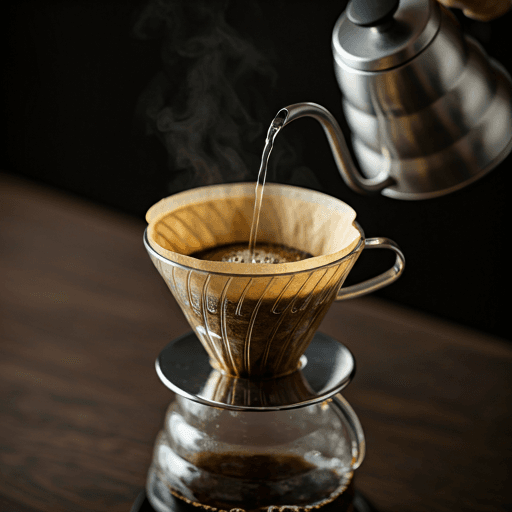
For brewing, filter methods flatter Yirgacheffe most. A pour-over or drip brew showcases the aromatics, the citrus acidity, and the tea-like body far better than a heavy espresso extraction, though a light-roast Yirgacheffe espresso can be a striking, jasmine-scented shot in the right hands. Grind medium-fine for pour-over, use water just off the boil, and taste as it cools — the florals often bloom as the temperature drops.
The editorial takeaway
Yirgacheffe endures as a reference point because it makes an abstract idea tangible: that a coffee can taste of flowers and citrus and tea, and that where and how a bean is grown and processed shows up unmistakably in the cup. It is a small district that taught the specialty world what clarity means. Whether you are new to origin coffee or a seasoned taster, a clean washed Yirgacheffe alongside a fruit-forward natural remains one of the most rewarding — and delicious — lessons you can pour.