
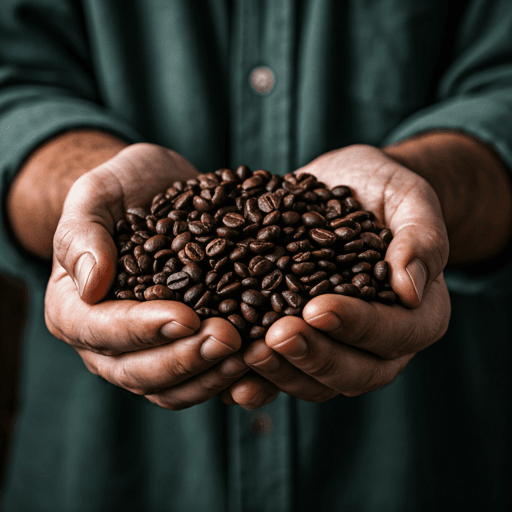
Harrar coffee is a bold, dry-processed Arabica grown by smallholders in the eastern highlands of Ethiopia, around the ancient walled city of Harar (also spelled Harrar or Harari). It is one of the world's oldest coffees, sun-dried inside its whole cherry, and prized for a wild, winey fruitiness that often leans toward jammy blueberry, warm spice, and deep chocolate. If Ethiopia is coffee's birthplace, Harrar is one of its most untamed and unmistakable expressions.
What is Harrar coffee?
Harrar coffee is a natural (dry-processed) Arabica from the Hararghe zones of eastern Ethiopia, cultivated on small plots in the highlands surrounding the historic city of Harar. Almost all of it is grown by smallholder farmers working a few hectares or less, tending indigenous heirloom plants by hand with no irrigation and no heavy machinery. The result is a coffee with an outsized reputation: heavy in body, syrupy in texture, and famous for a fermented, fruit-forward character that tastes more like a glass of berry wine than a conventional cup.
The name carries real history. Long before coffee reached Europe, beans from this region were carried down to the Red Sea and shipped through the Yemeni port of Mokha, which is why old-fashioned trade names like "Moka Harar" still float around the specialty world. Harrar is widely regarded as one of Ethiopia's oldest known coffee-growing areas, with cultivation in these mountains often said to reach back centuries. For a broader picture of the country's regions and heirloom genetics, our guide to Ethiopian coffee is a useful companion.
The eastern highlands terroir
Harrar sits in a very different landscape from Ethiopia's greener southern origins. The eastern highlands are semi-arid, with a sharp split between wet and dry seasons and warm, sunny days that make open-air drying not just possible but traditional. Coffee here grows at roughly 1,400 to 2,000 meters above sea level (about 4,500 to 6,500 feet), and much of it qualifies as genuinely high-grown. At those elevations the cherries mature slowly, packing the beans with dense sugars and the concentrated fruit intensity that defines the origin.
Crucially, most Harrar is dry-farmed, meaning it relies on seasonal rains rather than irrigation. Combined with genetically diverse landrace plants and generations of hand cultivation, this gives Harrar an old-world, almost feral quality. There is little of the standardized, uniform processing you find in newer washing-station origins. The character in the cup is very much a product of place, climate, and time-tested methods that have barely changed in generations.
Natural process: sun-drying the whole cherry
The single most important thing to understand about Harrar coffee is its processing. It is a natural (dry) process coffee, which means the whole cherry, fruit and all, is dried in the sun rather than being pulped and washed first. Harvested cherries are spread out on raised beds or patios and turned regularly, drying for weeks under the highland sun. As the fruit slowly dessicates around the seed, sugars and fermenting fruit character migrate inward and steep the bean in flavor.
This method is labor-intensive and weather-dependent, but it is exactly what produces Harrar's signature. The extended contact between drying fruit and bean is where the wild blueberry, wine, and boozy-berry notes come from. Naturals are inherently a little unpredictable and can carry a "funky," fermented edge, which is part of the appeal for fans and part of the reason Harrar polarizes. Done well, it is one of the most vivid fruit expressions in all of coffee.
Longberry, shortberry, and Mocha grades
Harrar is graded largely by bean size and appearance rather than by a single quality score, and the traditional names show up constantly on bags:
| Grade | Bean character | Cup tendency |
|---|---|---|
| Harrar Longberry | Largest, most uniform beans; often considered the premium grade | The most pronounced fruity, winey, blueberry-forward profile |
| Harrar Shortberry | Smaller, denser beans | Heavy-bodied, spicy, fragrant, and often deeply chocolatey |
| Mocha / Moka (peaberry) | Single rounded seed rather than two flat halves | Concentrated, lively, intensely aromatic |
Longberry is the name most buyers chase, valued for its size and its full-throttle fruit. Shortberry trades a little of that fruit brightness for body and spice. The Mocha grade is essentially the region's peaberry, where the cherry produces one round bean instead of the usual pair, prized for a punchy, concentrated cup. None of these are different plants; they are sortings of the same harvest.
The flavour of Harrar coffee
Harrar's flavor is where its reputation is made. Expect a heavy, syrupy body and a low-to-medium, wine-like acidity rather than the bright citric snap of a washed coffee. The dominant note is wild fruit: blueberry above all, often described as blueberry jam, alongside blackberry, strawberry, cherry, and dried apricot. Underneath the fruit runs a spine of spice, commonly cinnamon and cardamom, plus a rich seam of dark chocolate or cocoa that gives the cup its depth.
Because it is a natural, Harrar can also carry a fermented, "winey," sometimes slightly boozy or earthy edge. This is not a flaw so much as the origin's fingerprint, and it is precisely why so many drinkers describe Harrar as tasting wild or untamed compared with cleaner, more polished coffees. It is worth noting that veteran buyers say the fabled blueberry intensity varies year to year and lot to lot, so the very best Harrar is not always easy to find; when it lands, though, it rewards a curious palate and a willingness to embrace fruit that borders on the eccentric.
Harrar coffee vs washed Yirgacheffe
The clearest way to understand Harrar is to set it beside its opposite number within Ethiopia. Yirgacheffe from the south is classically washed, meaning the fruit is removed before drying, and it is the reference point for clean, delicate, floral coffee. Harrar is the natural-process counterweight: a fruit bomb where Yirgacheffe is a bouquet.
| Trait | Harrar (natural) | Washed Yirgacheffe |
|---|---|---|
| Region | Eastern highlands | Southern highlands (Gedeo) |
| Processing | Dry / natural, whole cherry sun-dried | Washed, fruit removed before drying |
| Body | Heavy, syrupy | Light to medium, tea-like |
| Acidity | Soft, winey | Bright, clean, citric |
| Dominant notes | Blueberry, wine, spice, dark chocolate | Jasmine, bergamot, lemon, florals |
| Overall impression | Wild, jammy, bold | Elegant, crisp, aromatic |
Both come from the same country and often the same heirloom genetics, which is a neat lesson in how much processing shapes the final cup. If you want to feel the difference between natural and washed coffee in a single side-by-side, a Harrar and a Yirgacheffe is one of the best comparisons you can brew.
Brewing Harrar coffee
Harrar is versatile, but it shines when you let its body and fruit lead. A medium roast keeps the blueberry and wine notes intact; push too dark and you trade fruit for generic roastiness. As a pour-over or drip coffee it delivers a juicy, jammy cup, while in a French press its heavy body turns almost velvety. Many drinkers love Harrar in espresso and as the backbone of a mocha-style drink, where its natural chocolate and berry depth do a lot of the work. Because naturals can vary, taste as you dial in and adjust grind and dose to tame or emphasize the fruit-forward edge.
What to look for when buying
Look for the words "natural" or "dry-processed" and a named grade such as Longberry, Shortberry, or Mocha, which tells you what you are getting. Freshness matters more than usual here: because naturals carry so much fruit character, stale Harrar can turn flat or muddled quickly, so favor recently roasted beans with a visible roast date. A little roughness and rusticity is normal and expected for the style, but heavy fermented, sour, or moldy off-notes are not. As a single-origin coffee, Harrar is best appreciated on its own so its personality comes through undiluted.
The takeaway on Harrar coffee
Harrar is one of coffee's great originals: an ancient, dry-farmed, naturally processed bean from the eastern Ethiopian highlands that tastes unlike anywhere else. Its wild blueberry, winey depth, spice, and heavy body make it a coffee that people either fall hard for or find too eccentric, and that polarizing intensity is exactly the point. In an era of ever-cleaner, ever-more-standardized coffee, Harrar remains gloriously untamed, a living link to the traditions that first carried Ethiopian coffee out into the world. Brew a good one carefully and you are tasting centuries of history in the cup.