
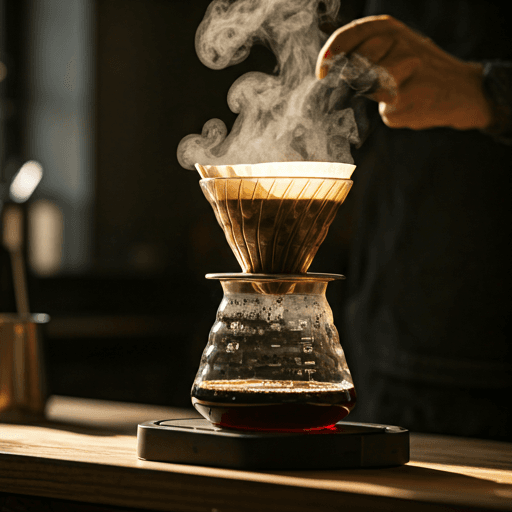
A kissaten is a traditional Japanese coffee shop: a calm, often retro establishment that serves carefully hand-brewed coffee, thick buttered toast, and simple sweets in an unhurried, wood-and-velvet setting. The word (喫茶店) literally means "tea-drinking shop," but by the mid-20th century the kissaten had become above all a place for coffee, brewed slowly by hand and drunk without any hurry. Think of it as the older, quieter cousin of the modern cafe, with a Showa-era mood all its own.
Below we unpack what a kissaten actually is, where it came from, what the room feels like, what to order, how it differs from a contemporary Japanese cafe, and why a new generation has fallen for these old rooms all over again.
What a kissaten is
A kissaten is a small, independent Japanese coffee shop built around slow-brewed coffee and a relaxed, sit-a-while atmosphere. The defining trait is the coffee itself: rather than pressing a button, a master (often the owner, working alone at the counter) brews cup by cup using a pour-over dripper, a cloth flannel filter, or a dramatic vacuum siphon. The house "blend" is the signature drink, and it is usually served strong, dark, and unrushed in a proper ceramic cup and saucer.
Just as important is what a kissaten is for. It is a place to linger. You buy one coffee and you are welcome to read, write, think, or simply sit for an hour. Many rooms are hushed by design, with newspapers on a rack, a low murmur of jazz or classical music, and an owner who treats each cup as a small craft. This is a distinctly different idea from grabbing a coffee to go, and it sits at the heart of why the kissaten still matters. For the wider Japanese coffee story, from third-wave pour-over bars to convenience-store cans, see our Japanese coffee guide; for the general idea of a cafe as a social space, see what is a cafe.
A short history of the kissaten
Kissaten began appearing in Japan in the early 20th century, as an alternative to the more Western, French-style cafes of the era. Cafe Paulista, opened in Tokyo's Ginza district in 1911 and still trading today, is often called Japan's oldest surviving coffee house of this kind, and it helped popularize the idea of a public room devoted to Brazilian coffee. Over the following decades the format spread and settled into its recognizable form.
The golden age came during the Showa era (1926 to 1989). Kissaten multiplied through the postwar decades and became fixtures of daily life, at their peak numbering well over 100,000 shops nationwide (by some counts topping 150,000 in the 1970s). They doubled as neutral meeting rooms, quiet offices, listening bars, and second living rooms. Specialist variants appeared, too: jazz kissa built around serious record collections and high-end speakers, meikyoku kissa devoted to classical music, and manga kissa stacked with comics to read. The city of Nagoya is often credited with turning the "morning service" set into a regional institution, and that habit shaped kissaten culture far beyond the region.
The atmosphere: wood, velvet, and quiet
Step into a classic kissaten and the decor tells you the story. Expect dark polished wood, low lighting, and deep upholstered chairs, sometimes in worn red or green velvet. Older shops carry the patina of decades: hand-written menus, a hush that borders on library-quiet, and interiors that were designed in the smoking era, so a faint retro heaviness is part of the character. Background music is chosen with care rather than piped in at random, and in the dedicated jazz and classical kissa the sound system is the point of the room.
The unwritten etiquette matches the setting. You are not rushed, but you are expected to keep your voice down and let the space stay calm. Conversation is fine; a loud phone call is not. The whole experience is deliberately analog and slow, an antidote to the fast, standing-room coffee bar. If you want to understand how that contrasts with the counter-service coffee bar model, our explainer on what is a coffee bar is a useful companion read.
What you order at a kissaten
The menu is short, comforting, and reassuringly consistent from shop to shop. Coffee anchors it, and a handful of nostalgic Western-influenced dishes fill out the rest.
- Blend coffee (burendo): the house drip or siphon coffee, the default order and the shop's calling card. It arrives strong and hot, with milk and sugar on the side.
- Morning service (moningu): a weekday-morning deal where a cup of coffee also gets you a light breakfast, classically thick-cut buttered toast with a boiled egg, and sometimes a small salad or jam. It is the friendliest, most famous kissaten ritual.
- Pizza toast and sandwiches: simple, hearty savory plates, including the thick "shokupan" milk-bread toast the kissaten is known for.
- Napolitan: a retro Japanese spaghetti dish, ketchup-based with sausage, peppers, and onion, invented in postwar Japan and a kissaten mainstay.
- Cream soda and floats: a bright green (melon-flavored) soda topped with a scoop of vanilla ice cream, an iconic, photogenic kissaten sweet.
- Pudding (purin): a firm custard caramel pudding, often served retro-style with a swirl of cream and a cherry.
None of this is fussy or expensive-feeling; the appeal is warmth and familiarity, the same plates your grandparents might have ordered, served exactly as they always were.
Kissaten vs a modern Japanese cafe
In everyday Japanese, older sit-and-stay coffee houses are the kissaten (sometimes called a kohi-ten, a "coffee shop"), while newer, Western-style spots are simply called a "kafe" (cafe). They overlap, but the mood, service, and pace are genuinely different. This decoder table sums up the split.
| Feature | Kissaten (traditional) | Modern kafe (cafe) |
|---|---|---|
| Era and mood | Showa-era, retro, hushed | Contemporary, bright, casual |
| Coffee style | Hand drip, cloth filter, or siphon; house blend | Espresso drinks, single-origin pour-over, latte art |
| Service | Owner-brewed, cup by cup, table service | Counter order, often self-serve |
| Pace | Linger for an hour or more | Quick, or grab-and-go |
| Food | Toast sets, napolitan, pudding, cream soda | Pastries, brunch plates, seasonal specials |
| Music and decor | Jazz or classical, wood and velvet | Playlists, minimalist or trend-led interiors |
| Wi-Fi and laptops | Often none, and not the point | Common, laptop-friendly |
Neither is "better." A kafe is where you meet friends for a flat white and photos; a kissaten is where you disappear into a corner with a book and a strong blend. Many people who love one grow to love the other, and plenty of newer shops deliberately blend the two moods.
Decline, and a quiet revival
The number of kissaten has fallen steadily since the peak. Rising rents, aging owners with no successor, the arrival of international coffee chains, and the sheer convenience of canned and convenience-store coffee all thinned their ranks over the past few decades. Many beloved shops close simply because the master retires and no one takes over the counter.
But the story does not end there. Younger customers have rediscovered the kissaten, drawn to exactly the things that once seemed old-fashioned: the analog calm, the hand-brewed coffee, the retro cream soda and velvet chairs, and the escape from screens. "Junkissa" (pure kissaten, the food-and-coffee kind without alcohol) have become a genre of their own on social media, and a wave of new shops now open in deliberate Showa-retro style. The tradition is smaller than it was, but it is far from finished.
The takeaway
A kissaten is Japan's slow-coffee institution: a hand-brewed cup, a plate of toast, a quiet retro room, and permission to sit as long as you like. It is less a place to buy coffee than a place to spend time, and that is exactly why it endures. If this has you curious about how coffee-house rituals differ from country to country, wander on to our look at coffee culture around the world.