
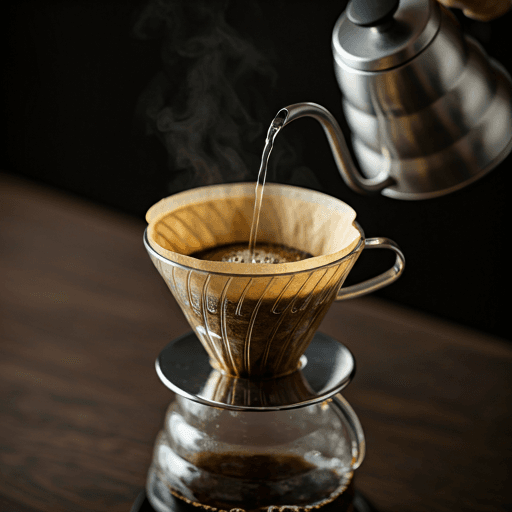
Japanese coffee is less a single bean origin than a distinctive coffee culture, one built on patience, precision and quiet ritual. Japan grows very little coffee of its own, yet it has shaped how the rest of the world brews: the old-fashioned kissaten cafe, meticulous hand pour-over, theatrical siphon brewing, Kyoto-style slow cold drip, and one of the planet's biggest canned and vending-machine coffee habits. This guide walks through each style and where you meet it.
What makes Japanese coffee distinctive
When people talk about Japanese coffee, they usually mean an approach rather than a place on a map. Coffee arrived in Japan through Dutch traders centuries ago and became a fixture in the twentieth century, and along the way the country developed a reputation for craftsmanship: careful roasting, exact water temperatures, unhurried service, and equipment engineered to a fine tolerance. The result is a coffee scene that runs from hushed, wood-panelled cafes to hyper-convenient cans pulled warm from a machine on a street corner. Both extremes take coffee seriously in their own way.
Japanese coffee culture also loves the single, perfected cup. Where some traditions favor big carafes and refills, the Japanese ideal is often one attentive brew, poured slowly, served with a small sweet and a glass of water. That mindset quietly influenced the global specialty movement, which borrowed both the tools and the ceremony.
Styles at a glance
| Style | What it is | Where you meet it |
|---|---|---|
| Kissaten | Traditional coffee house; hand-brewed cups, calm service, retro decor | Older neighborhoods and back streets |
| Pour-over (dripper) | Precise hand drip through a cone or flat-bottom filter | Specialty cafes and home brewers worldwide |
| Siphon (vacuum) | Two-chamber vacuum brew, full-bodied and theatrical | Classic kissaten and dedicated coffee bars |
| Kyoto-style cold drip | Ice water dripped over grounds for hours in a tall tower | Specialty shops, summer menus |
| Canned coffee | Ready-to-drink, sold hot or cold | Vending machines everywhere |
| Konbini coffee | Fresh, self-serve drip by the cup | Convenience stores |
The kissaten: Japan's traditional coffee house
The kissaten (literally a "tea-drinking shop," though it became coffee's home) is the soul of old-school Japanese coffee culture. These cafes flourished through the twentieth century as retreats for writers, students and office workers, with dim lighting, dark wood, worn upholstery and often a soundtrack of jazz or classical records. At their peak in the postwar decades there were tens of thousands of them, and Tokyo alone counted many thousands.
A kissaten is defined less by a menu than by an atmosphere. The master, or tenshu, may brew each cup by hand at an unhurried pace, and the point is to sit, slow down and stay a while. Many specialize: a pour-over house, a siphon bar, or a spot known for its thick, silky "kissaten coffee" served in a heavy cup. Food tends to be simple and nostalgic, think a soft pudding, a thick slice of toast, or the fluffy egg sandwich. If you want to understand where Japan's reverence for a careful cup comes from, the kissaten is the starting point.
Precision brewing: Japanese pour over coffee and the siphon
Two of Japan's biggest gifts to the coffee world are tools. The Hario V60, a conical dripper with a spiral-ribbed interior and a single large hole, and the Kalita Wave, a flat-bottomed dripper with a wavy filter, are both Japanese designs that became icons of the global specialty scene. Hario began as a glassmaker and introduced the V60 in the early 2000s; Kalita is a long-running Japanese equipment maker. When third-wave cafes abroad started chasing clarity and control, they reached for these Japanese drippers, and Japanese pour over coffee, poured in slow spirals from a gooseneck kettle, became the visual shorthand for craft coffee.
We keep the hands-on method for its own pages, so if you want to actually brew a cup this way, see our step-by-step guide on how to brew with a V60 and the deeper Hario V60 pour-over guide. Here the point is cultural: the patience of a careful pour is central to how Japan drinks coffee.
Then there is the siphon, or vacuum brewer, a dramatic two-chamber glass apparatus heated over a flame. Water rises into the upper chamber, mingles with the grounds, and is drawn back down through a filter as it cools, producing a clean, aromatic, full-bodied cup. The siphon arrived in Japan in the early twentieth century and was embraced by kissaten owners who wanted a repeatable, theatrical way to extract their prized beans one cup at a time. Watching a siphon bubble and settle at a coffee counter is one of the small pleasures of a classic Japanese cafe.
Kyoto-style slow cold drip
Japan also refined cold coffee into an art. Kyoto-style cold drip, sometimes just called Kyoto-style coffee, uses a tall glass tower in which ice-cold water drips over a bed of grounds one drop at a time, extracting slowly over several hours. The tower-like brewers were popular in Kyoto, which gave the method its name. Brewed cold rather than chilled after the fact, the result is smooth, syrupy, low in acidity and intensely aromatic, and it is often aged briefly before serving.
This is different from quick iced coffee poured over ice, and different again from big-batch immersion cold brew. If you want to try the slow-drip approach at home, our guide to how to make cold drip coffee covers the ratios and timing. In Japan it is a summer signature, poured neat over a single large cube.
Canned coffee, vending machines and konbini culture
At the opposite end of the spectrum sits the most everyday face of Japanese coffee: the can. Ready-to-drink canned coffee took off from the late 1960s, and a decade later vending machines that could dispense drinks both hot and cold made it a national habit. Today those machines stand on nearly every street, switching to warm cans in winter and cold ones in summer, and canned coffee is one of the most widely consumed forms of coffee in the country. Big ready-to-drink brands such as Suntory's Boss and Coca-Cola's Georgia are named here purely as familiar examples of the category, not as endorsements.
Convenience stores, the beloved konbini, added another layer. Chains installed self-serve machines that grind and drip a fresh cup on demand for pocket change, and the quality genuinely surprised people. Between the vending machine and the konbini counter, Japan made good, quick coffee available almost anywhere, at any hour, which is its own kind of coffee culture, sitting comfortably beside the slow ceremony of the kissaten.
Modern third-wave roasters
The newest chapter is Japan's own third-wave scene. Independent roasters and specialty cafes in Tokyo, Kyoto, Osaka and beyond now source single-origin beans, roast lighter, and brew with the same drippers the country exported to the world. In a neat loop, the meticulous pour-over ethos that Japan helped inspire abroad has come home as a thriving specialty movement, sitting alongside, not replacing, the kissaten and the vending machine. Many younger cafes deliberately blend the two moods: specialty beans and modern brew bars wrapped in the calm, detail-obsessed hospitality of the old coffee houses.
How it fits the wider coffee world
Japan's story is one thread in a much larger tapestry of rituals and regional habits. If you enjoyed this, our overview of coffee culture around the world sets it beside the espresso bars of Italy, the drip pots of the United States and the sweet, slow coffees of Southeast Asia. Japanese coffee's lesson is a simple one that travels well: whether it comes from a siphon at a counter or a warm can from a machine, coffee is worth a little care and a moment of attention.