
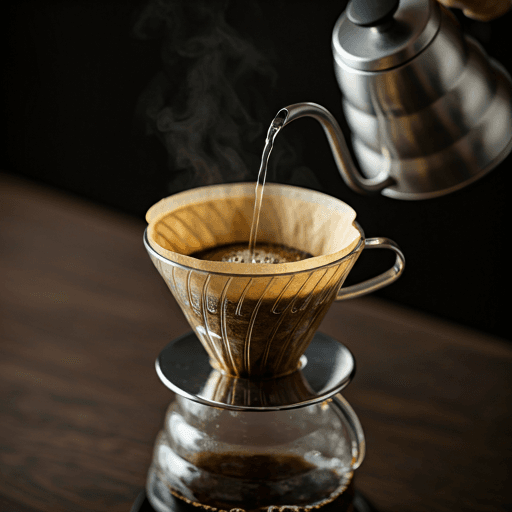
Cold drip coffee is made by slowly dripping cold water, one drop at a time, through a bed of ground coffee in a tall glass tower over several hours. The result is clean, bright and almost tea-like, with a clarity that sets it apart from immersion cold brew. Below is the practical method, the settings that actually change the cup, and how the Kyoto-style approach compares to a jug of cold brew. For the exact numbers to dial in, lean on our companion guide to the cold drip coffee ratio; here we focus on the how.
What is cold drip (Kyoto-style)?
Cold drip is a percolation method: cold water travels down through the grounds and is collected below, rather than sitting in the coffee the whole time. It is traditionally made in a Kyoto-style tower, a stacked glass rig named for the Japanese city where the slow-drip style became famous. A water chamber sits at the top, an adjustable valve controls the drip, water falls onto a bed of grounds in the middle, and the finished concentrate collects in a carafe at the bottom. Because water is only ever in brief contact with the coffee, kyoto cold drip coffee tastes remarkably clean, with delicate, tea-like notes and low perceived acidity.
What you need
- A cold drip tower, the stacked glass or steel dripper with an adjustable drip valve.
- Freshly roasted beans and a burr grinder set to a medium grind, roughly the texture of coarse sand or a standard drip-filter grind.
- Roughly 60-70 g of coffee per 500-700 ml of water (about a 1:8 to 1:11 ratio; adjust to taste).
- Cold, filtered water, plus ice if your tower's top chamber is designed to hold it.
- A paper or metal filter disc for the grounds chamber (some towers include one).
- Time. Plan for several hours of mostly unattended dripping.
How to Make Cold Drip Coffee, Step by Step
- Grind medium and weigh your dose. Aim for a medium grind and roughly 60-70 g of coffee per 500-700 ml of water. Too fine and the bed clogs and turns bitter; too coarse and the drip runs fast and thin. Fine-tune the exact amounts with the ratio guide linked above.
- Build the coffee bed. Place a filter disc in the middle chamber, add the grounds, level them gently, and set a second filter or a small paper round on top so the falling drops spread evenly instead of drilling a channel straight through.
- Pre-wet the grounds. Add a little water and let the whole bed dampen before you start. Even saturation is the single biggest factor in an even, balanced extraction.
- Fill the top chamber. Pour in cold or iced water. Ice in the reservoir slows the drip and keeps everything cold as it runs, which is part of the point.
- Set the drip rate. Open the valve to about one drop every 1-2 seconds, which is roughly 40-60 drops per minute. Watch it for a minute and adjust. This is the dial that most shapes the final flavour.
- Let it drip. Leave the cold drip tower to run for about 3-6 hours (some setups run 8-12 for a larger, stronger batch). Check the rate now and then, since it can speed up or slow down as the reservoir empties.
- Chill, rest and serve. When the top chamber empties, decant the concentrate, chill it, and let it settle for a few hours or overnight; the flavour rounds out noticeably as it rests. Serve neat over ice, or dilute with water or milk to taste.
Settings that change the cup
Cold drip is forgiving to start and rewarding to tune. Change one variable at a time and taste the difference.
| Variable | Typical setting | What changing it does |
|---|---|---|
| Grind size | Medium (coarse sand / drip grind) | Finer clogs the bed and over-extracts (bitter); coarser drips fast and tastes thin and watery. |
| Coffee dose | ~60-70 g per 500-700 ml | More coffee gives a stronger, richer concentrate; less gives a lighter, more tea-like cup. |
| Water | Cold, filtered, plus ice | Ice slows the drip and keeps it cold; filtered water tastes noticeably cleaner. |
| Drip rate | ~1 drop every 1-2 seconds (40-60/min) | Faster drips run weak and under-extracted; slower builds strength, but very slow can turn harsh. |
| Brew time | ~3-6 hours (up to 8-12) | Longer contact builds body and strength; watch for bitterness at the far end. |
| Serving | Neat over ice or diluted | The concentrate can be cut with water or milk; dilution softens strength without muddying flavour. |
Cold Drip vs Cold Brew: What Is the Difference?
The cold drip vs cold brew question comes down to percolation versus immersion. Cold drip passes water slowly through the grounds and takes just a few hours; immersion cold brew fully submerges the grounds and steeps them for 12-24 hours in the fridge or on the counter. They use different gear, different timing and taste different: cold drip tends to be cleaner, brighter and more tea-like, while immersion cold brew is rounder, smoother and often a touch sweeter and heavier.
If you want the immersion route instead, see how to make cold brew coffee for the steep-and-strain method, what is cold brew coffee for the background, and the cold brew coffee ratio for its numbers. Neither is "better"; they are two distinct drinks, and many people keep both in rotation.
Tips and troubleshooting
- Tastes weak or watery? Slow the drip, grind a little finer, or add more coffee. A fast drip is the usual culprit.
- Tastes harsh or bitter? Grind slightly coarser, speed the drip up a touch, or shorten the run. Over-extraction creeps in at the slow, long extreme.
- Uneven or channelling drip? Re-level the bed and use a top filter so drops land evenly instead of boring a hole.
- Storage. Keep the finished concentrate sealed in the fridge and enjoy it within a few days; cold drip is best fresh, so brew what you will drink soon rather than a huge batch.
Cold drip rewards patience with one of the cleanest cups in cold coffee, and the tower is as much fun to watch as the result is to drink. Once you have your drip rate dialled in, try nudging the grind and dose to chase the delicate flavours a single-origin bean can show off. When you are ready to compare styles side by side, brew a batch of immersion cold brew the same week and taste them back to back; it is the quickest way to understand what percolation really brings to the glass.