
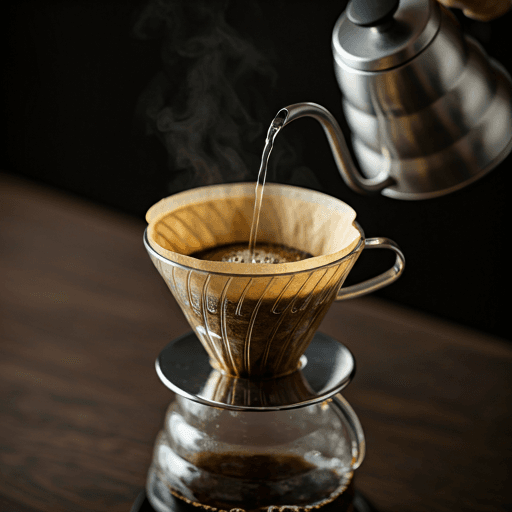
A cold drip coffee ratio is the weight of coffee to water you load into a slow-drip tower, and a sensible starting point is roughly 1:8 to 1:12 coffee to water -- about 80 g of grounds to 640-960 ml of water. That gives a concentrate similar in strength to cold brew concentrate, which you then chill and dilute to taste. Cold drip is the tall, theatrical "Kyoto-style" tower that releases cold water one slow drop at a time over several hours.
Before you weigh anything, it helps to know how cold drip differs from cold brew, because they look alike but taste like two different drinks.
Cold drip vs cold brew: what is the difference?
Both are brewed cold, with no heat, which is why both taste low in bitterness and gentle on the stomach. The difference is contact.
- Cold brew fully immerses the grounds in cold water and lets them steep for 12-24 hours. Every soluble compound extracts at once, so the cup comes out smooth, rounded, heavy-bodied and chocolatey. See what is cold brew coffee for the full picture.
- Cold drip slowly percolates cold water through a bed of grounds, about one drop per second, in a tower. The water meets fresh coffee continuously and extracts in layers, so the cup is cleaner, brighter, more aromatic and almost tea-like.
Neither is "better." Cold brew is the easy, forgiving everyday method; cold drip is the slower, more delicate one that shows off bright, fruity and floral notes, especially in lighter roasts. If you want the immersion route instead, our cold brew coffee ratio guide covers it end to end.
The cold drip coffee ratio, grind and drip rate
Three dials control your cup: the ratio, the grind, and the drip rate. Get these in range and the rest is patience.
| Variable | Cold drip target | Why it matters |
|---|---|---|
| Ratio (coffee:water) | 1:8 to 1:12 by weight (concentrate) | Tighter (1:8) is stronger and richer; wider (1:12) is lighter and more sessionable |
| Grind | Medium to medium-fine | A touch finer than cold brew, because water passes through rather than steeps |
| Drip rate | About 30-60 drops per minute (~1 drop/second) | Sets contact time and therefore strength and clarity |
| Total time | About 3-6 hours | Longer towers and finer grinds run longer; taste, do not just clock-watch |
| Water | Cold or cool, filtered | Some people add a few ice cubes to the top chamber to keep it cold and slow the melt-fed drip |
The cold drip ratio is the headline number, but grind and drip rate are what actually deliver it. A finer grind or a slower drip extracts more from the same dose, so two towers at the same 1:10 ratio can taste noticeably different depending on those settings.
How cold drip compares to immersion cold brew
| Method | Grind | Ratio | Time | Taste |
|---|---|---|---|---|
| Cold drip (tower) | Medium / medium-fine | ~1:8 to 1:12 | ~3-6 h drip | Clean, bright, aromatic, tea-like |
| Cold brew (immersion) | Coarse | ~1:4-1:8 concentrate; ~1:15-1:17 ready-to-drink | 12-24 h steep | Smooth, round, heavy, chocolatey |
Notice the grind: cold brew wants a coarse grind and a long immersion, while cold drip wants a slightly finer grind because the water is moving through the bed, not sitting in it.
How to make cold drip coffee: step by step
The exact tower varies, but the method is the same on any of them.
- Weigh and grind. Pick your ratio (start at 1:10 if unsure), weigh the coffee, and grind to medium / medium-fine. A consistent burr grind matters more here than the brand of beans.
- Load and level the bed. Add the grounds to the middle chamber over its filter. Tap the chamber to settle them and level the surface. A light, even tamp helps the water spread instead of carving a channel; do not pack it hard.
- Pre-wet the grounds. Drip or pour a little cold water over the bed and let it bloom for a few minutes. Wet grounds drip evenly; a dry bed channels and runs unevenly.
- Fill the top and set the drip rate. Add cold (or iced) water to the upper reservoir, then open the valve until you see roughly one drop per second, about 30-60 drops a minute. This is the single most fiddly step -- adjust and watch for a minute.
- Let it run. Walk away for 3-6 hours. Check once or twice that the valve has not sped up or stalled as the water level drops.
- Rest, chill and serve. Many people let the finished concentrate rest in the fridge overnight to let flavours marry. Serve over ice, neat or diluted; with milk, dilute less. Drink within a few days.
Diluting and serving
What drips out is a concentrate, not a finished drink. Treat it like one: start by cutting it with an equal part of cold water or milk (1:1) over ice, then adjust. A tighter brew ratio (1:8) needs more dilution; a wider one (1:12) may be close to ready as-is. Because it is brewed from real coffee, cold drip is not caffeine-free -- a glass of concentrate can be fairly strong, so dilution manages both flavour and caffeine.
Troubleshooting your cold drip
- Too fast, weak and watery? Slow the drip rate, grind a little finer, or tighten the ratio toward 1:8. A fast drip gives the water too little contact time.
- Bitter or harsh? Go the other way: grind coarser, speed the drip slightly, or shorten the run. Bitterness usually means over-extraction.
- Drip stalls or clogs? The grind is too fine or the bed was packed too hard. Re-level next time and ease off the tamp.
- Channelling (water boring a hole)? The bed was uneven or not pre-wet. Level it and bloom before opening the valve.
- Flat and dull? Try a brighter, lighter-roast single origin -- cold drip rewards them more than dark roasts do.
Dialing in your own ratio
Treat the numbers as a starting frame, not a rule. Brew one batch at 1:10 with a medium grind and a one-drop-per-second rate, taste it diluted 1:1, then change one variable at a time. If you enjoy thinking in ratios across every brew method, our guide to coffee brewing ratios shows how the same logic carries from espresso to pour-over to cold coffee. Cold drip rewards patience: once you find the tower setting and ratio you like, it is one of the most beautiful and clean cups of coffee you can make at home.