
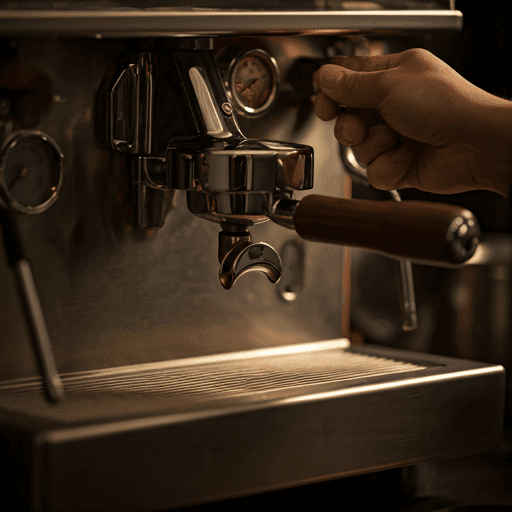
A coffee bar has two meanings, and both are worth knowing. The first is the classic Italian-style espresso bar: a counter where you order a quick drink and often sip it standing up, no table service required. The second is the home coffee bar trend, a dedicated nook stocked with your machine, grinder, beans, mugs and accessories. This guide covers both, so you can recognize a real espresso bar abroad and build a tidy coffee station of your own.
The two share a name because they share a job: making good coffee fast, in a space designed for exactly that. Once you understand the logic of the original counter, the home version makes a lot more sense.
What is a coffee bar in the original sense?
In Italy, a coffee bar (locals simply call it il bar) is a counter-service spot built around espresso. You walk in, order at the bar, and a server pulls your shot from a large lever or pump machine on the spot. Most people drink it then and there, standing, in a couple of minutes, and leave. It is woven into daily life: a morning cappuccino, a mid-morning espresso, a quick word with the person behind the counter.
The format grew up alongside the espresso machine itself. After early patents in the late 1800s and the spread of pressurized brewing in the early 1900s, bars could serve concentrated coffee almost instantly. The Caffe Manaresi, opened in Florence in 1898 and often cited as one of the first such bars, was nicknamed the "Caffe dei Ritti" - the bar of those who stand. The word "bar" itself is sometimes traced to that era as shorthand for a refreshment counter. That nickname captures the whole idea.
Espresso bar versus a sit-down cafe
An espresso bar and a full cafe overlap, but the emphasis differs. The grand cafe tradition is about seated service: a waiter brings drinks to your table, and you linger. The bar is about speed at the counter. In Italy this even shows up in pricing - sipping at the counter is typically the cheaper, faster option, while taking a table with service can cost more. Neither is "better"; they answer different needs. The counter is for the quick ritual, the table is for the long conversation.
| Feature | Espresso bar / coffee bar | Sit-down cafe |
|---|---|---|
| How you order | At the counter | Often table service |
| Typical stay | A few minutes, often standing | Linger, work, socialize |
| Core focus | Fast, consistent espresso drinks | Atmosphere, food, seating |
| Pace | Quick, ritual-driven | Relaxed |
You will find counter-first coffee bars far beyond Italy now - inside grocery halls, train stations, office lobbies and specialty roasteries worldwide. Wherever the design says "order here, drink here, move on," you are looking at the bar format.
The people and gear behind the bar
The person pulling shots is the barista - literally "bar person" in Italian. A good bar runs on a tight kit: a serious espresso machine, a grinder dialed in for the day's beans, a knockbox for spent grounds, a steam wand for milk, and a rhythm that keeps the line moving. The same logic scales down beautifully to a kitchen counter, which is exactly why the home version took off.
What is a home coffee bar?
A home coffee bar - also called a coffee station or coffee corner - is a single, dedicated spot in your home where everything you need to make coffee lives together. Instead of hunting for the grinder in one cabinet, beans in another and mugs across the kitchen, you gather them in one place so making a cup is a smooth, repeatable ritual.
The appeal is partly practical and partly emotional. Practically, a coffee station keeps clutter off the main counter and shortens your morning routine. Emotionally, it borrows the feel of a real espresso bar: a small, purpose-built stage for a daily ritual you actually enjoy.
What makes a good coffee corner
A coffee corner does not need to be big. A repurposed side table, a bar cart, a hutch, or one stretch of countertop is plenty. The trick is to use vertical space - shelves and hooks above the surface - so a small footprint still holds everything. Aim for three zones:
- The brew zone: your main brewing method (drip maker, pour-over, espresso machine or pod machine), the grinder, and a kettle or water source nearby.
- The bean zone: sealed canisters for beans or ground coffee, plus a scoop or scale. Whole beans stored airtight and ground fresh make the biggest difference to taste.
- The serve zone: mugs and cups, spoons, sugar, and any milk or creamer, kept slightly apart so post-brew supplies do not crowd the machine.
The essentials checklist
- A brewing method you will actually use every day.
- A grinder - even a modest one beats pre-ground for freshness.
- A kettle or filtered water source close at hand.
- Airtight storage for beans and any pods.
- Your favorite mugs, within easy reach.
- A small tray or canister to corral spoons, sugar and stir sticks.
- A wipe-down surface and a spot for the knockbox or used grounds.
Beyond the basics, the coffee station is where personality shows up. Open shelving lets you display nice jars, a plant, a piece of art, or a handsome machine. Warm wood reads cozy; glass and stainless steel read modern. Layered lighting - a small lamp or under-shelf strip - gives the corner that cafe glow. None of this changes the coffee, but it changes how the ritual feels, which is half the point.
Coffee bar versus coffee station versus coffee corner
These terms get used interchangeably, and that is fine. If there is a useful distinction, it is one of scale and ambition. A "coffee corner" suggests a compact nook; a "coffee station" suggests a more organized, multi-zone setup; "home coffee bar" leans into the cafe-style flourish - maybe a dedicated cabinet, a real espresso machine, and a syrup or two for cafe-style drinks. Build to the version that fits your space and how much coffee you actually make.
The best coffee bar, home or commercial, is the one that removes friction. Everything you need is one reach away, and nothing you do not need is in the way.
Bringing the bar home
Whether you mean the espresso counter where Italians grab a quick shot standing up, or the tidy nook on your own kitchen counter, a coffee bar is really the same idea at two scales: a space designed so that making and enjoying coffee is fast, consistent and a little bit of a ritual. Start with a brewer you love and beans you grind fresh, then build the corner around them.
From here, it is worth reading up on the heart of any coffee bar - learn how espresso works, what a barista actually does, or explore the wider world of the cafe and keep building your own corner from there.