
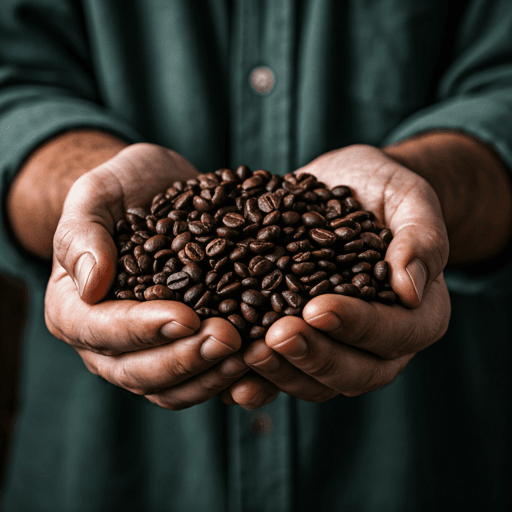
Green coffee beans are simply raw, unroasted coffee beans — the pale green-gray seeds of the coffee cherry before they ever meet a roaster. They are the exact same beans that become the familiar brown coffee in your cup, only untouched by heat, so they taste grassy and vegetal, hold far more chlorogenic acid, and cannot be brewed into a pleasant cup as they are. This guide explains what green coffee beans really are, how they differ from roasted, why home roasters and the wider coffee trade care about them, and the honest story behind "green coffee extract" weight-loss supplements.
What are green coffee beans?
Every coffee starts life green. Coffee grows as a fruit — the coffee cherry — and inside each cherry sit one or two seeds. Once the fruit is picked and the pulp is removed (washed, natural or honey processing), those seeds are dried down to roughly 10–12% moisture. What is left is the green coffee bean: a dense, pale seed that ranges from sage green to blue-green to yellow-gray depending on variety and processing. It smells faintly of hay, fresh peas or cut grass — nothing like the toasty aroma of a roasted bag.
Because they are unroasted coffee beans, green beans are hard, low in the aromatic oils that give coffee its smell, and high in acids and sugars that roasting later transforms. If you want the full picture of what a coffee bean is and how the plant produces it, see our guide to what coffee beans are. The short version: green is the raw material, and roasting is the step that turns it into coffee as most people know it.
Green coffee beans vs roasted: what changes
Roasting is a controlled cook. As green beans hit heat they lose moisture, expand, crack (the famous "first crack"), turn brown, and develop hundreds of new aroma compounds through the Maillard reaction and caramelization. Three changes matter most:
- Flavor. Grassy, vegetal green beans become sweet, toasty, chocolatey or fruity — the aromatic oils and browning reactions only appear with heat.
- Chlorogenic acid. Green coffee is naturally high in chlorogenic acid, a group of plant polyphenols. Roasting breaks much of it down, so darker roasts carry noticeably less. This is the compound the supplement industry is chasing (more on that below).
- Caffeine. Caffeine is remarkably heat-stable, so roasting does not destroy much of it. A green bean and its roasted version hold roughly the same caffeine per bean; by weight, roasted beans read slightly higher only because they shed about 15–25% of their mass during the roast.
Here is a side-by-side. For a deeper treatment of the two states, see green vs roasted coffee beans and our explainer on what coffee roasting is.
| Attribute | Green (raw / unroasted) | Roasted |
|---|---|---|
| Color | Pale green-gray to blue-green | Light to dark brown |
| Aroma & flavor | Grassy, hay-like, vegetal | Toasty, sweet, chocolatey, fruity |
| Chlorogenic acid | High | Lower (falls as roast deepens) |
| Caffeine | Present; heat-stable | Similar per bean; slightly higher by weight |
| Moisture | Around 10–12% | Very low after roasting |
| Shelf life | Months to ~2 years if stored well | Best within weeks of roasting |
| Ready to brew? | No — needs roasting first | Yes |
Why people buy raw, unroasted coffee beans
There are two very different reasons someone reaches for green beans.
Home roasting and the coffee supply chain
All coffee is bought and shipped green. When a roaster orders from a farm, cooperative or importer, what arrives is sacks of raw coffee beans, and roasting happens close to where the coffee is sold. That is partly practical: green beans keep far longer than roasted ones, which fade within weeks. Hobbyists tap into the same supply, buying small lots of green beans to roast themselves in a popcorn popper, a heavy skillet or a dedicated home roaster. The appeal is control — you choose the origin, dial in the roast level, and brew at peak freshness. Roasting your own is also a fast way to learn flavor, because you can taste the same coffee at several roast levels. If freshness is your priority, our guide to fresh-roasted coffee explains why the clock starts the moment beans leave the roaster.
How to store green coffee beans
Green beans are forgiving, not immortal. Keep them somewhere cool, dark and dry, in a breathable or airtight container, away from moisture, strong odors and temperature swings. Most green coffee is at its best within 6–12 months; stored carefully it can hold usable quality for up to about two years, though it slowly loses brightness and can turn flat or woody. In the trade, coffee from a previous harvest is called "past crop" once the new harvest lands. The real enemies are humidity and heat, so a stable pantry beats a hot garage or a damp basement.
Green coffee extract and weight-loss claims
The other reason "green coffee" shows up is as a supplement. Green coffee extract is made from unroasted beans precisely because they are rich in chlorogenic acid, and it is often marketed for weight loss and for blood-sugar or blood-pressure support. A few honest points are worth making:
- It still contains caffeine. "Green" does not mean caffeine-free — extracts and green-coffee capsules can carry a meaningful dose, which matters if you are caffeine-sensitive or already drinking coffee.
- The weight-loss evidence is limited and mixed. Some small studies suggest chlorogenic acid may nudge body weight or BMI, but the effects are modest and far from conclusive, and reviews repeatedly flag small samples and weak study designs. One widely publicized trial that fueled the craze was later retracted, and the company behind it settled charges from regulators over unsupported claims. Treat green coffee extract as "may help a little, maybe" — not a magic solution.
- Supplements are loosely regulated. Dose, purity and actual chlorogenic-acid content vary widely between products, and labels are not always reliable.
None of this is medical advice. If you are considering a green coffee supplement — especially alongside medication, pregnancy or an existing health condition — talk to a doctor or pharmacist first, and remember that everyday coffee and many whole foods also supply chlorogenic acid without a pill.
Can you just brew green coffee beans?
Not into anything most people would enjoy. Raw beans are hard and grassy, and grinding and steeping them yields a thin, herbal, vegetal liquid that tastes nothing like coffee — this is essentially how "green coffee" drinks and some extracts are made, for the chlorogenic acid rather than the flavor. The toasty, sweet, complex character we call coffee simply does not exist until the beans are roasted. In short, green beans are potential; roasting is what unlocks the cup.
The bottom line on green coffee beans
Green coffee beans are the starting point of every cup you have ever had — the same seeds, minus the heat. Understanding them makes the rest of coffee click: why roast level changes flavor, why freshness fades within weeks, and why "green coffee" supplements are a very different thing from a good bag of beans. Whether you are curious about home roasting or just want to read your coffee bag with sharper eyes, the raw green seed is where the whole story begins.