
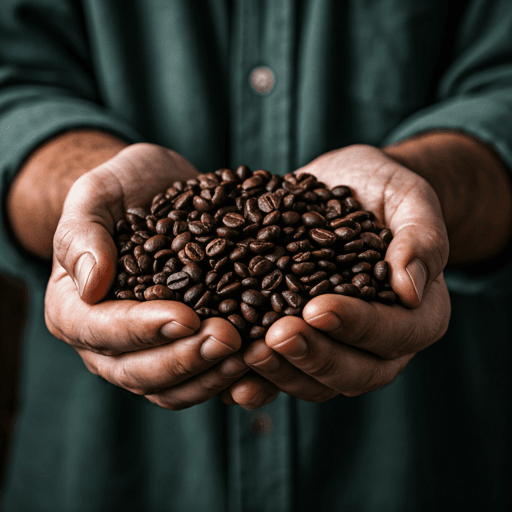
Does espresso go bad? Like all coffee, dry espresso goes stale rather than dangerous: it quietly loses the aroma, sweetness and crema-making freshness that made it worth pulling, long before it ever becomes unsafe. A pulled shot, though, is a different story — its crema and bright flavour collapse within a minute or two — and any milky espresso drink left warm is genuinely perishable. So 'go bad' is really doing two jobs here.
For anything dry, the honest answer is that espresso fades rather than spoils. For the drink in the cup, especially with milk, the clock is far shorter and the stakes are real. Keeping those two ideas apart is the whole point of this guide. We will not re-explain what espresso actually is, since that lives in espresso explained, and we will keep the storage side brief, because the full method has its own home in how to store coffee beans.
The short answer: does espresso go bad or just go stale?
For espresso in its dry forms — whole beans and finely ground coffee — time is mostly an enemy of flavour, not of safety. Roasted coffee is low in moisture and fairly inhospitable to the microbes that spoil food, so an old bag tucked at the back of a cupboard is far more likely to brew a boring shot than a risky one. What disappears is the good stuff: the volatile aromatics and roasted oils that give espresso its punch and its thick, hazelnut crema.
A finished shot flips that logic entirely. The moment hot water forces its way through the puck, you have a drink with a very short flavour life, and once you add steamed milk you have a perishable dairy drink on your hands. This guide walks through each form in turn. For how the wider picture applies to coffee of every kind, our companion on whether coffee goes bad covers brewed cups, instant and more.
Do espresso beans go bad? Whole beans first
Do espresso beans go bad? Not quickly, and rarely in a way that is unsafe. Whole roasted beans are the most forgiving form because most of each bean's surface is still locked inside — less area meets the air, so the aromatics escape slowly. Many roasters suggest beans taste their best within roughly two to four weeks of the roast date, which is when you get the sweetest cup and the most generous crema. Treat that as a soft window rather than a deadline; it shifts with the coffee, the roast and how tightly the bag is sealed.
After that peak, beans do not turn undrinkable — they simply drift toward flat. Sealed and kept dry, whole espresso beans stay pleasant for a couple of months and safe for considerably longer, even as the sparkle fades and the crema thins. The eventual limit is the oils slowly oxidising and turning faintly rancid, which tends to happen sooner for the oily, dark, espresso-style roasts than for drier light ones. That is a flavour and freshness point, not a safety cliff. What 'freshly roasted' really means, and how roast dates work, is covered in fresh roasted coffee explained.
Ground espresso: the fastest to fade
Ground espresso stales faster than any other dry form, and the reason is simple geometry. Espresso is ground fine — much finer than filter coffee — so a single dose is broken into an enormous number of tiny particles, each one exposing fresh surface to oxygen all at once. That huge surface area is exactly what makes espresso extract so quickly in the machine, and it is also what makes ground espresso go stale so fast out of it.
Pre-ground espresso in a sealed, unopened pack holds up longer because it has not met much air yet, but the clock speeds up sharply the moment you break the seal — think hours to a few days for peak flavour rather than weeks. If a tin of ground espresso smells faint and cardboard-like where it once smelled sweet and roasty, it has gone stale: still safe, just tired, and it will pull a thin, pale shot with little crema. This is the single biggest reason many espresso drinkers grind fresh just before pulling.
How long does espresso last once it is a pulled shot?
How long does espresso last after it hits the cup? Barely any time at all, and this surprises people. A freshly pulled shot is at its best in the first ten to sixty seconds. The crema — that reddish-brown foam — starts to break down almost immediately, and as it fades the shot turns flat and increasingly bitter within a couple of minutes. Nothing has spoiled in any unsafe sense; the aromatics and the delicate structure of the shot have simply died off fast.
That is why espresso is, more than almost any coffee, a drink-it-now thing. A shot left standing on the counter is not a food-safety worry in the first few minutes so much as a wasted one — it will taste harsh and hollow compared with the same shot sipped straight away. If you are pulling for a milk drink, get the milk in promptly rather than letting the espresso sit and go bitter while you steam.
Milky espresso drinks: same-day, keep cold
Here is where 'bad' becomes literal. A latte, cappuccino, flat white or any espresso drink built on steamed or cold milk is a perishable dairy drink, and warmth is exactly what invites spoilage. Left standing warm and exposed, it can sour, develop an off smell or grow a film, in the same way any glass of milk would. The espresso part fades within minutes, but the milk sets the real safety clock.
So treat milky espresso drinks as same-day, and keep any you are not drinking right away cold rather than warm. An iced latte forgotten on a desk for hours is worth a careful sniff before you go back to it. Responses and conditions vary and this is general food-safety guidance, not medical advice, so when a milk drink has been sitting out too long the sensible move is simple: when in doubt, throw it out.
Signs your espresso is past it
Reading espresso is mostly about your nose and, for the drink, your eyes. For dry espresso, staleness shows up as a flat, cardboard-like smell and a thin, ashy or hollow taste in the cup, along with weak, pale crema that vanishes quickly. It is perfectly safe; it has just lost its life. Fresh espresso, by contrast, smells sweet and roasty and pulls a thick, lasting crema.
For a milky espresso drink the warning signs are sharper and worth taking seriously: a sour or genuinely off smell, curdled or separated milk, or an oily film on the surface all mean the drink has spoiled and should go straight down the sink. You do not need to taste a suspect cup to be sure. Responses vary from person to person, and again, this is not medical advice — err on the cautious side.
Espresso shelf life at a glance
The windows below are deliberately hedged, because your climate, packaging and how tightly things are sealed all shift them. They capture the general shape rather than hard rules.
| Form | Best window | Still usable | How to tell it is past it |
|---|---|---|---|
| Whole espresso beans | ~2-4 weeks from roast | Months if sealed and dry | Flat, papery smell; thin, weak crema |
| Ground espresso | Hours to a few days once opened | A week or two sealed | Cardboard smell; pale shot, little crema |
| A pulled shot | ~10-60 seconds | A minute or two, tasting worse | Crema gone; flat, harsh, bitter |
| Milky espresso drink | Same day, kept cold | Only briefly, cold | Sour smell, curdling, oily film — discard |
The four enemies, and what a roast date really means
Whatever the form, the same four forces drag dry espresso downhill, and naming them explains every window above.
- Air (oxygen) — oxidises the oils and carries off the aromatics; the more surface area, the faster it works, which is why ground espresso suffers most.
- Moisture — makes grounds clump and, at worst, invites mould; a damp scoop or steam from the machine is enough to do harm.
- Heat — speeds up every staling reaction, so a bag stored beside the stove or the machine's warm top ages faster.
- Light — especially direct sun, which degrades flavour compounds over time, so opaque storage helps.
Does espresso expire the way milk does, with a hard cliff on a printed date? Not really. A 'roasted on' or 'best by' date on a bag of espresso is a peak-quality estimate, not a safety deadline. Dry espresso a little past that date is almost always fine to drink; it has simply given up some of its best flavour and crema. Trust your senses over the print: if sealed dry espresso smells and tastes clean, it is good to go, and if it smells rancid or shows any mould, retire it. Keep dry espresso for flavour, judge the drink for safety, and whenever a bag or a cup leaves you unsure, the oldest kitchen rule still applies — when in doubt, throw it out.