
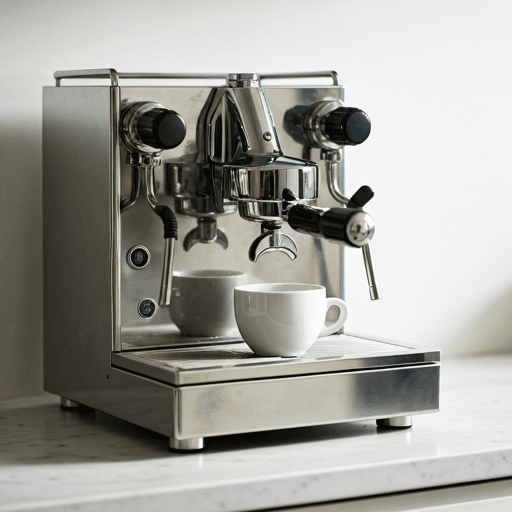
A Delonghi coffee maker in the bean-to-cup family is a fully automatic machine that grinds fresh beans, doses, tamps and brews an espresso for you at the touch of a button, and on many models also textures milk for a cappuccino or latte. If you want cafe-style coffee without weighing, grinding and pulling shots by hand, this is the category to look at. The catch is that Delonghi (officially styled De'Longhi) sells several overlapping families, so the real question is which one fits your kitchen, your milk habits and your patience for cleaning.
This guide explains what bean-to-cup means, maps the main automatic families, and gives you a checklist to choose. It names models only as factual examples, with no prices and no ranked picks, because the right machine depends entirely on how you drink your coffee.
What a Delonghi coffee maker does in the bean-to-cup range
A bean-to-cup machine is a sealed, all-in-one workflow. You fill a hopper with whole beans, fill a tank with water, press a drink, and the machine handles every step: it grinds a measured dose, tamps it inside a brew unit, forces hot water through at espresso pressure, then drops the puck into an internal waste bin. The whole thing is sometimes called a super-automatic or simply an automatic coffee machine, to distinguish it from a manual pump espresso machine where you do the grinding, dosing and tamping yourself.
That convenience is the entire point of a Delonghi bean to cup model. The trade-off versus a manual setup is less hands-on control over each variable, but far more consistency and speed day to day. For a wider view of the whole automatic category before you commit to one brand, our bean-to-cup coffee machine guide covers the format in general, and how to choose a coffee maker helps you decide whether automatic is even the right path for you.
What is NOT a bean-to-cup Delonghi
Two of Delonghi's best-known espresso machines are not bean-to-cup at all. The slim Dedica and the entry-level Stilosa are manual pump machines: they have no built-in grinder, so you load a portafilter with ground coffee yourself and steam milk with a wand. They make excellent espresso, but they are a different category. If a compact manual machine is what you actually want, read the dedicated Delonghi Dedica espresso machine guide instead, and the broader Delonghi espresso machines guide for the manual line-up.
The Delonghi bean-to-cup families at a glance
Delonghi organises its automatics into named families that climb in features and price tier rather than in a strict quality ranking. The espresso itself is broadly similar across the range, because they share the same core brew technology. What changes as you move up is the milk system, the screen, the number of saved drinks and app connectivity.
| Family | Milk system | Who it suits |
|---|---|---|
| Magnifica / Magnifica S / Magnifica Evo | Manual steam wand on most; simple one-step auto froth (LatteCrema Hot) on some Evo versions | First-time automatic buyers who want value and simplicity |
| Dinamica / Dinamica Plus | Manual wand or one-touch LatteCrema carafe, depending on version; touchscreen on Plus | The sensible middle ground: more drinks and convenience without the top tier |
| Eletta / Eletta Explore | Advanced LatteCrema, hot and cold milk foam, adjustable froth; cold-brew style extraction on Explore | Enthusiasts who want iced drinks, app recipes and milk control |
| PrimaDonna | Full one-touch auto-milk carafe, profiles, app, touchscreen only (no physical buttons) | People who want maximum personalisation and a premium finish |
Magnifica: the entry automatic
The Delonghi Magnifica coffee machine is the range most people start with, and it is the one you will see most often. Classic Magnifica and Magnifica S models pair the automatic grind-and-brew engine with a manual steam wand: the machine pulls the shot, but you froth milk yourself in a jug. The newer Magnifica Evo modernises the design and, in some versions, adds a simple automatic milk carafe (a one-step LatteCrema Hot) that froths milk straight into the cup. Magnifica machines tend to dose a slightly shorter slug of coffee than the step-up families, but for everyday espresso, Americano and a hand-frothed cappuccino they are hard to fault. This is the value tier.
Dinamica: the convenient middle
The Delonghi Dinamica sits a step up and leans into convenience. Many Dinamica machines add one-touch milk drinks via the LatteCrema carafe, longer dosing for a fuller shot, a quieter grinder and a brighter display, with the Dinamica Plus adding a touchscreen and more saved recipes. If the Magnifica feels too bare but the flagships feel like overkill, the Dinamica is the balanced choice for a busy household that wants lattes without learning to steam milk.
Eletta and PrimaDonna: the feature-rich end
The Delonghi Eletta, especially the Eletta Explore, is where milk gets serious: it uses Delonghi's most advanced LatteCrema carafe and can make both hot and cold foam, with adjustable texture and temperature, plus a cooler extraction mode aimed at iced coffee. It pairs with the Coffee Link app for extra recipes over Wi-Fi. The Delonghi PrimaDonna (sometimes written Delonghi Prima Donna) is the premium personalisation tier: a touchscreen-only interface with no physical buttons, full one-touch cappuccino, saved user profiles and a metallic finish. Above these sit niche flagships such as the Maestosa, and Delonghi also offers the Rivelia with swappable bean hoppers, but for most buyers the four families above cover the decision.
Manual steam wand versus automatic milk
This is the single biggest choice in the range, so it deserves its own thought. A manual steam wand (the panarello-style frother on most Magnifica machines) is cheaper, simpler to clean, and lets you texture milk to your own taste, but it asks you to learn a small skill and froth each drink by hand. An automatic milk system (the LatteCrema carafe on Dinamica, Eletta and PrimaDonna) clips on, froths milk into the cup at the press of a button, and is brilliant for one-touch cappuccinos, but it adds parts to rinse and a carafe to store.
If you drink mostly black coffee, you barely need a milk system at all. If your household runs on lattes and flat whites, a one-touch carafe earns its keep every morning. If you want to learn latte art, a manual wand is more rewarding. A separate handheld milk frother can also bridge the gap on an entry machine if you only occasionally want a foamed drink.
Key decisions before you buy a Delonghi bean to cup machine
- The grinder and grind settings. Every bean-to-cup Delonghi has a built-in burr grinder with adjustable steps. A finer setting slows the pour and boosts strength; coarser speeds it up. Note that you usually adjust grind only while the grinder is running.
- Milk system, again. Decide manual wand versus one-touch carafe first, because it splits the range cleanly into Magnifica versus the step-up families.
- The bypass chute. Almost all of these machines include a funnel that lets you drop in pre-ground coffee, bypassing the bean hopper. It is the simplest way to brew a decaf cup or a second blend without emptying the beans.
- Ease of cleaning. A genuine Delonghi advantage is the removable brew unit: it pops out so you can rinse it under the tap, unlike sealed machines that you cannot open. This makes hygiene far easier and is worth prioritising.
- Drinks, presets and app. Entry machines offer a handful of buttons; the higher families add touchscreens, many saved recipes, user profiles and Wi-Fi app control. Be honest about how many of those you will use.
- Counter size. Automatics are tall and need clearance above for the hopper lid, plus depth for the bean compartment and water tank. Measure your counter, including under any wall cabinets, before you fall for a model.
How to choose your Delonghi automatic coffee machine
- Start with milk. Black-coffee drinker? A Magnifica with a wand is plenty. Daily latte household? Choose a one-touch LatteCrema family (Dinamica and up).
- Set a feature ceiling. Pick the lowest tier that has every feature you will genuinely use. Paying for a touchscreen and 30 recipes you ignore is the most common over-spend.
- Check iced and cold. If you want cold foam or iced coffee, that points toward the Eletta Explore rather than the entry machines.
- Confirm it fits. Re-measure height with the lid open and depth with the tank in.
- Match the cost tier to your use. Entry-level machines suit light, simple use; mid-range fits a milk-loving family; premium rewards heavy use and a taste for personalisation. Think in tiers, not exact figures.
Maintenance: keeping a Delonghi automatic happy
Automatic machines reward a simple routine. Run the auto-rinse the machine prompts at switch-on and switch-off to clear the coffee path. Empty the puck bin and drip tray daily, and wash the milk carafe parts after every milky drink so they do not clog or sour. Pull the removable brew unit out about weekly and rinse it under the tap with no detergent, then let it dry before refitting.
Descaling is the big one: hard water leaves limescale that slows the machine and dulls the taste, so descale when the indicator light prompts, typically every one to two months depending on your water, using a proper descaling solution. Fitting a water-softening filter in the tank cuts how often you need to descale and protects the internals. For a brand-level overview that spans the automatics and the wider line-up, see our Delonghi coffee machines guide.
The bottom line
A Delonghi bean-to-cup coffee maker is about trading hands-on control for reliable, push-button convenience, and the family you pick should follow your milk habits and your appetite for features, not a notion that pricier always means better espresso. Decide manual wand versus one-touch milk, choose the lowest tier that covers what you will actually use, measure your counter, and commit to the cleaning routine. Do that and the machine quietly earns its place every morning. From here, browse the broader automatic category, the manual Dedica, or the full Delonghi range to confirm your shortlist.