
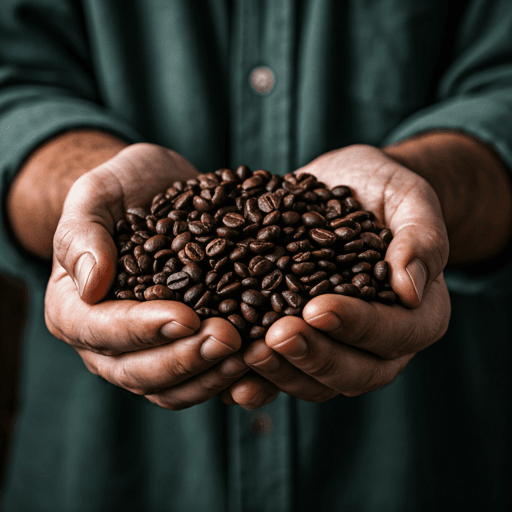
Central Valley coffee, Costa Rica's oldest and most storied growing region, is where the entire national coffee industry was born more than two centuries ago. Known in Spanish as the Valle Central, this highland basin wraps around the capital San José and the provincial cities of Heredia, Alajuela, and Cartago. Cradled by three volcanoes and blessed with deep, fertile soil, it yields a balanced, chocolate-and-nut cup with clean acidity that many drinkers think of as the classic Costa Rican profile.
Where the Valle Central sits
The Central Valley is a broad interior plateau, sometimes called the Meseta Central, in the middle of Costa Rica. It is the country's most densely populated area, home to roughly two-thirds of Costa Ricans, and its coffee farms are woven directly into the fabric of everyday life around the four historic provincial capitals: San José, Heredia, Alajuela, and Cartago. Coffee grows on the slopes rising out of the basin, generally between 900 and 1,600 metres above sea level.
What makes this region a natural coffee cradle is the ring of volcanoes on its northern and eastern rim. The Poás, Barva, and Irazú volcanoes have layered the valley floor and its foothills with weathered ash and basaltic material over millennia, creating soils that are rich in organic matter, drain well, and hold moisture. Combined with two clearly defined seasons — a wet season that feeds the crop and a dry season that concentrates and ripens the cherries — the terroir gives farmers a reliable rhythm to plant, flower, and harvest.
Where Costa Rican coffee began
The Valle Central is not just a growing region; it is the birthplace of Costa Rican coffee. Coffee plants first arrived in the late 1700s — commonly dated to 1779, brought from Cuba — and the first documented plantations took root in San José and Heredia. Commercial planting expanded in the early 1800s, encouraged by a government that handed out free land and seedlings to anyone willing to grow the crop on the fertile Central Valley slopes.
By the 1820s the young nation was shipping beans abroad, first to neighbours like Panama and Chile, then reaching Britain in the 1840s and the United States by 1860. Coffee quickly became the engine of the economy, funding roads, railways, theatres, and the rise of a landowning class often called the "coffee barons." Costa Ricans still call the crop grano de oro, the golden bean, a reminder of how completely coffee shaped the country. Almost all of that early history unfolded here, in the towns and hillsides of the Central Valley, before cultivation spread south to Tarrazú and out to other regions.
Volcanic soil and the making of the cup
Volcanic terroir is the thread that ties Central Valley coffee to its flavour. The andisol soils born from Poás, Barva, and Irazú are loose and porous, which encourages deep, healthy root systems, good oxygenation, and steady humidity around the plant. Nutrients released slowly from weathering ash feed the trees without the harshness of over-fertilised ground.
Altitude does the rest. Between roughly 1,000 and 1,600 metres, cool nights slow the ripening of the cherry, letting sugars and acids develop more fully and producing a denser, harder bean. Density matters for cup quality and for grading, which is why so much Central Valley coffee carries the country's top hardness classification.
What Central Valley coffee tastes like
The Central Valley is prized for balance rather than for any single dramatic note. A typical cup is medium-to-full bodied, smooth, and clean, with the following signatures showing up again and again:
- Chocolate and nut — cocoa, milk chocolate, and roasted almond or hazelnut tones form the backbone of most lots.
- Gentle fruit — mellow citrus, red apple, or stone fruit that lifts the cup without overpowering it.
- Clean, bright acidity — crisp and pleasant rather than sharp, one of the hallmarks of high-grown Costa Rican coffee.
- Honeyed aroma and a rounded finish — a soft sweetness that makes these coffees approachable for almost any palate.
Because the profile is so even-handed, Central Valley beans are a dependable everyday choice and a common component in blends. They rarely divide drinkers the way a wild natural-process lot might; instead they deliver the reassuring, well-mannered character that built Costa Rica's global reputation.
Central Valley vs West Valley vs Tarrazú
Costa Rica recognises eight coffee regions, and the three that newcomers most often confuse are the Central Valley and its two famous neighbours. The adjacent West Valley (Valle Occidental) and the higher, more celebrated Tarrazú each offer a different expression of the same country.
| Feature | Central Valley (Valle Central) | West Valley (Valle Occidental) | Tarrazú (Los Santos) |
|---|---|---|---|
| Location | Around San José, Heredia, Alajuela, Cartago | West of the capital: Naranjo, Grecia, San Ramón, Palmares | Southern mountains, Los Santos zone |
| Typical altitude | 900–1,600 m | 1,200–1,700 m | 1,200–1,900 m |
| Key volcanoes / terrain | Poás, Barva, Irazú | Foothills west of Poás | Steep, high inland ridges |
| Cup character | Balanced, chocolate-nut, gentle fruit, clean acidity | Diverse and complex; peach, orange, vanilla, honey | Bright, high acidity, dried fruit and rich body |
| Reputation | The historic heartland | Micro-mill innovation, Cup of Excellence winners | Costa Rica's most famous premium region |
The short version: the Central Valley is the classic, historic middle ground; the Tarrazú region reaches higher and brighter; and the West Valley has become a laboratory for experimental, award-winning micro-lots. All three share the country's volcanic backbone and its commitment to quality.
Micro-mills, SHB grading, and 100% arabica
Costa Rica grows only arabica. A 1980s law effectively banned robusta cultivation to protect the country's quality image; while that ban was loosened in 2018 to allow limited robusta at low elevations, the highland regions — including the Central Valley — remain overwhelmingly 100% arabica. The everyday varieties you will meet here are Caturra and Catuaí, both well suited to volcanic slopes.
Grading in Costa Rica is based on altitude and bean density. The top tier, SHB (Strictly Hard Bean), is reserved for coffee grown at about 1,200 metres and above, where slow ripening produces the hardest, densest beans. Much of the upper Central Valley qualifies as SHB, a mark of the region's high-grown pedigree.
The biggest shift in recent decades has been the micro-mill revolution. Historically, most farmers delivered cherry to large cooperative wet mills that blended everyone's harvest together. Starting in the early 2000s, a wave of producers built their own small microbeneficios, processing and drying their own cherry to keep single-farm and single-lot character intact. This move toward traceability let smallholders experiment with washed, honey, and natural methods and command better prices for distinctive coffee. To see how those processing choices shape flavour, and how the wider industry is structured, our guide to Costa Rican coffee covers the country's regions and methods in depth.
Urban sprawl and the region's future
The Central Valley faces a pressure most coffee origins do not: the city is eating the farm. Because the region is also Costa Rica's economic and population centre, the sprawl of San José and its suburbs has swallowed a great deal of historic coffee land. Studies have found the urbanised footprint of the Central Valley expanding dramatically in recent decades, with housing developments and shopping centres replacing plantations that had grown coffee since the 1800s.
The Tres Ríos sub-zone near Cartago, once celebrated enough to be called the "Bordeaux of Costa Rica," has seen its production fall sharply as farms give way to real estate. Some historic estates now survive as heritage plantations and coffee-tour destinations rather than pure commercial operations. It is a bittersweet chapter: the very region that launched an industry is where that industry is most visibly under threat, even as growers, cooperatives, and agritourism projects work to keep the tradition alive.
The takeaway
To understand Central Valley coffee is to understand where Costa Rican coffee started — a volcanic highland around the capital where a small nation turned a single crop into a golden bean that reshaped its economy and identity. The cup it produces is not the flashiest in the country, but its balanced, chocolatey, clean-acidity profile is arguably the truest expression of the classic Costa Rican style. As you explore other arabica origins along the coffee belt — from the neighbouring high-altitude regions to Colombia and beyond — the Valle Central is worth remembering as the historic heartland where it all began. For more origin stories and brewing background, browse our full coffee guides.