
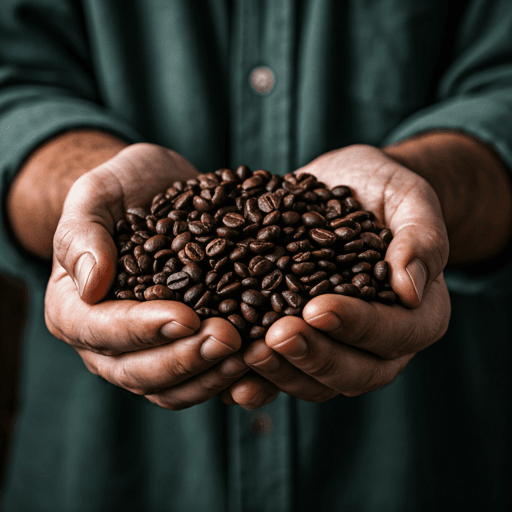
Coffee silverskin is the thin, papery seed coat that clings tightly to a green coffee bean, tucked just inside the parchment and lodged in the bean's centre crease. It is the last layer standing between the fruit and the cup, and during roasting it dries, loosens, and flakes away as the light debris roasters call chaff. Understanding coffee silverskin explains where those pale flakes in your grinder come from, why roasters chase them with a cyclone, and why food scientists have started treating this "waste" as a valuable ingredient.
What is coffee silverskin?
Silverskin is the testa, or seed coat, of the coffee seed — a delicate tegument sometimes also called the perisperm, spermoderm, or simply the epidermis of the bean. It forms the innermost of the several layers that wrap a coffee seed inside its fruit. Working from the outside of a ripe cherry, you pass through the skin (exocarp), the sweet pulp (mesocarp), a sticky mucilage layer, the papery parchment (endocarp), and finally the silverskin, which lies directly against the seed itself. Only then do you reach the endosperm — the dense, oil- and protein-rich tissue that the trade knows as the green bean.
In dried, milled coffee the silverskin is easiest to spot as a pale coating running along the flat side of the bean, packed into the central groove or crease. Its colour ranges from silvery white through light tan to grey, and its surface can be smooth or finely crinkled. Because it sits underneath the parchment, silverskin survives the milling steps that strip away the outer fruit and hull, riding along on the green bean all the way to the roaster. For a fuller picture of the seed it protects, see our guide to green coffee beans.
Silverskin vs parchment: not the same layer
Silverskin and parchment are frequently confused because both are dry, papery, and pale, but they are distinct layers removed at different stages. Parchment is the tough endocarp — a crisp hull that encases the whole seed. Silverskin is a much finer membrane bonded to the seed's surface beneath it. The clearest way to tell them apart is by when each one leaves the bean.
| Feature | Parchment | Silverskin |
|---|---|---|
| Botanical name | Endocarp (hull) | Testa / perisperm (seed coat) |
| Position | Outer, encases the seed | Innermost, bonded to the seed surface |
| Thickness | Rigid, crisp shell | Very thin, papery membrane |
| When removed | Hulling, during dry milling | Roasting, as it flakes off into chaff |
| What it becomes | Parchment husk (fuel, mulch) | Chaff |
Parchment is peeled away at origin during the first step of dry milling, long before the coffee is exported. Silverskin, by contrast, mostly stays put until heat drives it off in the roaster. So the green beans a roaster receives are already de-hulled but still wear their thin silver coat, especially in the crease. The way that coat forms and how much of it survives depends heavily on how the cherry was processed.
Why silverskin lingers in the crease
Every green bean carries some silverskin, but the amount left in the centre crease varies with processing, bean density, and roast level. During drying and milling, most of the loose silverskin is rubbed away, yet the fold of the crease shelters a stubborn strip that mechanical polishing cannot reach. How firmly it clings depends on how the fruit was removed.
- Washed coffees tend to hold noticeably more silverskin in the crease. The seed is fermented and washed clean of mucilage while still relatively pale and often retains a bright, clingy silver strip well into the roast.
- Natural (dry) process coffees, dried whole inside the fruit, frequently show less crease silverskin, and denser naturals shed it early. If you want the mechanics of drying the whole cherry, see our natural process guide.
- Monsooned coffees, such as Monsooned Malabar, are exposed to damp monsoon winds for weeks in open warehouses. The beans swell, pale, and change character, and much of the silverskin loosens in the process.
- Roast level matters too: a light-roasted, larger washed bean can keep silverskin in its crease even into second crack, while a dense natural rarely shows any past first crack.
From silverskin to chaff in the roaster
Silverskin becomes chaff during roasting. As the beans heat, typically climbing through roughly 175–230°C (about 350–450°F), the seed loses moisture and expands while the thin silverskin dries out and turns brittle. The decisive moment is first crack, the audible popping that occurs around 196°C (385–390°F), when built-up steam and carbon dioxide fracture the bean and pry open the crease. That expansion breaks the silverskin's grip and releases it as dry, papery flakes — chaff.
In a drum roaster, airflow lifts this lightweight chaff off the beans and carries it out of the drum into a chaff collector or cyclone, a separate chamber that traps the flakes. Air roasters and home fluid-bed machines behave similarly, blowing chaff up and away from the roasting chamber. This is why freshly roasted whole beans still shed a little chaff, and why grinding them can leave a scatter of light tan flakes in the burrs and grounds. Roasting is the final act of the long journey we trace from cherry to cup.
Chaff is a genuine fire risk
Accumulated chaff is one of the most important safety concerns in a roastery. The flakes are extremely thin and very low in moisture, which makes them ignite easily — a bin of dry chaff sitting near a hot exhaust is a real fire hazard. Glowing embers can travel with the airflow into the collector and smoulder in the pile.
Because of this, disciplined roasters empty and clean the chaff collector regularly, often between roast batches, and keep ducting free of buildup. Good chaff management is partly about flavour and consistency — a clogged cyclone disrupts airflow — but mostly about preventing fires. For anyone stepping up from home roasting to a production drum, chaff housekeeping is a non-negotiable habit.
Does silverskin affect flavour?
For most modern roasting, silverskin left in the crease has little noticeable effect on flavour. Because it detaches and largely blows away as chaff, only trace amounts remain by the end of a typical roast, and their sensory contribution is minor. Roasters generally treat crease silverskin as a cosmetic and housekeeping matter rather than a taste problem.
That said, it is not entirely inert. Some traditional roasting styles deliberately left silverskin on, arguing it adds subtle notes and a touch more caffeine, and heavy chaff carbonising in the roaster can contribute faint smoky or ashy tones if airflow is poor. In espresso, a few papery flakes surviving into the grinder are usually harmless but can look untidy in the portafilter. In practice, the flavour conversation around silverskin is far less important than the safety and byproduct stories.
Silverskin as a valuable byproduct
Coffee silverskin is the single most abundant solid byproduct generated during roasting, and for a long time it was simply swept up and discarded or burned. Research over the past two decades has reframed it as a functional raw material rich in bioactive compounds. Analyses of silverskin typically report a striking nutritional profile:
- Dietary fibre at roughly 56–62% of dry weight, most of it insoluble fibre such as cellulose and hemicellulose — one of the highest fibre contents of any food byproduct.
- Protein around 18–19% and total minerals near 8%.
- Antioxidants including chlorogenic acids, plus melanoidins (roughly 17–23%) formed by the Maillard reaction, which carry antioxidant and anti-inflammatory activity.
- Caffeine in the region of 0.8–1.25%.
Those properties have driven experiments using silverskin as a functional-food ingredient — for example, as a fibre- and antioxidant-rich flour blended into baked goods like biscuits and cake — and as a natural active in cosmetics, where its melanoidins, phenolics, and caffeine are studied for anti-ageing and skin-protective formulations. Beyond the lab, roasteries increasingly divert chaff toward composting, garden mulch, animal bedding, biofuel pellets, and mushroom-growing substrate as part of a zero-waste approach. Silverskin is a reminder that even the humblest layer of the seed has value once you look past the label of "waste."
The takeaway
Coffee silverskin is a tiny thing with an outsized story: a whisper-thin seed coat that shelters in the bean's crease, distinct from the parchment removed at origin, and destined to become the chaff that floats off in the roaster. Knowing what it is helps you read your beans — a pale strip in the crease is normal, not a defect — and appreciate why roasters watch their chaff collectors so closely. And as researchers keep finding new uses for its fibre and antioxidants, this modest membrane looks less like a byproduct and more like coffee's next ingredient. To see where silverskin sits in the whole picture, explore more in our coffee guides.