
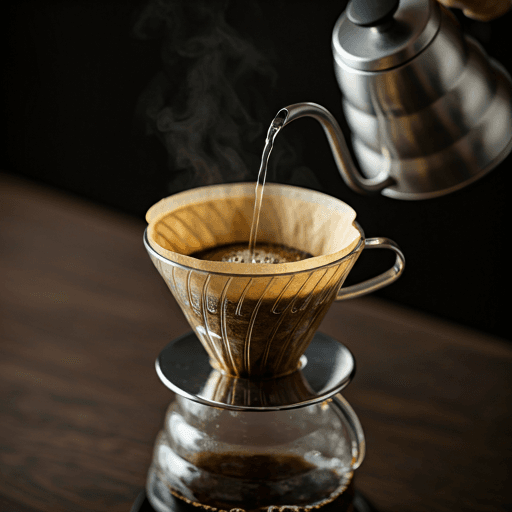
Coffee complexity describes how many distinct flavors and aromas a cup reveals, and how those notes layer and shift from the first sip to the last. A complex coffee shows several evolving layers at once — say, berry up front, a floral middle, cocoa underneath and a squeeze of citrus that appears as the cup cools — while a simple coffee tastes of one or two flat notes all the way through. Neither is a defect: complexity is simply a measure of how much is going on in a cup, and it happens to be one of the qualities specialty tasters prize most.
This guide unpacks what complexity means as a tasting term, how it differs from strength, balance and body, what shapes it, and how to slow down and taste for it yourself. Responses to any given cup vary from person to person, so treat every tasting note here as a starting point rather than a rule.
What coffee complexity means
In coffee tasting, complexity is a cupping quality — a way of describing the number, the layering and the evolution of the flavors and aromas in a cup. A complex coffee is not necessarily a strong or intense one. Strength and intensity are about how loud a flavor is; complexity in coffee is about how many flavors there are and how they interact. A gentle, delicate cup can be highly complex, and a bold, punchy cup can be quite simple.
Think of it the way you might think about music. A single sustained note can be loud and intense, but it is not complex. A chord that keeps resolving into new chords is complex even at a whisper. So when a taster calls a coffee complex, they usually mean it offers several things to notice — often across the aroma, the flavor and the finish — rather than one big, flat impression. The full vocabulary of what those individual notes might be — fruit, floral, nutty, chocolatey, spiced — is mapped out on the coffee flavor wheel, which is a useful companion when you are trying to name what you taste.
Complexity vs simplicity: is one better?
The honest answer is that neither is automatically better — it depends on what you want. A simple cup with one clear, clean note can be deeply satisfying: a comforting mug of chocolatey drip coffee does not need five competing flavors to be good. Complexity is prized in specialty coffee because it rewards attention and gives you more to explore, but a busy cup that never settles can also feel unfocused. Plenty of everyday drinkers actively prefer a straightforward flavor.
What "complex coffee flavor" really signals is range. The table below shows the difference between a simple cup and a complex one in terms of what you actually notice as you drink.
| What you notice | A simple cup | A complex cup |
|---|---|---|
| Number of flavors | One or two clear notes | Several distinct notes at once |
| Aroma | Straightforward, single-note | Layered, with new smells as it cools |
| How it changes | Tastes much the same start to finish | Shifts across the sip and as it cools |
| Finish | Short, fades quickly | Long, with flavors that keep revealing themselves |
| Overall impression | Easy, familiar, uncomplicated | Intriguing — you keep finding more to name |
How the flavors evolve
One of the clearest signs of a complex coffee is that it changes while you drink it. A complex cup does not taste the same from the first sip to the finish — it moves. Tasters often describe three moments: the front (the first flavors that land as the coffee hits your palate), the middle (what fills out as you hold it in your mouth), and the aftertaste (what lingers once you swallow). In a complex coffee, each of these can be different — bright fruit at the front, a rounder sweetness in the middle, a cocoa or spice note trailing off at the end.
Temperature is the other big driver of evolution. As a cup cools from hot to warm to nearly room temperature, aromatic compounds that were masked by heat become easier to pick out, and acidity and sweetness read differently. Many coffees that seem one-dimensional when piping hot open up considerably as they cool. That lingering, evolving tail after you swallow is worth studying on its own — our guide to coffee aftertaste goes deeper on the finish and why a long, clean one is a mark of quality.
What shapes a coffee's complexity
Complexity is not created at any single step — it is the sum of decisions from the farm to your cup. A few of the biggest factors:
- Origin and variety. Where the coffee grew and which botanical variety it is set the raw potential. Some varieties are naturally more aromatic and layered than others.
- Growing altitude. Higher-grown coffees mature more slowly, which tends to build denser beans with more concentrated, intricate flavor.
- Processing method. How the cherry is turned into a green bean — washed, natural, honey and so on — strongly shapes the flavor profile. Washed coffees often read as clean and articulate; naturals can add fruit-forward layers.
- Roast level. Lighter roasts tend to preserve more of the origin character and delicate notes, so they often taste more complex. Darker roasts push everything toward roast flavors — bittersweet, smoky, chocolatey — which can flatten the finer distinctions.
- Extraction. Even a coffee with huge potential needs careful, even brewing to show its range. Under-extraction hides flavors behind sourness; over-extraction buries them under bitterness. A well-dialed brew lets the layers come through.
The deeper science of how these choices translate into specific tastes and aromas is more than one section can hold — a good flavor wheel is the standard reference for connecting a process or origin to the notes you eventually taste.
Complexity vs balance and body
Complexity is easy to confuse with two other tasting terms, but they measure different things. Keeping them separate makes your tasting notes far more useful:
- Complexity is how much is going on — the number and layering of flavors.
- Balance is how well those elements fit together — whether the acidity, sweetness and bitterness are in harmony or one of them dominates. A coffee can be complex but poorly balanced (busy and jarring), or simple but beautifully balanced. Our guide to coffee balance covers this harmony in detail.
- Body is the weight and texture of the coffee on your tongue — light and tea-like versus heavy and syrupy. Body has nothing to do with how many flavors there are; a full-bodied cup can be simple and a light-bodied cup can be intensely complex.
A genuinely great cup is often complex, well balanced and pleasant in body all at once — but those are three separate judgments, and it helps to score them one at a time.
How to taste for complexity
Tasting for complexity is mostly about slowing down and paying deliberate attention. A rough approach:
- Smell first. Before you sip, breathe in the aroma. A lot of complexity lives in the nose, and naming smells primes you to taste them.
- Sip and hold. Take a slurping sip that sprays the coffee across your whole palate, then hold it a moment before swallowing. Notice whether the flavor at the front differs from the middle.
- Taste across temperatures. Try the same cup hot, warm and nearly cool. If new notes keep appearing as it cools, that is a strong sign of complexity.
- Count what you can name. Ask yourself, honestly, how many distinct things you can identify. One vague note is simple; three or four that you can actually name is complex.
Do not worry about matching a printed tasting note or a barista's description — your palate is your own, and the point is to notice more, not to be "right." The more cups you taste attentively, the more layers you will start to catch.
Which coffees tend to be complex
If you want to seek out complexity, the odds are best with washed, high-grown, lightly roasted single-origin coffees — the profile many specialty roasters build their menus around. These tend to keep the most origin character and the cleanest separation between notes. Naturally processed lots can be complex in a different, fruit-forward way, and some prized regions are famous for layered, floral cups.
The most reliable place to experience coffee flavor complexity is a formal tasting, where several coffees are brewed to the same recipe and evaluated side by side. That ritual — smelling, slurping and scoring in sequence — is designed precisely to surface how much is going on in each cup; our guide to coffee cupping walks through how it works and how to try a simplified version at home.
The takeaway
Complexity is one of the most rewarding lenses for tasting coffee, because it turns a quick drink into something you can keep discovering. It measures how many flavors a cup offers and how they evolve, not how strong or how balanced it is. So the next time a coffee catches your attention, slow down: smell it, sip it across temperatures, and count how many things you can name. Whether you land on one clean note or a shifting chord of them, you will be tasting more deliberately — and that, more than any label, is what deepens the pleasure of a good cup.