
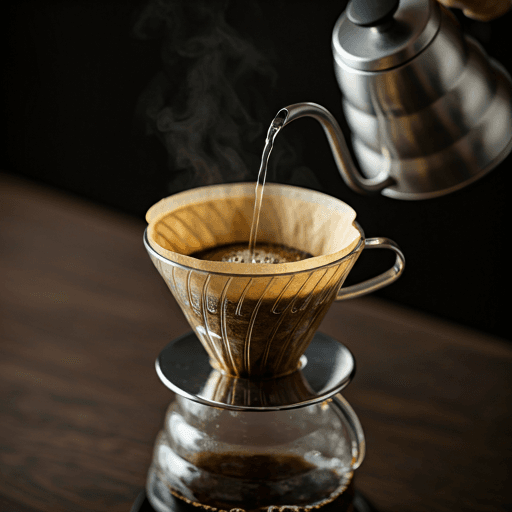
In coffee tasting, the coffee aftertaste — also called the finish — is the flavour and sensation that linger on your palate after you swallow. A great cup tends to leave a pleasant, lasting impression, often reading as chocolate, caramel, ripe fruit or florals, while a weaker or over-extracted one fades fast or leaves a harsh, dry, ashy edge. Responses vary from palate to palate, so treat any tasting note as a guide rather than a rule.
What coffee aftertaste means
Aftertaste in coffee is simply the taste and feeling that stay in your mouth once the coffee is gone. Professional tasters, or cuppers, score it directly on their forms as "aftertaste" (some call it the finish), and it sits right beside flavour, acidity, sweetness and body as one of the core signals of quality. When people ask what is coffee aftertaste, the short answer is that it is the memory of the cup — how the last impression holds, evolves or drops away in the seconds after you swallow.
Because it is the final thing you experience, the finish carries a lot of weight. Two coffees can taste alike on the first sip yet part ways completely on the finish: one keeps giving a clean, sweet echo of cocoa or berry, the other collapses into nothing or turns dry and bitter. That difference is a big part of why one cup feels satisfying and the other forgettable. For the full vocabulary of what those lingering notes might be, the coffee flavor wheel maps the whole range of descriptors.
A long finish vs a short finish
The single most useful thing to notice is how long the aftertaste lasts and how it behaves. A long finish — a lingering coffee taste that stays clean and pleasant for many seconds, often sweet with chocolate, caramel, nutty or fruity tones — is prized and usually points to good beans brewed well. A short finish that vanishes almost as soon as you swallow tends to signal a more ordinary or stale coffee with less to give. Tasters also value a finish that resolves gracefully, softening into a clean sweetness rather than snapping off or leaving something jarring behind.
Length alone is not the whole story, though. A finish can linger for the wrong reasons. If what stays behind is bitterness, an ashy or burnt edge, or a dry, astringent, mouth-puckering feel, that long finish is a fault rather than a virtue — often a sign of over-extraction, a scorched dark roast, or water that was too hot. The ideal is long and clean, not long and harsh. A pleasantly sweet close often overlaps with the impression covered in our guide to coffee sweetness.
What a good or bad aftertaste tells you
Use the finish as a quick read on the cup. Here is a rough decoder — hedge every line, because roast style, bean origin and your own palate all shift what you notice.
| Aftertaste sign | What it tends to tell you |
|---|---|
| Long, clean, sweet finish (chocolate, caramel, fruit) | Good-quality, fresh beans and a well-balanced brew |
| Short finish that vanishes quickly | Often a more ordinary or stale coffee with less to give |
| Lingering bitterness or an ashy, burnt edge | Over-extraction, a scorched dark roast, or water too hot |
| Dry, astringent, mouth-puckering close | Over-extraction, or unripe or defective beans |
| Sharp, sour finish that never resolves | Under-extraction or under-developed beans |
| Clean but flat, with little to linger on | A sound everyday cup, simply modest in complexity |
What shapes the aftertaste
Three things do most of the work: the coffee itself, its freshness, and how you brew it. Higher-grade beans with more developed sugars and cleaner processing simply have more pleasant flavour to leave behind, and roast level tilts the finish — lighter roasts often close with fruit and florals, medium roasts with caramel and cocoa, and very dark or burnt roasts with bitterness and smoke. Fresh, recently roasted beans keep a livelier, longer finish; stale beans go flat and short.
Brewing then makes or breaks it. A balanced extraction — pulling roughly the right amount of soluble material from the grounds — gives a cleaner, sweeter, longer finish. Push too far, with the grind too fine, the water too hot or the brew too long, and over-extraction drags out bitter, drying compounds that sour the aftertaste; stop too soon and the cup finishes sharp and hollow. The deeper mechanics belong to their own guides, but the headline is that a well-dialled brew protects the finish.
How to taste the aftertaste
Tasting the finish is easy to practise. Take a sip, let the coffee coat your whole mouth, then either swallow or spit and pause. Pay attention to what stays: which flavours remain, how long they hold, whether the feeling is smooth and sweet or drying and rough, and how it changes over the next five to fifteen seconds. Does it fade cleanly, bloom into something nicer, or turn bitter? Comparing two coffees side by side makes the differences obvious fast, especially if you sip water in between to reset your palate. It also helps to taste with intent rather than in passing, since the finish is quiet and easy to talk over. This is exactly the kind of structured observation that the formal ritual in coffee cupping is built around.
How to brew for a better aftertaste
You cannot add a finish that the beans do not have, but you can protect and reveal the one they do. A few general habits tend to help — treat them as starting points, not guarantees, since every bean and machine behaves a little differently:
- Start with fresh beans and grind just before brewing; staleness shortens and flattens the finish first.
- Use clean, good-tasting water at a sensible temperature — just off the boil rather than a rolling boil for most methods — so you do not scorch bitter notes into the cup.
- Dial in a balanced extraction by adjusting grind size, dose and brew time until the cup finishes clean and sweet rather than sharp (under) or harsh and drying (over).
- Taste it in the cup both hot and as it cools, because a good finish often opens up and lengthens as the temperature drops.
Aftertaste vs flavour, body and acidity
It helps to keep these four apart, because tasters score them separately. Flavour is what you taste while the coffee is in your mouth; the coffee finish, or aftertaste, is specifically what remains after it is gone — the residue and the memory, not the live sip. Body is the weight and texture on your tongue, and acidity is the bright, tangy sparkle near the front of the taste. A cup can be full-bodied yet finish short, or light-bodied yet finish long and sweet, which is why the aftertaste earns its own line on the form.
For the distinctions in detail, see how weight and texture are judged in coffee body and mouthfeel; brightness has its own character, and the flavours you can name mid-sip live on the flavour wheel. Kept separate, these qualities give you a far richer read of a cup than any single impression could.
The aftertaste is coffee's last word, and often its most honest one. Once you start paying attention to what a cup leaves behind — how long it lingers, whether it stays sweet and clean or turns dry and bitter — you have a fast, reliable way to judge beans and brews without any special equipment. Slow down on the finish, and every coffee tells you a little more about itself.