
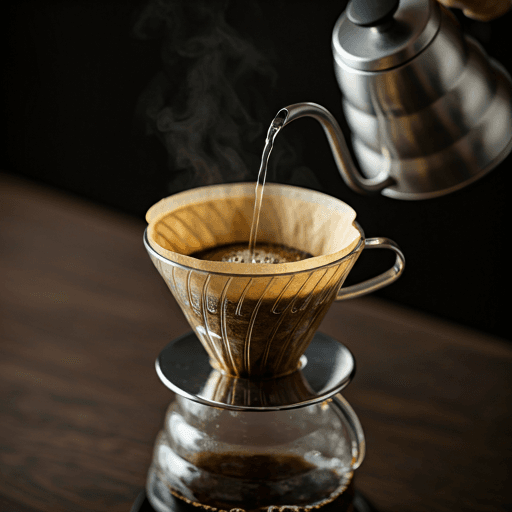
Coffee balance is a tasting term for how well a coffee's flavors fit together — the way its acidity, sweetness, bitterness, body and aroma sit in proportion, with no single quality shouting over the rest. A balanced cup of coffee tastes complete and settled; you notice the coffee as a whole rather than one jagged edge. An unbalanced cup, by contrast, reads as too sour, too bitter, flat and dull, or thin and hollow — one trait dominates and the others go missing.
Balance is one of the attributes tasters score when they cup coffee, and it is less about any single flavor than about the relationship between all of them. Below is what balance in coffee actually means, what a balanced cup feels like, how to spot imbalance, and the handful of levers — beans, roast and, above all, extraction — that push a cup toward harmony or away from it.
What coffee balance means
In specialty coffee, balance is a cupping attribute: a judgment of how the individual characteristics of a coffee — acidity, sweetness, bitterness, body and aroma — combine on the palate. A coffee can have bright acidity, real sweetness and a full body and still taste unbalanced if those pieces don't support one another. So what is a balanced coffee? It is one where proportion and harmony win out over raw intensity — where no element is begging to be turned up or down.
Think of it the way you might think of a piece of music or a plated dish: the goal is not the single loudest note but the way all the notes resolve together. A high-grown washed coffee might be prized for lively acidity, yet what earns it a high balance score is that its acidity is carried by matching sweetness and a body that gives it somewhere to land. For a full map of the individual flavors that make up a cup — from florals to chocolate to citrus — see the coffee flavor wheel. Balance is the meta-quality that describes how all those flavors relate, not any one of them alone.
What makes a cup balanced
A balanced coffee tends to share a few traits:
- Acidity rounded by sweetness — brightness that is softened and framed rather than left sharp and bare.
- Body that supports the flavor — enough weight to carry the cup, but not so much that it turns heavy or muddy.
- Bitterness in the background — present as structure, framing the cup instead of leading it.
- A clean, resolved finish — an aftertaste that fades pleasantly rather than turning harsh or hollow.
- Everything in proportion — no single trait you'd want to dial back or push forward.
When those pieces line up, tasters often describe the cup as "complete," "round" or "harmonious," and good coffee flavor balance is exactly that sense of nothing being out of place. The brightness of the coffee's acidity is a useful example: on its own, acidity can be thrilling or it can be sour; in a balanced cup it is tempered by sweetness so it reads as juicy and lively rather than tart. The same goes for body and bitterness — each is welcome as long as it stays in scale with the rest.
Signs a coffee is out of balance
Imbalance usually shows up as one quality overpowering the others. The common patterns are easy to recognize once you know them:
- Too sour or sharp — bright, biting acidity with little sweetness to soften it; can taste aggressive or lemony-tart.
- Too bitter — harsh, drying bitterness that lingers and buries the sweeter, more delicate notes.
- Flat and dull — no lift or brightness at all; the cup tastes lifeless and one-dimensional even when it isn't especially bitter.
- Hollow or thin — a weak middle and a body so light the cup feels watery, with a finish that drops away too quickly.
None of these automatically mean "bad beans." Far more often they point to how the coffee was roasted or, most commonly, how it was brewed — which is good news, because those are things you can adjust. The decoder below maps the most common off-notes to a likely cause and a quick change to try.
| What you taste | Likely cause | Quick nudge to try |
|---|---|---|
| Too sour, sharp, thin | Under-extraction (or grind too coarse) | Grind a little finer; brew slightly longer or hotter |
| Too bitter, harsh, drying | Over-extraction (or grind too fine) | Grind coarser; shorten the brew; ease the water temperature down |
| Flat, dull, muddy | Stale beans, water too cool, or over-extraction | Use fresher coffee; check temperature; reduce contact time |
| Weak, watery, hollow | Too little coffee for the water | Tighten the ratio — a touch more coffee per cup |
| Ashy, over-roasted, one-note | Very dark roast dominating | Try a lighter roast, or grind a shade coarser |
Treat these as starting points rather than rules — every coffee, grinder and brewer behaves a little differently, so change one variable at a time and taste as you go.
What shapes balance: beans, roast and extraction
Three big levers decide whether a cup lands in balance. The first two are set before you brew; the third is the one you steer every morning.
The beans and origin
Variety, growing altitude, processing method (washed, natural or honey) and freshness set the raw material. Some origins lean bright and acidic, others sweet and heavy-bodied, so the natural "balance point" differs from coffee to coffee. A delicate, floral lot and a dense, chocolatey one will each feel balanced in a different place — part of the skill is meeting each coffee where it is.
The roast level
Roast shifts the seesaw between acidity and bitterness. Lighter roasts preserve more acidity and origin character; darker roasts trade some of that brightness for roast-driven bitterness and body. A roast pushed too far in either direction — underdeveloped and grassy, or scorched and ashy — makes balance harder to reach no matter how carefully you brew.
Extraction, the biggest everyday lever
For most people brewing at home, extraction is where balance is won or lost. Under-extraction — pulling too little out of the grounds — leaves a cup that is sour, sharp and thin. Over-extraction — pulling too much — makes it bitter, harsh and drying. The sweet spot in between is exactly where acidity, sweetness and bitterness settle into proportion. The mechanics of what dissolves when, and why the order matters, are covered in how coffee extraction works; for balance, the short version is that you are aiming for the middle of that range.
How to brew for balance
Since extraction does most of the work, brewing for balance mostly means dialing three variables — grind, ratio and time — until the cup tastes proportioned. Rough starting logic, all of it to be adjusted by taste rather than treated as gospel:
- Grind — a finer grind extracts more (nudging a sour cup toward balance, or a balanced cup toward bitter); a coarser grind extracts less.
- Ratio — more coffee to water builds body and strength; less thins the cup out. A common filter-brew starting point is roughly 1 part coffee to 16–17 parts water, then tweak from there.
- Time and temperature — longer contact and hotter water extract more; shorter and cooler extract less.
The workflow is simple even if it takes practice: brew, taste, decide whether the cup leans sour (extract more) or bitter (extract less), change one thing, and brew again. Fresh beans and clean, good-tasting water make the target far easier to hit. There is no universal "correct" setting; balance is simply the point where, for that coffee on that gear, nothing tastes like it is fighting anything else. Because so much varies by bean, grinder and method, expect to re-dial whenever you switch coffees.
Balance vs acidity, sweetness and body
It helps to keep balance separate from the individual attributes it draws on. Acidity is the brightness; sweetness is the sugar-like, rounding quality; and body and mouthfeel are the weight and texture the coffee leaves on your palate. Each of these can be judged on its own — a coffee can be very acidic, notably sweet or unusually full-bodied. Balance is the higher-order question of whether those separate qualities add up to something coherent.
That distinction matters in practice. A cup can score well on every individual attribute and still feel unbalanced if one of them runs away from the others; conversely, a modest coffee with nothing spectacular in any single dimension can still be beautifully balanced. Intensity and balance are not the same thing, and chasing one does not guarantee the other.
In the end, that is the whole point of balance: it is the quality that turns a list of flavors into a cup you actually want to keep drinking. You don't need a cupping form to chase it — just pay attention to whether anything tastes too loud or too quiet, then nudge grind, ratio and time until the coffee reads as one thing rather than several competing parts. Get the proportions right and even simple, everyday beans can taste complete.