
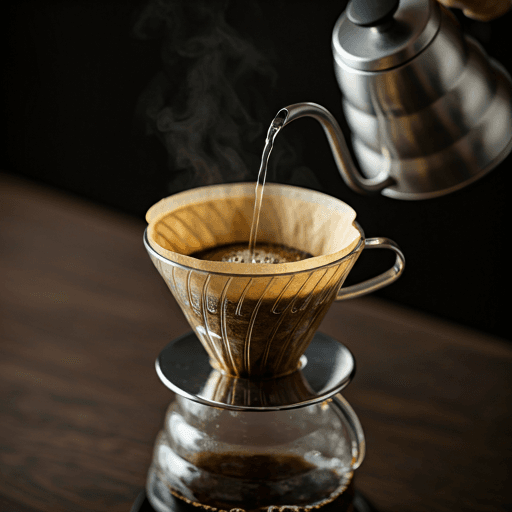
Coffee extraction is the process of hot water dissolving flavor out of ground coffee. Get it right and the cup tastes sweet, rounded, and balanced; pull too little and it turns sour, thin, and salty; pull too much and it goes bitter, dry, and harsh. Extraction is the single idea sitting behind every brew method, from a paper filter to an espresso shot, and once you can taste it you can steer almost any coffee toward better.
This guide keeps it practical: what extraction actually is, how under- and over-extraction taste different, the handful of levers that move it, and how to dial in a cup by flavor alone. You do not need a lab or a numbers obsession to use any of this.
What coffee extraction actually is
A roasted coffee bean is only partly soluble. When you grind it and add hot water, the water pulls dissolvable compounds out of the grounds and carries them into your cup. That transfer is extraction. Only about a fifth of a ground coffee's weight typically dissolves into a well-made brew — specialty guides often aim for somewhere in the high teens to low twenties as a percentage of the grounds — and the rest is spent material you throw away. Extraction in coffee is simply how much of that soluble material you managed to draw out, and in what balance.
The compounds do not all leave at the same speed. As a rough sequence, water tends to dissolve them in this order:
- Bright acids first — the fruity, tart, sometimes sharp notes come out early and fast.
- Sweetness and sugars next — caramel, chocolate, and rounded body build up in the middle of a brew.
- Bitter and drying compounds last — heavier, more astringent material dissolves slowly and arrives late.
That ordering is the whole game. Stop too early and you get mostly acid with little sweetness to balance it. Go too far and you keep pulling until the bitter, drying compounds swamp the cup. The sweet spot is where the acids and sugars are in, and most of the harsh material is still locked in the grounds.
Under-extraction vs over-extraction
Because the flavors come out in order, a badly balanced cup usually fails in one of two recognizable directions. Learning to name them is the fastest way to fix your coffee.
Under-extracted coffee: sour and thin
Under-extracted coffee has only given up its earliest, fastest compounds — the sharp acids — without the sweetness that normally softens them. It tastes sour, sharp, and salty, with a thin body and a hollow, quick finish that fades almost as soon as you swallow. People often mistake this sourness for a "too strong" cup, but it is really a cup that stopped too soon. Grind too coarse, water too cool, a brew that ran too fast, or too little contact between water and grounds all push you here.
Over-extracted coffee: bitter and dry
Over-extracted coffee has been pushed past the sweet middle so that the slow, heavy compounds have flooded in. It tastes bitter, dry, and astringent — that mouth-puckering, ashy, lingering harshness that coats your tongue. A grind that is too fine, water that is too hot, a brew that ran too long, or an overly dark or stale roast all tip you into over-extraction. Bitterness is the classic signature of a cup that went too far.
The balanced middle
Between those two extremes is the target: enough extraction to bring in the sugars and body that round off the acidity, but not so much that the bitter compounds take over. A balanced cup reads as sweet, clear, and syrupy with a long, pleasant finish. If you can taste the difference between sour and bitter, you already have the map you need — one tells you to extract more, the other to extract less.
The levers that control extraction
You control extraction with a small set of variables. Change one and you move where the cup lands between sour and bitter. In practice, change only one at a time so you can taste what each one does.
- Grind size — finer grounds have more surface area and extract faster and more; coarser grounds extract slower and less. This is the most powerful lever most people have. For the sizes that suit each brewer, see our coffee grind size chart, and for technique our guide on how to grind coffee beans at home.
- Contact time — the longer water sits with the grounds, the more it dissolves. A slow-draining pour-over or a long steep extracts more than a quick one.
- Water temperature — hotter water dissolves faster and pulls more; cooler water extracts less, which is why cold brew needs many hours. We cover the sweet-spot range in our note on the best water temperature for coffee.
- Coffee-to-water ratio — this mostly sets strength, but it interacts with extraction too. Dialing your dose is its own craft; start with our coffee brewing ratios guide.
- Agitation — stirring, swirling, or a turbulent pour speeds contact between water and grounds and raises extraction. More agitation, more extraction.
Grind size, temperature, and ratio each have their own deep dives; this article is the map that ties them together. When a cup is off, you are almost always adjusting one of these five.
Extraction yield vs strength (TDS)
One point trips up a lot of home brewers: extraction and strength are two different things. Extraction is how much soluble material you pulled out of the grounds. Strength — often measured as TDS, or total dissolved solids — is how concentrated the final drink is, meaning how much coffee is dissolved in how much water.
You can have a strong cup that is under-extracted (lots of coffee, but sour because the grind was too coarse) or a weak cup that is over-extracted (little coffee, but bitter because the water was too hot and sat too long). Strength is roughly set by your ratio; extraction is set by grind, time, temperature, and agitation. Adjusting your ratio makes a cup more or less intense without necessarily fixing a sour or bitter flavor — for that, you change the extraction levers.
Specialty cafes sometimes measure both with a refractometer, but you do not need one. Your tongue reads sour-versus-bitter perfectly well, and that is the only instrument required to dial in a good cup at home. Treat any percentage you read online as an approximate guide, not a rule — the numbers vary by coffee, roast, and method.
How to dial in coffee extraction by taste
Here is the whole method in one move. Brew a cup, taste it, and ask a single question: is it more sour or more bitter?
- Too sour (under-extracted)? Extract more: grind finer, use hotter water, or extend the brew time. Nudge one lever, brew again, taste again.
- Too bitter (over-extracted)? Extract less: grind coarser, use cooler water, or shorten the brew time.
- Sweet and balanced? Write down exactly what you did so you can repeat it.
Change one variable per attempt so you always know what caused the shift. Grind size is usually the fastest and most dramatic lever, so start there before fiddling with temperature or time. Use the table below as a quick decoder whenever a cup disappoints.
| Extraction level | How it tastes | How to fix it |
|---|---|---|
| Under-extracted | Sour, sharp, salty, thin body, hollow and quick to fade | Extract more: grind finer, brew hotter, lengthen the time, add gentle stirring |
| Balanced (the target) | Sweet, rounded, clear acidity, syrupy body, long clean finish | Nothing — note the settings and brew it the same way again |
| Over-extracted | Bitter, dry, astringent, ashy, harsh lingering aftertaste | Extract less: grind coarser, brew cooler, shorten the time, ease off agitation |
Why extraction is worth understanding
Every brewing debate — grind setting, water temperature, bloom, ratio, pour pattern — is really an argument about extraction. Once you hear a sour cup and reach for a finer grind, or taste bitterness and back off the heat, you stop chasing recipes and start reading the coffee itself. The same bag of beans can make three completely different cups depending on how far you pull it, and the difference between a forgettable brew and a genuinely delicious one is often a single small adjustment. That is the quiet power of understanding coffee extraction: it turns guesswork into a conversation you can actually have with your own cup.