
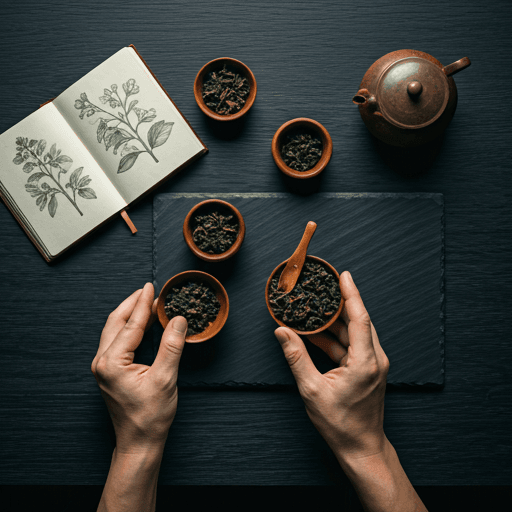
Chocolate tea is not one drink but a small family of them. The name covers three very different cups: a tisane brewed from roasted cacao husks (often called cacao tea or cocoa tea), a true tea such as black tea or pu-erh blended with cocoa for a dessert-like flavour, and a caffeine-free rooibos scented with chocolate. They share an aroma but differ in base, caffeine and taste, so it helps to know which one is in your cup.
What they almost never are is melted hot chocolate. That distinction trips people up, so we will clear it up below, then walk through each style, its caffeine, and how to brew it well.
What is chocolate tea?
At its simplest, chocolate tea is any infusion built around the flavour of chocolate. That flavour can come from real cacao (the husks, shells or nibs of the cocoa bean) or from added cocoa and natural chocolate flavouring layered onto a tea base. Because the flavour can ride on so many different bases, the same shelf label can hide a caffeine-free herbal cup or a brisk caffeinated one.
It usually falls into one of three buckets:
- Cacao husk (cocoa shell) tea – a tisane made only from roasted cacao husks. Naturally low in caffeine, but it carries theobromine, cacao's own gentle stimulant.
- Chocolate-flavoured true tea – black tea, pu-erh or another leaf from the tea plant, blended with cocoa nibs or chocolate flavour. Caffeine matches the base leaf.
- Chocolate rooibos (or honeybush) – a naturally caffeine-free herbal base scented with cocoa, for a sweet dessert cup with no caffeine at all.
Each is a kind of herbal or flavoured tea in its own right, and the differences matter most if you are drinking it in the evening.
The three kinds of chocolate tea compared
Here is the quick map. Use it to read a label or a menu before you steep.
| Type | Base | Caffeine | Flavour |
|---|---|---|---|
| Cacao husk / cocoa shell tea | Roasted cacao husks (a tisane) | Low caffeine, plus theobromine (cacao's mild stimulant) | Toasty, malty, gently chocolatey; lighter than it smells |
| Chocolate-flavoured black tea or pu-erh | Camellia sinensis leaf + cocoa nibs or flavour | Caffeinated, like its base leaf | Rich, brisk, dessert-like; deep with milk |
| Chocolate rooibos / honeybush | Caffeine-free herbal base + cocoa | Caffeine-free | Naturally sweet, nutty, smooth |
| Drinking chocolate (not a tea) | Melted cocoa solids + milk or water | Some caffeine and theobromine from cocoa | Thick, rich, fully chocolate |
1. Cacao husk tea (cacao tea, cocoa tea)
This is the purest expression of chocolate tea. It is brewed from the roasted shells or husks that come off cacao beans during chocolate making, so it is a by-product of the chocolate trade rather than a leaf tea. The aroma is unmistakably chocolatey, but the taste surprises first-timers: it is lighter, toasty and a touch malty, closer to a roasted grain infusion than to a chocolate bar. It is also very low in calories on its own.
On caffeine, cacao husk tea is naturally low, often in the rough range of 10 to 20 mg per 8 oz cup, well under a cup of coffee. What it does carry is theobromine, the gentle, slow-release stimulant that gives cacao its lift. Cacao holds several times more theobromine than caffeine, which is why a cup feels warming and mildly energising without the sharp edge of coffee. That makes it a popular evening or afternoon cup.
2. Chocolate-flavoured true tea
Here the chocolate flavour is built onto real tea from the Camellia sinensis plant, most often black tea, sometimes pu-erh or even an oolong. Blenders add cocoa nibs, cocoa pieces or natural chocolate flavour so the cup reads like dessert. Because the base is a true tea, the caffeine comes with it: expect a caffeinated cup, brisk and full-bodied, that takes milk well. Black-tea chocolate blends are the classic after-dinner indulgence, and a chocolate pu-erh leans earthy and deep.
3. Chocolate rooibos and honeybush
If you want the chocolate note with zero caffeine, this is the route. Rooibos, a red bush from South Africa, is naturally caffeine-free and slightly sweet, which makes it a friendly partner for cocoa. Blends often pair cacao husks or cocoa with rooibos (or its cousin honeybush) for a smooth, dessert-like cup you can drink at night. If rooibos is new to you, our guide to rooibos tea covers the base in full, and the wider world of caffeine-free teas is worth a look if evening sipping is your goal.
Chocolate tea is not the same as drinking chocolate
This is the big one. Drinking chocolate, hot chocolate or cocoa is made by dissolving or melting cocoa solids (and usually sugar) into hot milk or water. It is thick, rich and fully chocolate because you are drinking the cocoa itself. Chocolate tea is an infusion: you steep husks or flavoured leaves in hot water and strain them out, so the result is a clear, much lighter, tea-like drink. One is a dessert in a mug; the other is a brewed cup with a chocolate accent. If you want the dense, chocolatey hit, you want drinking chocolate, not chocolate tea.
How to brew chocolate tea
The method depends on which style you have.
Cacao husk tea
- Use roughly one to two tablespoons of cacao husks per cup (they are light and bulky).
- Heat water to near boiling, around 200–212°F (93–100°C).
- Pour over the husks, cover the cup or pot to trap the aroma, and steep 5 to 10 minutes. Husks need a longer steep than leaf tea to give up their flavour.
- For more body, simmer the husks gently for 5 to 10 minutes on the stove, then strain.
- Drink it plain, or add a splash of milk and a little sweetener for a cocoa-like finish.
Chocolate-flavoured true tea or rooibos
- Brew to the base leaf's rules. For a black-tea blend, use water at or near boiling and steep about 3 to 5 minutes.
- For a chocolate rooibos, near-boiling water and a 5 to 7 minute steep work well; rooibos is forgiving and rarely turns bitter.
- Taste and adjust. These blends shine with a splash of milk, which rounds the cocoa into something genuinely dessert-like.
How people drink chocolate tea
Most people reach for chocolate tea as a cosy, lower-effort alternative to dessert. The caffeine-free versions (cacao husk and chocolate rooibos) are popular in the evening, while a caffeinated chocolate black tea makes a good mid-afternoon pick-me-up. It is usually served hot, with or without milk; a little milk and a touch of honey or sugar pushes any of them toward a hot-chocolate feel without the richness. All three also chill nicely: brew strong, cool, and pour over ice for a chocolate iced tea.
A quick wellness note, kept general and not medical advice: cacao husk tea is prized for its theobromine and a comforting, low-stimulant lift, and rooibos brings its own antioxidants, but the amounts in a brewed cup are modest. Enjoy chocolate tea as a pleasant drink rather than a supplement, and if caffeine or theobromine sensitivity is a concern for you, choose the caffeine-free rooibos style.
Choosing your cup
If you want the cleanest, most natural chocolate-from-cacao experience with barely any caffeine, go for cacao husk tea. If you want a rich, after-dinner cup and do not mind caffeine, a chocolate black tea or pu-erh delivers. And if you want chocolate flavour with no caffeine at all, chocolate rooibos is the easy answer. Whichever you pick, remember the label can be misleading, so check the base before you brew, especially late in the day.
Chocolate tea is one of the friendliest doors into flavoured and herbal infusions: comforting, low-fuss, and endlessly tweakable with milk, spice or ice. From here, it is a short hop to exploring the wider types of tea and finding the next cup worth steeping.