
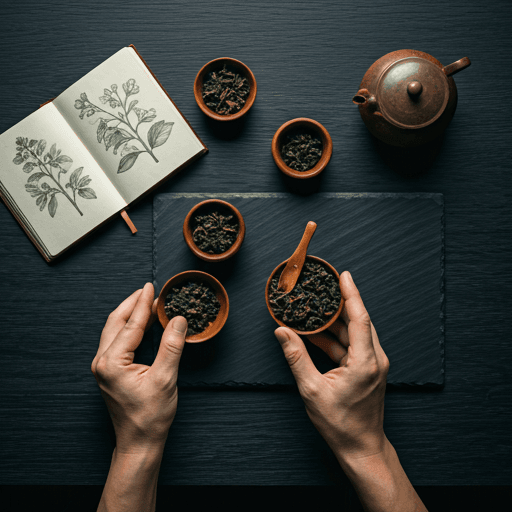
Caffeine free tea splits into two groups that are easy to mix up. True caffeine free tea means herbal infusions, things like rooibos, peppermint, chamomile, ginger, hibiscus and fruit blends, that never contained caffeine because they are not made from the tea plant. Decaffeinated tea is different: it is real tea with most of its caffeine stripped out, but a trace stays behind. So decaf is not quite the same as caffeine-free, which is exactly why so many people ask whether there is any caffeine in caffeine free tea at all.
This guide untangles the two, shows which popular drinks are naturally caffeine-free and which always contain caffeine, explains how decaf tea is made and why a little caffeine survives, and helps you choose the right cup for the evening or for cutting back. A quick note up front: this is general, evidence-based information, not medical advice. For your own limits, talk to a clinician.
What "caffeine free tea" really means
The phrase covers two genuinely different things, and the difference matters if you are avoiding caffeine for sleep, sensitivity or health reasons.
- Naturally caffeine-free (herbal infusions). These are made from herbs, flowers, roots, spices, bark or fruit, not from the tea plant. They never had any caffeine to begin with, so there is nothing to remove. Rooibos, peppermint, chamomile and ginger all sit here.
- Decaffeinated true tea. This starts as ordinary black, green, oolong or white tea, all of which contain caffeine, and has had the vast majority of that caffeine taken out. It is genuinely low-caffeine, but not zero.
That distinction is the whole reason "decaf" and "caffeine-free" should not be used interchangeably. Decaf is low; herbal is none.
Why herbal "tea" is technically a tisane
Real tea, whether black, green, oolong or white, comes from a single plant: Camellia sinensis. That plant naturally produces caffeine, so every true tea contains some. Herbal "teas" come from completely different plants, so botanically they are not tea at all. The proper word for them is a tisane, an infusion of something other than the tea plant. We call them tea out of habit because we steep and sip them the same way.
This is more than a naming quirk. Because a tisane has no link to Camellia sinensis, it carries no caffeine and needs no decaffeination process. That is what makes the herbal family the reliable, no-asterisk answer when you genuinely want zero caffeine. For the wider world of these infusions, our guide to what herbal tea is is a good companion read.
Which teas are naturally caffeine-free
These popular infusions contain no caffeine at all, with no processing required to make them so:
- Rooibos (red bush tea). A naturally sweet, low-tannin infusion from a South African shrub, Aspalathus linearis. It is one of the most loved caffeine-free options, and we cover it in depth in our rooibos tea explainer.
- Peppermint and spearmint. Bright, cooling mint infusions, often reached for after meals.
- Chamomile. A gentle flower infusion with a soft, apple-like sweetness, a classic bedtime cup.
- Ginger. Warming and spicy, made from fresh or dried root.
- Hibiscus. Tart, ruby-red and refreshing hot or iced.
- Lemon balm. A mild, lemony herb in the mint family, often used to wind down.
- Fruit and berry infusions. Apple, berry and citrus blends, usually caffeine-free, though you should read the label (see the warning below).
Which teas always contain caffeine
Every true tea contains caffeine because it comes from the caffeine-producing tea plant. Roughly speaking, per 8 oz (about 240 ml) cup:
- Black tea: around 40 to 70 mg of caffeine.
- Green tea: around 20 to 45 mg.
- Oolong and white tea: generally somewhere in between, and highly variable.
These figures are typical and approximate. Caffeine varies with the leaf, the amount used, water temperature and steeping time. There is no such thing as a naturally caffeine-free black or green tea, only a decaffeinated one. To understand how caffeine actually works and why it affects people differently, see our caffeine explainer.
One trap: "herbal" does not always mean caffeine-free
A few plants are herbal yet naturally caffeinated. Yerba mate and guayusa both contain meaningful caffeine despite being tisanes, not true tea. And some commercial "herbal" blends quietly include green tea, black tea or yerba mate for flavour or a lift. If zero caffeine is the goal, always check the ingredient list rather than trusting the word "herbal" on the front of the box.
Is there caffeine in caffeine free tea?
Here is the question people most often search, and the honest answer depends on which kind you mean. In a genuine herbal tisane, no, there is no caffeine in caffeine free tea, because the plant never made any. In a tea labelled "decaffeinated," yes, a small trace remains. Decaffeination removes the great majority of the caffeine, typically leaving on the order of just a few milligrams per cup, often cited around 1 to 8 mg in an 8 oz cup, compared with maybe 40 to 70 mg in a regular black tea. That is a roughly 95 to 99 percent reduction, but it is not absolute zero.
So if even a trace matters to you, choose a herbal infusion rather than a decaf. If you simply want to cut caffeine sharply while still drinking real black or green tea for its flavour, decaf does the job well.
How decaffeinated tea is made
Decaffeination removes caffeine from already-processed tea leaves. Four methods are common, and the leftover trace exists because none of them strips the leaf completely:
- Carbon dioxide (CO2). Pressurised CO2 in a "supercritical" state, behaving like both liquid and gas, draws the caffeine out. It is gentle on flavour and leaves no chemical residue, which is why premium and organic brands favour it.
- Ethyl acetate. A compound found naturally in tea binds the caffeine. Tea processed this way is often labelled "naturally decaffeinated."
- Water process. The leaves are steeped and the caffeine is captured through a carbon filter, then the flavour-rich water is returned to the leaves.
- Methylene chloride. A solvent method, effective and widely used historically, though less favoured by brands marketing a clean process.
Whichever method is used, a little caffeine clings to the leaf, which is why no decaf can honestly call itself caffeine-free.
Caffeine free tea at a glance
| Drink | Caffeine? | Notes |
|---|---|---|
| Rooibos (red bush) | None | Herbal tisane from a South African shrub; naturally sweet, low tannin |
| Peppermint / spearmint | None | Mint tisane; cooling, popular after meals |
| Chamomile | None | Flower infusion; a classic bedtime cup |
| Ginger | None | Root infusion; warming and spicy |
| Hibiscus | None | Tart, ruby-red; lovely iced |
| Lemon balm | None | Mild, lemony, calming herb |
| Fruit / berry blends | Usually none | Check the label; some add tea or yerba mate |
| Decaf black or green tea | Trace (~1 to 8 mg/cup) | Real tea, ~95 to 99% removed; not absolute zero |
| Regular black tea | ~40 to 70 mg/8 oz | True tea, always caffeinated |
| Regular green tea | ~20 to 45 mg/8 oz | True tea, always caffeinated |
| Yerba mate / guayusa | Yes | Herbal but naturally caffeinated |
When to choose caffeine free tea
There are a few clear moments when reaching for a caffeine-free cup makes sense:
- In the evening. A caffeine free hot tea such as chamomile, rooibos or peppermint lets you enjoy a warm, comforting cup at night without the stimulant keeping you awake. Many people find a herbal blend a soothing ritual that may help them wind down.
- If you are sensitive to caffeine. Some people feel jittery, anxious or wired on even small amounts. Herbal tisanes let you drink freely without watching the clock.
- If you are cutting back. Swapping an afternoon or evening true tea for a tisane is an easy way to lower your daily caffeine without giving up the habit of a hot drink.
- During pregnancy, in discussion with a doctor. Health authorities such as ACOG and the NHS commonly advise limiting caffeine to about 200 mg a day in pregnancy. Caffeine turns up in many foods, drinks and medicines, so some people choose herbal infusions or decaf to keep the total comfortably low. Importantly, "herbal" is not automatically "pregnancy-safe": some herbs are not recommended during pregnancy. Always discuss your own limit, and which specific herbs are fine, with your doctor or midwife.
A reminder that this is general information, not medical advice. Caffeine figures here are typical and label-dependent; consult a clinician about your own situation.
How to choose a good caffeine-free cup
- Decide: zero or just low? If you need genuinely none, pick a herbal tisane. If sharply reduced real tea is fine, decaf works.
- Read the ingredients. Confirm a "herbal" blend has no green tea, black tea, yerba mate or guayusa hiding in it.
- Match the flavour to the moment. Chamomile and lemon balm for calm, peppermint and ginger for after a meal, hibiscus for something tart and refreshing, rooibos for a smooth all-rounder.
- Mind the brew. Most herbals are forgiving: boiling water and a longer steep deepen flavour without adding bitterness. Decaf real teas still benefit from their usual gentler temperatures.
- Remember benefits vary by herb. Any wellness effect is herb-specific and generally mild, framed as "may," not guaranteed. Drink them for the pleasure first.
The bottom line
Caffeine free tea is really two families. Herbal tisanes such as rooibos, peppermint, chamomile and hibiscus carry no caffeine because they were never made from the tea plant, while decaffeinated black or green tea keeps a small trace even after most of it is removed. Knowing the difference lets you pick with confidence: a true tisane when you want absolutely none, a decaf when you want the flavour of real tea with far less of the buzz. From there, the caffeine-free shelf is a genuinely fun place to explore, so brew a few, hot and iced, and find the cups that suit your evenings best.