
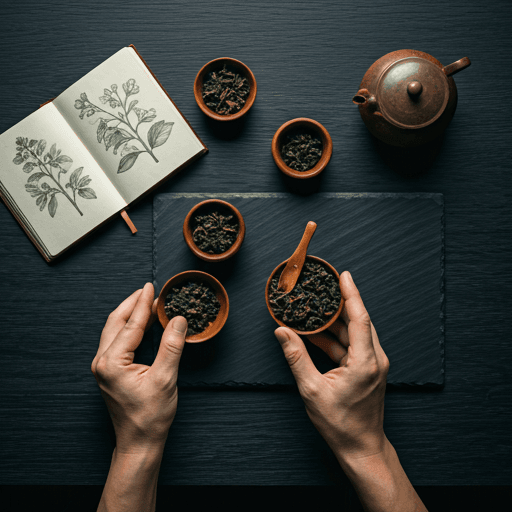
Rooibos is a caffeine-free herbal tea from South Africa, made from the fine needle-like leaves of a shrub called Aspalathus linearis. The planner head term "red bush tea" simply means rooibos, an Afrikaans name that literally translates as "red bush". It brews up a warm reddish-amber, tastes naturally sweet and smooth, carries almost no bitterness and is famously hard to over-steep. This guide explains what rooibos is, how red and green rooibos differ, why it is so low in tannins, and the measured "may" benefits behind the antioxidant headlines.
What is red bush tea (rooibos)?
Strictly speaking, rooibos is not a true "tea" at all. Real tea, whether black, green, oolong or white, comes from a single plant, Camellia sinensis. Rooibos comes from a completely different, legume-family shrub that grows in just one place on earth. We call it a tea because we steep it and drink it like one, but botanically it belongs with the herbal infusions.
That shrub is endemic to the fynbos, the distinctive shrubland of South Africa's Western Cape, and in particular the rugged Cederberg mountains north of Cape Town. The plant is adapted to a tough environment: acidic sandy soils, hot dry summers and wet winters. It grows almost nowhere else commercially, which is part of what makes rooibos special. In 2021 the European Union granted "rooibos" protected designation of origin status, the first African food product to earn that protection, meaning anything sold as rooibos in the EU must genuinely come from Aspalathus linearis grown in that South African region.
The drinking tradition is usually traced to the Khoi people of the Cederberg, who harvested and used the wild plant; the modern, cultivated rooibos industry took shape over the twentieth century and has since spread the drink worldwide. If you enjoy exploring caffeine-free infusions, rooibos sits alongside other plants covered in our herbal tea guide to common types.
Red rooibos vs green rooibos
There is really one rooibos plant but two main styles, and the difference comes down to oxidation, not different shrubs.
- Red rooibos (traditional) is the familiar kind. After the leaves are cut and bruised, they are left to oxidise (often loosely called "fermenting"). This step turns the needles a deep red-brown, develops the warm reddish brew and brings out the rounded, honeyed, slightly woody-sweet flavour most people picture when they think of red bush tea.
- Green rooibos (unoxidised) skips that oxidation step, much as green tea skips the oxidation that black tea goes through. The result is greener leaves, a lighter, grassier and more delicate cup, and a higher level of certain antioxidant compounds, because they are not broken down during oxidation. Green rooibos is less common and usually pricier.
The comparison below summarises how the two stack up.
| Feature | Red rooibos | Green rooibos |
|---|---|---|
| Processing | Oxidised ("fermented") | Unoxidised |
| Colour of brew | Deep reddish-amber | Pale golden-green |
| Flavour | Sweet, smooth, woody-honeyed | Lighter, grassy, fresh |
| Aspalathin level | Lower (degraded in oxidation) | Higher |
| Caffeine | None | None |
| Availability | Widely sold, affordable | Less common, pricier |
Why rooibos is caffeine-free and low in tannins
Because rooibos has nothing to do with the Camellia sinensis plant, it contains no caffeine at all, never has, with no decaffeination process required. That is the single biggest reason people reach for it. It makes a soothing evening drink, it suits anyone cutting back on stimulants, and it is a common caffeine-free swap for those who simply want a warm cup late in the day. If you want to understand how caffeine works in the drinks that do contain it, our caffeine explainer covers the basics.
Rooibos is also naturally low in tannins compared with black and green tea. Tannins are the compounds that lend regular tea its astringent, mouth-drying edge, and in larger amounts they can interfere with how the body absorbs some minerals such as iron. The low-tannin character is also why rooibos tastes so mellow and why milk is optional rather than a rescue, the cup is rarely sharp enough to need softening.
Rooibos benefits: what the evidence actually says
Most of the interest in rooibos benefits centres on its antioxidants, especially a polyphenol called aspalathin that is fairly distinctive to this plant, along with others such as quercetin and nothofagin. Green rooibos generally carries more of these than red, because oxidation breaks some of them down.
It is worth being honest about the kind of evidence here. A lot of it comes from laboratory and small or early human studies, plus a long history of traditional use, rather than large clinical trials. So the sensible framing is "may", not "will". With that caveat, rooibos is reasonably associated with the following.
- Antioxidant intake. Drinking rooibos has been shown to raise the antioxidant capacity of the blood for a short window after a cup, which is the most consistent finding.
- Heart and metabolic interest. Some early research has looked at rooibos polyphenols in relation to markers tied to heart health and blood sugar, but this is an area of ongoing study, not settled fact.
- A gentle, hydrating, calorie-free drink. Plain rooibos has no calories, no caffeine and no real bitterness, which makes it an easy everyday hot or iced drink.
None of this makes rooibos a medicine. Treat it as a pleasant, low-risk drink with some promising compounds rather than a remedy. If you are pregnant or breastfeeding, take regular medication or have a health condition, it is wise to check with a doctor before relying on any herbal tea, including rooibos. For another popular caffeine-free option and how its evidence compares, see our look at hibiscus tea benefits.
How to brew rooibos tea
One of the joys of rooibos, or roiboos tea as it is sometimes misspelled, is how forgiving it is. With no caffeine and few tannins, it will not turn bitter or harsh even if you forget it, so you have real freedom with time and strength.
Ingredients
- One teabag, or about one heaped teaspoon of loose rooibos, per cup (roughly 8 oz / 240 ml)
- Fresh, fully boiling water
- Optional: a slice of lemon, a little honey, sugar, or milk to taste
Steps
- Bring water to a rolling boil. Unlike green tea, rooibos likes properly boiling water.
- Pour over the teabag or loose leaves in your cup or pot.
- Steep at least 5 minutes for a standard cup. Because it cannot over-extract into bitterness, you can comfortably push to 7, 10 or even 15 minutes for a deeper, fuller brew.
- Remove the bag or strain the leaves. Drink it plain to taste its natural sweetness, or add lemon, honey or milk if you like.
Iced and beyond
Rooibos makes an excellent iced tea, brew it a little stronger, then chill and pour over ice. It is also the base for many blends and lattes, including the spiced "red latte" made by steaming milk into strong rooibos. Its low tannin and lack of caffeine make it especially family-friendly as an evening cup.
How rooibos fits in your tea cupboard
If you mostly drink black or green tea, think of rooibos as the easygoing, anytime member of the cupboard: no caffeine to keep you up, no tannins to turn it bitter, and a naturally sweet flavour that takes milk, lemon or nothing at all. For the bigger picture of how true teas and infusions relate, our overview of the types of tea explained sets rooibos in context alongside black, green, white, oolong and other herbals. Whichever style you reach for, rooibos rewards a little experimentation, so brew a long, strong pot, try it both hot and iced, and find the cup that suits you.