
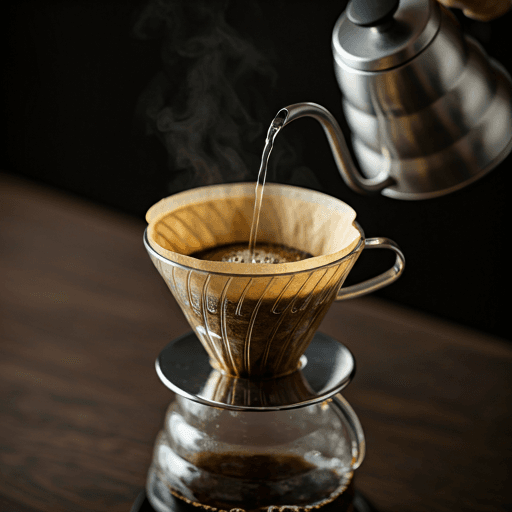
The short version of chemex vs drip coffee comes down to who is doing the pouring. A Chemex is a manual pour-over: you stand over an hourglass glass carafe and pour hot water across the grounds by hand. An automatic drip machine does that showering for you at the push of a button. Both send water down through coffee and a paper filter, so the real split is hands-on control versus hands-off convenience.
Chemex vs drip coffee: the short answer
Picture two brewers side by side. One is a single piece of curved glass shaped like an hourglass, with a wooden collar around the middle. You place a thick folded paper filter in the top, add ground coffee, and slowly pour hot water yourself. The other is the familiar electric machine that sits on a kitchen counter: you fill a reservoir, load a basket filter, press a button, and walk away while it heats the water and drips it into a carafe below.
So when people compare a Chemex to "drip coffee," they usually mean this everyday automatic drip machine. The Chemex asks for a few attentive minutes and a kettle; the machine asks for almost nothing but a button press. Everything else that follows — filter, clarity, effort, volume — flows from that one difference. If you want the fuller pour-over-versus-machine story, we cover it in our guide to pour-over vs drip coffee, and the step-by-step Chemex routine lives in how to use a Chemex.
First, a clarification: a Chemex is technically a drip method too
Here is the wrinkle that trips people up. A Chemex is, strictly speaking, a drip brewer — water drips through a bed of grounds and a paper filter by gravity, exactly as it does in a machine. The Chemex itself is a design classic, first patented in the 1940s and still made in the same instantly recognizable hourglass form. You can read more about the vessel and how it works on our Chemex coffee maker page.
So the phrase "drip coffee vs Chemex" is a little loose. What people really mean is manual pour-over drip by hand versus automatic drip by machine. Throughout this comparison, "drip coffee" refers to the push-button auto-drip machine, and "Chemex" refers to pouring by hand. Keeping that straight makes the difference between a Chemex and drip coffee much easier to see.
The filter: thick bonded paper vs a thin basket
The single biggest technical difference in chemex vs drip machine brewing is the paper. A Chemex uses its own proprietary filter, which is noticeably thicker and more tightly bonded than a standard drip basket filter. That heavier paper tends to trap more of the coffee's oils and fine particles as the water passes through.
An automatic machine's basket filter is generally thinner, so it lets a little more oil and sediment slip into the cup. Neither is "correct" — they simply pull the cup in different directions. Because the Chemex paper holds back more of those oils and fines, it usually produces a very clean, transparent cup. The trade-off is that the same thick paper can slow the flow, which is part of why a Chemex rewards a slightly coarser grind. Results vary with your grind, your paper, and how you fold and rinse it, so treat these as tendencies rather than guarantees.
Control: your hands vs the machine's routine
On a Chemex, you are the barista. You decide the water temperature, the size of the initial "bloom" pour that wets the grounds and lets them release gas, how fast you pour, where you pour, and how long the whole brew takes. Small adjustments — a slower pour, a longer bloom, a touch more or less water — change the cup in your hands. That is the appeal for people who like to tinker.
A drip machine trades that control for consistency. It heats the water to whatever temperature its heating element reaches, showers it over the grounds through a fixed shower head, and repeats the same routine every single morning. You lose the fine-tuning, but you gain a cup that is identical whether you are wide awake or half asleep. If you like the idea of hands-on control but want to compare a manual method that works differently again, our Chemex vs French press guide looks at pour-over against full-immersion brewing.
Clarity and taste
Because of the thick filter and your careful pouring, a Chemex tends to make an exceptionally clean, crisp cup that many drinkers describe as bright and almost tea-like. Delicate, fruity or floral notes often come through clearly because so much of the oil and sediment has been removed. If you enjoy tasting the subtler character of a coffee, that clarity is the draw.
An automatic drip machine generally makes a rounder, slightly fuller cup — a touch more body, a little less transparency. How good it tastes leans heavily on the machine itself: whether it heats the water hot enough for good extraction, and whether its shower head wets the grounds evenly instead of drilling a hole in the middle of the bed. A well-built machine can make excellent coffee; a cheaper one may brew unevenly. As always, taste is personal, and descriptions like "clean" or "rounder" are general tendencies, not fixed rules.
Effort and time
This is where daily life decides for a lot of people. A Chemex is a few attentive minutes at the counter: heat the kettle, rinse the filter, bloom the grounds, pour in stages, and watch the brew draw down. It is a small ritual, and some people love that; others do not want it before their first coffee. A typical Chemex brew runs in the rough neighborhood of three to five minutes of pouring, though that shifts with volume and grind.
An automatic drip machine is press-a-button-and-walk-away. Many models have timers, so coffee can be waiting when you wake up. You give up the ritual and the control, but you also give up standing there with a kettle. If mornings are rushed or you are making coffee for several people at once, that convenience is hard to beat.
Volume: a fresh small pot vs a warm batch
Scale matters too. A Chemex is built to brew a small pot fresh, then serve it right away — it shines when you are making a few cups at a time and drinking them soon. It is not designed to keep coffee hot for hours.
An automatic drip machine can brew a larger batch and hold it warm on a hot plate or in an insulated carafe, ready for refills or a household of coffee drinkers filtering through the kitchen over a couple of hours. If you regularly need volume, that is a genuine practical edge for the machine. If you value each cup at its freshest, the Chemex approach suits you better.
Chemex vs drip coffee at a glance
| Feature | Chemex | Automatic drip machine |
|---|---|---|
| Method | Manual pour-over in an hourglass glass carafe | Push-button electric drip brewer |
| Filter | Thick bonded proprietary paper; removes more oils and fines | Thinner basket filter; lets a little more oil through |
| Control | You set bloom, pour, rate and timing | Machine repeats the same routine every time |
| Clarity & body | Very clean, crisp, often tea-like | Rounder, a touch fuller; depends on the machine |
| Best for | An attentive, fresh cup for one or a few | Easy volume kept warm for a household |
Think of the table as a map of tendencies. Grind, water temperature and the specific machine can all nudge a cup away from the "typical" description, so use it as a starting point rather than a verdict.
Which to choose, and when
Reach for a Chemex when you want a clean, bright, hands-on cup and you enjoy the few minutes of pouring — it is ideal for a quiet morning, for tasting a single-origin coffee's finer notes, or for serving one or a few people a fresh pot. Reach for an automatic drip machine when you want reliable coffee with no fuss, a bigger batch, or a timer that has it ready before you are. Many households happily keep both: the machine for busy weekday volume, the Chemex for a slower weekend cup.
Neither is objectively better; they answer different questions. If your priority is clarity and involvement, the glass carafe wins. If your priority is convenience and volume, the machine wins. Understanding the difference between a Chemex and drip coffee is really just deciding how much you want to be part of the brewing — and that is a matter of taste, not of one method beating the other.