
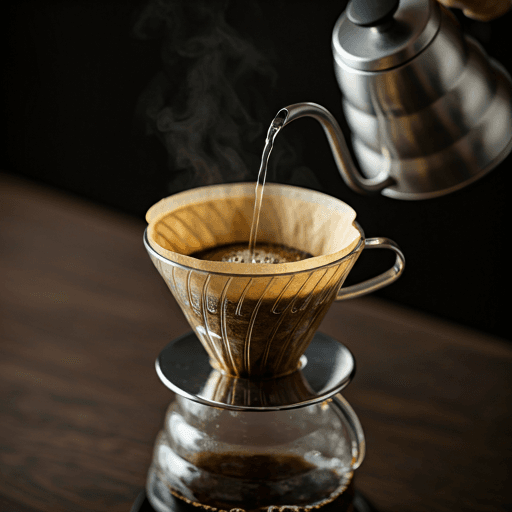
The Chemex is a pour-over brewer that uses thick, bonded paper Chemex filters to make an exceptionally clean, bright cup of coffee. To use one, you rinse the filter, add medium-coarse ground coffee at roughly a 1:15 to 1:17 ratio, wet the grounds to let them bloom, then pour hot water in slow spirals over about four to five minutes. The filter does much of the work: it traps oils and fine particles, so the coffee that drips through tastes crisp and free of sediment.
This guide covers the brewing method step by step. For the story of the hourglass carafe itself, its history and how to pick one, see our Chemex coffee maker overview. Here, we focus on the doing.
What you will need
- A Chemex carafe (the classic three-cup or six-cup sizes are the most common).
- Genuine or compatible Chemex filters (more on why these matter below).
- Freshly roasted whole beans, ground medium-coarse.
- A kettle, ideally a gooseneck for control, with water at about 93-96°C (200-205°F).
- A kitchen scale and a timer. Brewing by weight is far more repeatable than by scoops.
How to use a Chemex, step by step
The recipe below makes a medium batch using about 30 g of coffee and 500 g of water, a 1:16.7 ratio. Scale it up or down as long as you keep the proportions steady.
- Set and rinse the filter. Open the folded filter into a cone so the thick, three-layer side sits against the pouring spout. Drop it into the top of the Chemex, then pour hot water through the paper until it is soaked. This rinses away any papery taste, preheats the glass, and seals the filter to the wall. Tip out the rinse water without removing the filter.
- Add the coffee. Pour in about 30 g of medium-coarse grounds and give the Chemex a gentle shake so the bed sits flat. A level bed helps the water pass through evenly.
- Bloom the grounds. Start your timer and pour just enough water, roughly twice the coffee weight (about 60 g), in slow circles to wet every ground. Let it bloom for 30 to 45 seconds. You will see the bed puff up and release trapped carbon dioxide; this lets the later pours extract evenly.
- Pour in stages. Add the rest of the water in two or three slow, spiralling pours from the center outward, pausing to let the level drop between additions. Avoid pouring directly onto the paper. Keep the bed level and aim to reach your target weight of 500 g by around the 2:30 mark.
- Let it draw down. Total brew time should land around four to five minutes from the first pour to the last drip. If it finishes much faster or slower, adjust your grind next time.
- Lift, discard, and serve. Remove the filter with its spent grounds, give the carafe a gentle swirl to mix the brew, and pour. The Chemex looks great on the table and keeps the coffee warm for a while.
Why Chemex filters matter most
The single biggest variable in this brew is the paper. Chemex filters are bonded and noticeably thicker than ordinary pour-over filters, which is why they strip out most of the oils and fine particles that would otherwise muddy the cup. That thickness is the source of the Chemex's signature clarity, but it also slows the flow of water, which is exactly why grind size and rinsing matter so much.
Always rinse the filter before brewing, and always use genuine or truly compatible Chemex filters folded with the triple layer over the spout. A thin substitute or an un-rinsed filter will change both the taste and the drawdown speed. Because the paper already restricts flow, a grind that is too fine will choke it, stall the brew, and pull out bitter, over-extracted flavors.
| Variable | Setting | Effect |
|---|---|---|
| Grind size | Medium-coarse, like table or sea salt | Too fine stalls and over-extracts (bitter); too coarse runs fast and under-extracts (sour, weak). |
| Coffee-to-water ratio | 1:15 to 1:17 by weight | Lower ratio (1:15) tastes stronger; higher (1:17) tastes lighter and more delicate. |
| Water temperature | 93-96°C (200-205°F) | Cooler water under-extracts; boiling water can scorch and add bitterness. |
| Bloom time | 30-45 seconds | Degasses the grounds so the main pours extract evenly. |
| Total brew time | About 4-5 minutes | Much faster means too coarse; much slower means too fine or filter clogging. |
| Filter | Rinsed, genuine bonded paper | Removes oils and fines for a clean cup; rinsing removes papery taste and preheats. |
Getting the Chemex coffee ratio right
The Chemex coffee ratio is the lever you pull to control strength. A 1:16 ratio (say 30 g of coffee to 500 g of water) is a reliable starting point that suits most beans. If your cup tastes thin, move toward 1:15 by adding a little more coffee; if it tastes heavy or harsh, edge toward 1:17. Adjust one thing at a time so you can taste the difference. For a deeper look at how ratios shape strength across brew methods, see our guide to coffee brewing ratios.
Chemex pour over versus the V60
The Chemex pour over and the Hario V60 are cousins, but they drink differently. The V60 uses thin filters and ribbed walls for a faster flow and a slightly rounder, heavier body, while the thick Chemex paper delivers a cleaner, brighter, more tea-like cup. If you brew both, expect to grind a touch coarser and pour a little more patiently on the Chemex. Curious how the other method compares? Read how to brew with a V60.
Troubleshooting a Chemex brew
- Bitter or harsh: grind coarser, lower the water temperature slightly, or shorten the brew. This usually means over-extraction.
- Sour or weak: grind finer, use a touch more coffee, or pour more slowly. This usually means under-extraction.
- Brew stalls or takes over six minutes: the grind is too fine or the pour is too aggressive; coarsen up and pour gently in the center.
- Papery, cardboard note: you skipped the rinse, or the filter was not fully soaked before brewing.
Final thoughts
A Chemex rewards patience and a little precision. Nail the rinse, the medium-coarse grind, and a steady 1:16 ratio, and you will get a clean, sweet, sediment-free cup almost every time. Once the routine feels natural, experiment with different beans and small ratio tweaks to find what you love. If you want to compare it with other everyday brewing methods, our broader guide on how to make coffee is a good next stop.