
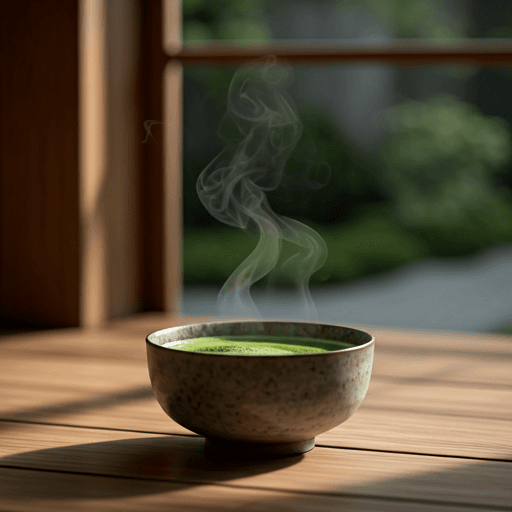
Osmanthus tea is a fragrant floral brew made from the tiny golden flowers of the osmanthus plant, also called sweet olive. It carries a sweet, fruity aroma often compared to ripe apricot, peach and honey. You will find it two ways: the pure flowers steeped on their own as a caffeine-free floral tisane, or osmanthus blossoms used to scent a true tea such as green or oolong. This guide explains what the flower is, how each form tastes, its place in Chinese culture, and exactly how to brew it.
What is osmanthus tea?
Osmanthus tea begins with Osmanthus fragrans, an evergreen shrub native to Asia and especially beloved in China, where the flower is known as gui hua. In autumn it produces clusters of small golden blossoms whose scent is so powerful it is traditionally said to be "fragrant for ten miles." Dried and steeped, those flowers give a brew that smells of sun-ripened stone fruit and tastes gently sweet and floral, with no bitterness.
The plant goes by several names in English — sweet olive, fragrant tea olive, fragrant olive — so "sweet olive tea" and osmanthus tea refer to the same blossom. Importantly, the pure flower is not made from the tea plant, Camellia sinensis, unless it is blended with one. That distinction matters, because it decides whether your cup has caffeine.
Two common forms
This is the single most useful thing to understand before you buy or brew:
| Form | What it is | Caffeine | Character |
|---|---|---|---|
| Pure osmanthus (gui hua cha) | Dried osmanthus flowers only | Caffeine-free | Light, sweet, intensely floral and fruity |
| Osmanthus green tea | Green tea scented with the flowers | Contains caffeine | Fresh, grassy base lifted by sweet floral aroma |
| Osmanthus oolong (Gui Hua oolong) | Oolong scented with the flowers | Contains caffeine | Smooth, roasted-to-floral, more body |
Because pure osmanthus is a flower infusion rather than a leaf tea, it sits in the same family as other floral and botanical brews — closer to a herbal tea than to a green or black tea. The scented versions, by contrast, are real teas that simply borrow the blossom's perfume.
What does osmanthus tea taste like?
The dried flowers smell extraordinary — rich notes of very ripe apricot and peach with a honeyed edge. In the cup the flavor is more delicate than the aroma suggests: softly sweet, clean and floral, finishing smooth with no astringency. Pure osmanthus is one of the gentler floral infusions, which makes it easy to enjoy plain.
When the flower is used to scent a true tea, the base leaf shapes the result:
- Osmanthus green tea keeps a fresh, slightly grassy backbone while the blossom adds a sweet, fruity top note. It feels bright and clean.
- Osmanthus oolong — often labeled Gui Hua oolong and prized in Taiwan and southern China — has more body and a smooth, sometimes lightly roasted character that the apricot-peach aroma rounds out beautifully. If you already enjoy oolong tea, this is a natural next step.
Osmanthus in Chinese culture
Osmanthus has been valued in China for well over a thousand years, and not only as a tea. The flower scents osmanthus cakes, sweet jellies and syrups, and the famous osmanthus wine traditionally enjoyed around the autumn Mid-Autumn Festival. It is one of China's most celebrated flowers and the city flower of places like Hangzhou and Guilin. For many people the smell of osmanthus drifting through the streets in autumn is a cherished memory of home.
In traditional Chinese medicine the flower has long been used as a warming, fragrant ingredient. Modern osmanthus tea, though, is best enjoyed simply as a beverage — a pleasure to drink rather than a remedy. Treat any old wellness lore as cultural background, not a health claim.
How to brew osmanthus tea
Osmanthus is delicate, so the goal is a gentle, lower-temperature steep that lets the flowers open and release their aroma without scorching. Watch the dried blossoms slowly bloom and the water turn pale gold — that is the sign it is ready.
Pure osmanthus (caffeine-free)
You will need:
- About 1 teaspoon of dried osmanthus flowers per cup
- Fresh water heated to roughly 80-85°C (175-185°F), just off the boil
- A cup, small teapot or glass (a glass lets you watch the flowers bloom)
Steps:
- Add the dried flowers to your cup or pot.
- Pour over the hot — not boiling — water.
- Steep 2-3 minutes. Longer means stronger flavor and a deeper golden color.
- Taste and sip. The flowers can usually take a second short infusion.
Osmanthus-scented green or oolong
Brew these like their base tea, kept gentle: green at around 80°C for 1-2 minutes; oolong a little hotter, around 90°C, for 1-2 minutes, with several re-steeps. For a Chinese gongfu approach, use more leaf, rinse briefly, then steep for short intervals — around 45 seconds to a minute on the first infusion — adding a few seconds each round. If you are new to the basics, our guide on how to make tea covers temperature and timing in more depth.
Pairings and serving
Osmanthus is sweet and aromatic, so it sits happily beside light, not-too-sugary food:
- Soft fruit — fresh peach, apricot, lychee or pear, echoing the tea's own notes
- Light pastries, sponge cakes, almond cookies or shortbread
- Plain rice puddings, custards and milky desserts
- A touch of honey or rock sugar in the cup, if you like it a little sweeter
It is lovely hot, and equally good chilled over ice in warm weather. A small drizzle of osmanthus syrup or a few extra blossoms makes a fragrant iced infusion for summer.
Where osmanthus fits among teas
Think of osmanthus as a bridge. On its own it belongs with the caffeine-free floral and botanical infusions. Scented onto green or oolong leaf, it becomes a true tea with the blossom's perfume layered on top. That flexibility is exactly why it has stayed popular for centuries. To see where every category sits — true teas, floral infusions and herbal blends — our overview of the types of tea is a good place to keep exploring.
Osmanthus tea rewards a slow, attentive cup. Warm the water gently, give the golden flowers a moment to open, and let that apricot-and-honey aroma fill the room before you sip. Whether you reach for the pure caffeine-free flowers in the evening or a scented oolong in the afternoon, it is one of the most quietly beautiful brews you can keep on the shelf.