
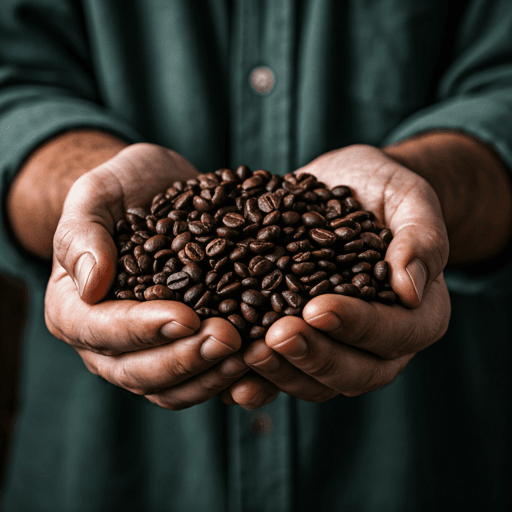
French roast coffee is one of the darkest roast levels there is: beans taken well past the start of second crack until they turn very dark brown, glossy with surface oil, and taste intense, smoky and bittersweet. At this point almost none of the bean's original origin flavour survives, so French roast is defined by the roast itself, not by where the coffee grew and not by any French origin. If you have ever had a cup that tasted deep, dark and almost charred-sweet, there is a good chance it was a French roast.
This guide explains what the name actually means, how French roast tastes, where it sits among the other very-dark roast names, and how to brew it well. For the wider family it belongs to, see our explainer on dark roast coffee; for the full lightest-to-darkest scale, the coffee roast levels guide walks through every stop.
What "French roast coffee" actually means
French roast is a named point near the dark end of the roast scale, not a coffee species, growing region or country of origin. It describes how far the beans have been taken: roasted to a high temperature, deep into or through the second crack, where the sugars have caramelised and then begun to carbonise and the coffee's oils have migrated to the surface. The result is a uniformly dark, shiny bean.
The word "French" here is a style label, the way "Vienna" and "Italian" are. It nods to a historical European taste for darker, bolder roasting rather than to beans grown in France (coffee is a tropical crop and is not farmed there). You will see the same idea written as "french roasted" beans or "french roast coffee beans" on bags, all pointing to the same very-dark treatment. Roasters do not all calibrate it identically, so one company's French roast can be a shade lighter or darker than another's. Treat it as a region on the scale rather than a single exact temperature.
Because the defining event is the roast, the very same green bean can be sold as a light, medium or French roast. To understand what happens inside the drum, from first crack to second crack and the shift from acidity to body, see what coffee roasting is, and for the raw material itself, what coffee beans are.
What French roast tastes like
Flavour is where French roast earns its fans. Expect:
- Deep, smoky, charred-sweet notes — think dark chocolate, toasted nuts, a hint of burnt caramel or campfire.
- Bittersweet intensity rather than brightness; the roast character leads the cup.
- Very low acidity. The fruity, floral and citrus notes that lighter roasts show are largely roasted away.
- Heavy, full body with a long, slightly dry finish.
The trade-off is nuance. A coffee's distinctive terroir — the berry notes of an Ethiopian, the caramel of a Latin American — mostly disappears past second crack, so a French roast from one origin tastes broadly similar to a French roast from another. You are tasting the roast, not the farm. That can be exactly what you want in a bold, comforting cup, or a drawback if you prize origin clarity.
French roast vs other dark roasts
"Dark roast" is an umbrella, and French roast is one specific rung on it. From lighter to darker, the commonly named dark stops run roughly Full City, then Vienna, then French, then Italian. French roast is darker than Vienna (and Full City) but lighter than Italian roast, which is usually the darkest common level. Here is the quick decoder:
| Roast | Darkness | Surface oil | Flavour |
|---|---|---|---|
| Vienna | Medium-dark, into the start of second crack | Light speckles of oil | Bittersweet and smoky-sweet; some origin character survives |
| French | Very dark, to the end of second crack | Shiny, visibly oily | Bold, smoky, charred-sweet; low acidity, heavy body; little origin left |
| Italian | Darkest common level, at or just past the end of second crack | Very oily, glossy | Most intense and roast-forward; bittersweet toward bitter; minimal origin |
The lines between these levels are fuzzy and vary from roaster to roaster, so use the ladder as a guide rather than a ruler. French roast is the specific dark level; the broader dark-roast category also covers Vienna and everything from Full City down to Italian. Because there is no universal standard, the safest way to know what you are buying is to look for a roaster's own tasting notes or a roast-colour indication on the bag.
Why people choose French roast, and the trade-off
French roast suits anyone who wants a bold, unmistakable coffee that cuts through milk and stands up to strong brewing. Common reasons to reach for it:
- Milk drinks. Its intensity punches through steamed milk, so lattes and cappuccinos still taste clearly of coffee.
- Espresso and moka pot. The low acidity and heavy body give a syrupy, chocolatey shot, which is why many traditional espresso blends lean dark.
- French press and drip. A robust, classic cup that reads as "strong" even at a normal brew strength.
- Consistency. Because origin character is muted, French roast is forgiving and reliable batch to batch.
The main trade-offs are the flip side of the same coin. You lose origin nuance and most of the delicate aromatics, so a French roast will never showcase a prized single origin. And because the roast has pushed oils to the surface, those oils are exposed to air and go rancid faster than in a lighter roast, so French roast can taste flat or stale sooner. Buy smaller amounts, keep the beans airtight and away from light and heat, and use them while they are fresh.
One myth worth retiring: dark roasts like French are not dramatically higher or lower in caffeine than lighter roasts. The difference is small and mostly about how you measure. Beans lose a little mass as they roast, so a scoop of French roast holds marginally less than a scoop of light roast, while by weight the two are close. Caffeine is not the reason to pick a roast level; flavour is.
How to brew French roast coffee
Dark, oily beans behave differently from lighter ones, so a few tweaks help:
- Grind a touch coarser. Dark roasts are more brittle and give up their solubles quickly; a slightly coarser grind guards against a harsh, over-extracted cup.
- Use slightly cooler water. Just off the boil rather than fully boiling (roughly 90 to 93 C, about 195 to 200 F) keeps bitterness in check.
- Do not over-extract. Because these beans extract fast, a slightly shorter contact time or a marginally lower dose helps prevent an ashy, bitter finish.
- Favour immersion and pressure methods. French press, moka pot and espresso flatter the heavy body; pour-over can work but rewards a gentle, careful hand.
- Keep it fresh. Those surface oils stale quickly, so grind just before brewing and store the beans well.
If your dark cup tastes ashy or hollow rather than rich, it is usually a sign of over-extraction or stale beans rather than the roast being "too strong" — dial the grind coarser, ease off the temperature and start with fresher coffee before you give up on it.
French roast at a glance
So French roast coffee is the very-dark, oily, smoky end of the everyday roast spectrum: a style defined by how hard the beans were roasted, not by where they came from. It trades the brightness and origin detail of lighter roasts for bold, bittersweet consistency, which is a deliberate choice rather than a lesser one. If you love a strong, chocolatey cup or a punchy milk drink, French roast is a natural home; if you are chasing the fruit and florals of a single origin, a lighter roast will serve you better. Either way, buy it fresh, brew it a little gently, and let the roast do the talking.