
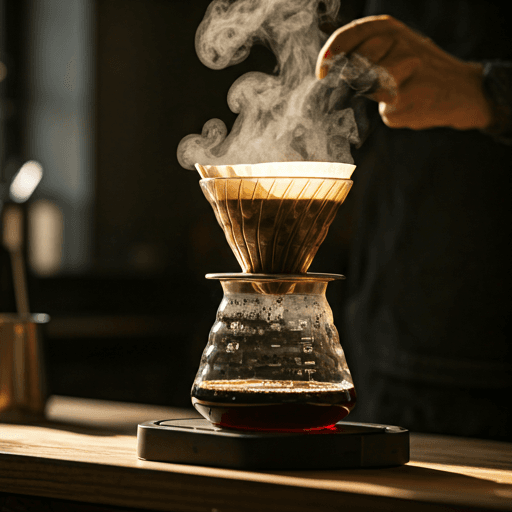
A specialty coffee shop is a cafe built around high-quality, carefully sourced coffee rather than sheer volume and convenience. It brews freshly roasted, specialty-grade beans, employs skilled baristas, dials in its espresso with precision, and usually offers single-origin coffees and manual methods like pour-over alongside the espresso menu. Everything is arranged so the coffee itself takes center stage.
In short, the difference is philosophy. A grab-and-go chain optimizes for speed and consistency at scale; a specialty coffee shop optimizes for flavor, traceability and craft. You will also see it written speciality coffee shop in British and Commonwealth English — same idea, different spelling.
What Defines a Specialty Coffee Shop
Not every good cafe is a specialty coffee shop, and not every place that hangs the word on the window earns it. A genuine one tends to share a recognizable set of traits, and most of them come back to sourcing, freshness, skill and focus:
- Specialty-grade beans. The coffee is high-scoring, carefully graded green coffee. The quality tier itself is a whole topic, which we unpack in what is specialty coffee. What matters for the shop is that it deliberately buys at that level rather than anonymous commodity coffee.
- Traceability, often single origin. Bags name the country, region, farm or cooperative, the varietal, the process (washed, natural or honey) and sometimes the altitude. Many pour bars feature rotating single-origin coffees so you can taste one place at a time.
- House or partner roasters. Some specialty shops roast their own beans; others build a close relationship with a respected roaster. Either way the roast is recent, and the roast date is usually printed right on the bag.
- Trained baristas. Staff are taught to grind, dose, tamp and steam with care, and to taste critically so they can adjust through the day. The role is a craft in its own right — more on that in what does a barista do.
- Dialled-in espresso plus manual brew. Expect a well-maintained espresso machine and grinder, plus filter options such as pour-over, AeroPress or batch brew for people who want a cleaner, lighter cup.
- A menu that lets the coffee shine. The focus stays on the coffee: shorter milk drinks, black coffee served proudly, and flavored syrups either absent or kept to the side rather than drowning the cup.
The "Third Wave" Context
Specialty coffee shops are the storefront of what the trade calls the "third wave" of coffee. The first wave made coffee a mass-market household staple; the second wave, led by the big cafe chains, turned espresso drinks into a social ritual and put a latte on nearly every corner. The third wave treats coffee more like wine or craft beer — something with origin, vintage and terroir worth talking about.
That mindset shows up as transparency from farm to cup. A third-wave shop wants you to know where the coffee grew, who grew it, how it was processed and how recently it was roasted. Lighter roasts became common precisely because they preserve the distinctive flavors of a single origin — the citrus of an Ethiopian coffee, the cocoa of a Brazilian one — instead of roasting everything down to a uniform dark. The goal is to highlight character, not to hide it, and to pass along enough of the story that the person drinking the cup can appreciate what went into it.
How a Specialty Coffee Shop Differs From a Regular Cafe or Chain
A regular cafe is defined by what it is — a place to sit and drink coffee or tea. A specialty coffee shop is defined by how seriously it takes the coffee. The distinction is not about being fancy or costly; a tiny counter can be deeply specialty while a plush lounge might serve ordinary beans. It comes down to sourcing, freshness, skill and focus.
| Aspect | Specialty coffee shop | Standard cafe or chain |
|---|---|---|
| Beans | Specialty-grade, traceable, often single-origin, freshly roasted with a visible roast date | Commodity or house blends, roasted for consistency and long shelf life |
| Brewing | Espresso dialled in by weight and time, plus manual methods like pour-over, AeroPress and batch brew | One standardized method, tuned for speed and repeatability |
| Staff | Trained baristas who taste, adjust and can talk you through the coffee | Operators following a fixed recipe and workflow |
| Focus | Flavor, origin and craft — the coffee is the point | Speed, convenience, volume and a familiar menu |
Plenty of specialty shops go further with tasting notes on the menu, a dedicated brew bar, public cupping sessions, or guest-roaster takeovers where another roaster's coffee is featured for a week. None of this is required to count as specialty, but it signals a place that treats coffee as an ongoing conversation rather than a fixed product.
It is also worth separating a specialty coffee shop from a coffee bar in the Italian sense — the stand-up espresso counter where a quick, consistent shot is knocked back where you order. That tradition prizes ritual and speed over origin storytelling. A "specialty coffee bar" borrows the counter format but applies the third-wave sourcing and brewing standards above.
What to Expect as a Customer
Walking into a specialty cafe for the first time can feel a little different from a chain, so here is roughly what to expect.
More choices, some you may not recognize
Alongside the usual espresso, cappuccino and latte, you will often see a filter or "pour-over" list of single-origin coffees, and maybe AeroPress or batch brew. If you just want a straightforward cup, batch brew — filter coffee made in volume — is usually the fastest, and it is genuinely good.
Lighter roasts and cleaner flavors
Coffee here may taste brighter, fruitier or more tea-like than you are used to, especially the filter options. That is intentional. If you prefer a bold, dark, chocolatey cup, just say so — many shops carry a darker or espresso-focused roast too, and the barista will happily point you to it.
Baristas who are happy to explain
Good specialty staff want you to enjoy the coffee, not to feel tested. It is completely fine to ask what tastes fruity versus chocolatey, what works well with milk, or simply what they would order. A short, friendly question usually earns an enthusiastic answer.
A calmer pace
Because drinks are made with care — grinding to order, weighing shots, steaming milk properly — service can be a touch slower than a machine-driven chain. The trade-off is a cup dialled in for that day's beans rather than a template poured on autopilot.
How to Spot a Genuine Specialty Coffee Shop
Marketing language is cheap, so look for the working details that are hard to fake:
- Fresh roast dates. Retail bags show a recent roast date, not just a distant "best before." Freshness is a core specialty value, and shops that care will make it easy to check.
- Origin information. The menu or bags name countries, regions, farms, varietals and processing methods — a sign the shop actually knows and cares where its coffee comes from.
- Visible tools. A quality grinder (often more than one), a scale on the counter, and a clean, well-kept espresso machine all suggest that measurement and consistency matter here.
- Knowledgeable, engaged staff. Baristas who can describe the current coffees and adjust to your taste are the clearest signal of all.
- A transparent roaster relationship. Whether they roast in-house or proudly name their roasting partner, specialty shops are open about the source rather than vague about it.
Ultimately, "specialty coffee shop" describes an attitude as much as a place: a commitment to sourcing carefully, roasting freshly, brewing precisely and sharing what makes each coffee taste the way it does. Whether it is a stool at a narrow counter or a bright room full of laptops, the mark of a real one is that the coffee is treated as the main event — and that the people behind the bar are genuinely glad you asked about it.