
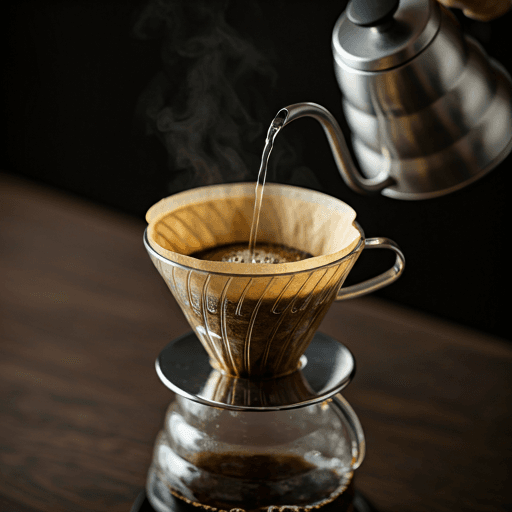
A doppio is a double shot of espresso, pulled as two shots' worth of coffee through a single basket. The word is simply Italian for "double," and a doppio espresso usually comes from about 14 to 18 grams of ground coffee, yielding roughly 60 ml (around 2 oz) in the cup. If you order an espresso almost anywhere today, you are very likely getting a doppio whether the menu says so or not.
That makes the doppio the quiet workhorse of the modern coffee bar. It is the base of your latte, your cappuccino, your flat white, and your americano. Understanding it is the fastest way to understand how every other coffee on the board is built.
What a doppio actually is
In Italian, doppio means double, and a doppio coffee is the double counterpart to the single shot, which Italians call a solo. Where a traditional single uses roughly 7 grams of finely ground coffee to produce about 30 ml of espresso, a double espresso doubles both numbers: a bigger dose of coffee in a larger basket, and roughly twice the liquid in the cup.
The crucial point is that a doppio is not stronger per sip than a well-made single. It keeps the same coffee-to-water ratio, so it tastes like a single shot, just twice as much of it. What changes is the total volume and the total caffeine. A doppio espresso typically carries somewhere in the range of 100 to 150 mg of caffeine, against roughly 60 to 80 mg for a single.
Doppio and "double espresso" are the same drink in two languages. There is no secret difference between them.
Why most cafes default to a doppio
If you have ever watched a barista pull a shot and noticed two streams of coffee falling into one cup, you have seen the reason. Most professional machines use a double-basket portafilter as standard, and most cafes dial in their grind and recipe around a double. There are a few practical reasons for this.
- Consistency. A larger dose forms a deeper, more even coffee bed (the "puck"), which extracts more reliably than a thin single-shot bed. Fewer channels, fewer surprises.
- Speed and workflow. One pull serves a bigger drink or two smaller ones. A barista builds a latte from a doppio without pulling two separate shots.
- Flavor balance. Many roasters and baristas simply find the double easier to keep sweet and balanced, with acidity, sweetness, and bitterness sitting comfortably together.
Single-shot baskets still exist, but they are finicky and increasingly rare in busy cafes. When you ask for "an espresso" at a specialty bar, the honest answer is usually: here is your doppio.
Dose, yield, and the brew ratio
Espresso recipes come down to three numbers: the dose (dry coffee in), the yield (liquid espresso out), and the time. A typical doppio looks roughly like this, though every cafe dials it to its own beans.
| Element | Single (solo) | Double (doppio) |
|---|---|---|
| Dose (dry coffee) | ~7-9 g | ~14-18 g |
| Yield (in cup) | ~30 ml / 1 oz | ~60 ml / 2 oz |
| Brew ratio | ~1:2 | ~1:2 |
| Shot time | ~25-30 sec | ~25-30 sec |
| Caffeine (approx.) | ~60-80 mg | ~100-150 mg |
Notice the brew ratio stays the same. That 1:2 figure, weight of coffee to weight of liquid, is what keeps the doppio tasting like espresso rather than something thinner or harsher. For the full mechanics of pressure, grind, and crema, see our guide to espresso, the base of every coffee.
Doppio vs ristretto vs lungo: same dose, different pull
This is where people get tangled. A doppio is about how much coffee you use (a double dose). A ristretto and a lungo are about how much water you push through (the brew ratio). They answer different questions, which is why you can have, say, a double ristretto.
| Shot | What it means | Brew ratio | Character |
|---|---|---|---|
| Ristretto | "Restricted" - less water through the puck | ~1:1 to 1:1.5 | Short, syrupy, sweeter and more aromatic |
| Espresso (normale) | The standard pull | ~1:2 | Balanced - sweet, acidic, bitter in harmony |
| Lungo | "Long" - more water through the puck | ~1:3 or more | Larger, lighter, sometimes sharper or more bitter |
| Doppio | "Double" - twice the coffee dose | ~1:2 (same as a single) | A normal espresso, just twice the volume |
So a ristretto stops the pull early for a concentrated, fruity cup, while a lungo lets more water run through, making it larger and often a touch more bitter. The doppio changes neither the ratio nor the extraction style; it just uses more coffee. A double ristretto, for instance, is two ristretto shots' worth of coffee still pulled short, not a doppio. Dig deeper in what is a ristretto and what is a lungo.
What about an americano?
An americano is different again. There, you pull espresso (usually a doppio) and then add hot water after extraction to fill the cup. The shot itself is unchanged; you are diluting in the cup, not at the puck. A lungo, by contrast, runs the extra water through the coffee during the pull, so the two taste quite different despite both being "longer" coffees.
The doppio as a building block
Here is why the doppio matters even if you never order one straight. It is the foundation of nearly every milk-based coffee. Add steamed milk and a thick cap of foam and you have a cappuccino. Add more steamed milk and a thin layer of microfoam and you have a latte. The espresso underneath is almost always a doppio.
- Latte - doppio plus a large volume of steamed milk and light foam. See what is a latte.
- Cappuccino - doppio with roughly equal parts steamed milk and dense foam.
- Flat white - doppio with silky microfoam, less milk than a latte.
- Americano - doppio lengthened with hot water.
- Affogato - a doppio poured over a scoop of cold gelato or ice cream.
When a recipe says "two shots of espresso," it means a doppio. Knowing that, you can read any cafe menu, or any home recipe, and picture exactly what is going into the cup.
How to order and enjoy a doppio
Ordering one is easy: ask for "a doppio" or "a double espresso" and you will get the same thing. If you want it as the base of a milk drink, that is what is already happening behind the bar. A couple of common mix-ups are worth clearing up. A doppio is not the same as two separate single espressos served side by side, and it is not an americano, which only becomes long once water is added in the cup.
Drink it the way Italians do: quickly, while it is hot and the crema is fresh, often standing at the bar. The flavor shifts as it cools, so a doppio is built for the first few minutes, not for slow sipping over half an hour. If the cup tastes harsh and bitter, the shot may be over-extracted or the beans over-roasted; if it tastes thin and sour, it is likely under-extracted. A good doppio lands in the middle: sweet, round, with a clean finish.
You do not need a cafe to make one. A home espresso machine with a double basket, freshly ground beans, and a 1:2 ratio will get you there. If you are starting from the ground up, our overview of how to make coffee walks through the broader options.
The bottom line
A doppio is simply a double shot of espresso, the standard pour at most modern cafes and the base of nearly every milk drink you order. It is not more intense than a single, just larger and richer in total caffeine. Once you see the doppio as the building block it is, the rest of the espresso menu, from ristretto to lungo to latte, falls neatly into place. Curious where the whole family branches out? Keep exploring the coffee hub for the drinks built on top of it.