
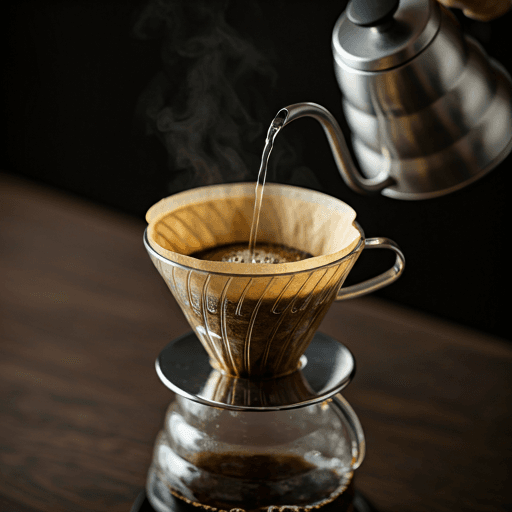
A lungo is a "long" espresso: the same dose of ground coffee is extracted with more water passing through it, producing a bigger shot of roughly 80-120 ml that tastes more open, more bitter, and more intense than a standard espresso. The word means "long" in Italian, and that single idea, more water pulled through the puck, explains everything that makes a lungo coffee what it is. Crucially, a lungo is not the same thing as an Americano, even though both end up as a larger black coffee.
If you have ever pressed the "Lungo" button on a pod machine and wondered why it tastes different from your usual cup, this guide unpacks the whole thing: the extraction, the flavour, the typical size, and the exact line that separates a caffe lungo from an Americano.
What is a lungo, exactly?
Start from the base. An espresso is a small, concentrated shot: hot water forced through finely ground coffee under pressure, typically around 9 bar, in about 25-30 seconds. That gives roughly 25-35 ml of intense coffee with a layer of crema on top.
A lungo espresso keeps the same dose of coffee but lets far more water run through the grounds. The extraction runs longer, often 45-60 seconds, and the brew ratio opens up. Where a classic espresso sits near 1:2 (one part coffee to about two parts liquid), a lungo pushes toward 1:3 or 1:4. The cup is bigger, lighter in body, and noticeably more bitter, because the longer the water spends pulling through the puck, the more of the late-extraction compounds it carries out with it.
So a lungo is genuinely a different extraction, not just a watered-down espresso. The flavour changes because the coffee itself was brewed differently, not because you diluted it afterward. That distinction is the heart of this whole topic.
Why a lungo tastes more bitter
Coffee extracts in stages. The bright, fruity, acidic flavours come out first. The sweet, balanced middle comes next. The heavier, more bitter, sometimes harsh compounds come out last. A standard espresso stops while the cup is still concentrated and balanced. A lungo keeps the water flowing into those later stages, so it pulls more of the bitter, drying notes into the cup. That is why a well-made lungo tastes "stronger" and more astringent, even though the dose of coffee is the same.
This also means a lungo rewards a slightly different bean and grind. Many people find a darker, more developed roast handles the longer pull better than a delicate light roast, which can turn harsh when over-extracted.
Lungo vs Americano: the key difference
This is the comparison that trips most people up, so let us be precise. Both a lungo and an Americano give you a larger black coffee with an espresso character. But they get there in opposite ways.
- A lungo adds the water during brewing. More water passes through the coffee grounds, changing the extraction itself. The result is bigger and more bitter because of those late-extraction compounds.
- An Americano adds the water after brewing. You pull a normal espresso (or double), then pour hot water on top. The extraction is untouched, so the drink is diluted but keeps the balanced flavour of the original shot, just softer and longer.
In short: a lungo changes the coffee, an Americano dilutes it. That is why a lungo tends to taste sharper and more bitter, while a well-made Americano tastes smoother and rounder at a similar volume.
| Drink | Coffee dose | How water is added | Typical size | Character |
|---|---|---|---|---|
| Espresso | 1 shot | Through grounds, short pull | ~25-35 ml | Concentrated, balanced, crema |
| Lungo | 1 shot (same dose) | More water through grounds, longer pull | ~80-120 ml | Bigger, more bitter, open |
| Americano | 1-2 shots | Hot water after the shot | ~120-240 ml | Diluted, smooth, balanced |
Lungo vs ristretto vs doppio
The lungo lives in a small family of espresso variations that all start from the same machine and the same puck. The easiest way to keep them straight is to think about water and shots.
- Ristretto is the opposite of a lungo: a "restricted" or short shot, pulled with less water through the same grounds. It stops early, so it is smaller, sweeter, and more concentrated, capturing mostly the first, brightest part of the extraction.
- Lungo is the long version: more water, longer pull, bigger and more bitter cup.
- Doppio is simply a double espresso, two shots' worth of coffee in one cup. It is about more coffee, not more water, so it stays concentrated rather than long.
Picture a slider. Ristretto sits at the short, concentrated end. Espresso is the balanced middle. Lungo is the long, water-forward end. A doppio is a separate dial entirely, doubling the dose rather than stretching the water.
The Nespresso "Lungo" capsule and button
For a lot of people, the first place they meet the word is a pod machine. On Nespresso's Original system, machines usually offer two main buttons: a small Espresso pour (around 40 ml) and a larger Lungo pour (around 110 ml). Press Lungo and the machine simply runs more water through the capsule.
Nespresso also sells capsules labelled "Lungo," which are designed to taste their best at that longer, 110 ml pour, often using a grind and blend matched to the extra water. So "Lungo" on a pod machine carries two meanings at once: a button that pulls a larger cup, and a capsule range built for that larger cup. Either way, the underlying idea is identical to the cafe drink, more water through the same coffee bed for a bigger, more intense result.
How to make a lungo at home
You do not need special gear beyond an espresso machine or a capable pod machine. The recipe is just an espresso with the water extended.
On an espresso machine
- Dose and tamp as you would for a normal shot. You can keep the same dose you use for espresso.
- Start the pull and simply let it run longer than usual, aiming for a finished volume around 80-120 ml.
- Taste. If it is too harsh or hollow, grind a touch coarser so the longer flow does not over-extract; if it is thin and sour, grind slightly finer.
On a pod machine
- Insert a capsule (a Lungo capsule if you want the intended flavour, but any will work).
- Press the Lungo button, or program a longer pour of roughly 110 ml.
- Drink it as is, or add steamed milk if you want a longer milk drink.
One honest note on caffeine: people often assume a lungo is dramatically stronger. Because more water passes through, a lungo can extract somewhat more caffeine than a single espresso from the same dose, but the difference is modest, and it depends far more on the dose of coffee and the bean than on the cup size. A lungo "feels" stronger mostly because it is bigger and more bitter.
When to choose a lungo
Reach for a lungo when you want something longer than an espresso but still want it to taste like espresso, brewed rather than diluted. It suits a slower morning cup, sipped black, where you want more in the cup without switching to a brewed-coffee method. If you find a straight lungo too bitter, an Americano gives you a similar volume with a gentler, more balanced profile, while a latte or a cappuccino takes the same espresso base in a milk-forward direction entirely.
The beauty of the lungo is how little it asks of you. Same machine, same coffee, one longer pour, and you have a completely different cup. Once you understand that a lungo changes the extraction while an Americano only dilutes it, the whole espresso menu starts to make sense, and you can decide exactly which version of "more coffee" you actually want. If you are curious how the rest of these variations relate, the ristretto and doppio guides round out the picture.