
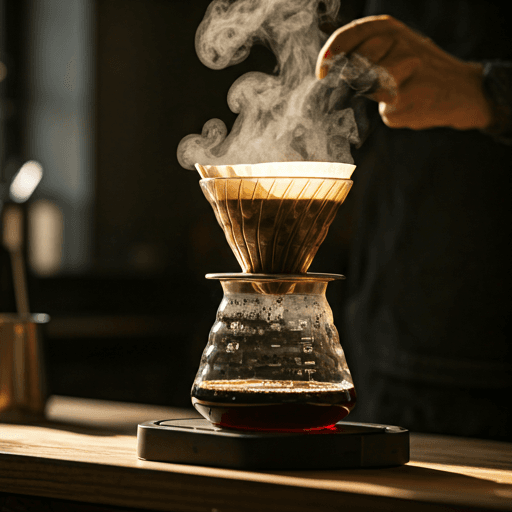
A coffee house — or coffeehouse — is an establishment that serves coffee and light refreshments and that, for centuries, has doubled as a social and intellectual gathering place. It is the direct ancestor of today's cafe: a warm room where people come not only to drink but to meet, talk, read, work and simply linger. The word carries a slightly older, cosier ring than "cafe," yet in everyday use the two are now almost interchangeable.
That double life — part drinks counter, part public living room — is what makes the coffee house one of the most quietly influential institutions in social history. This guide explains what a coffee house is today, where the idea came from, why a cup of coffee once bought a seat at the center of public life, and how the term compares with "cafe," "coffee bar" and "coffee shop."
What Is a Coffee House Today?
Today a coffee house is essentially a comfortable place to sit, sip and stay a while. Sociologists call this kind of spot a "third place" — somewhere that is neither home (the first place) nor work (the second place), but a neutral, welcoming ground where community happens. A good coffee house invites you to nurse a single cup for an hour, open a book or a laptop, meet a friend, or watch the street go by without anyone hurrying you along.
In practical terms, a modern coffee house and a modern cafe are largely the same thing. Both serve espresso drinks, filter coffee, tea and a few pastries or snacks; both offer tables, seating and an atmosphere built for lingering. "Coffee house" simply leans a touch more traditional and cosy in feel — think worn wooden tables, bookshelves and armchairs rather than a grab-and-go counter. For the fuller definition of the everyday cafe and how it works, see our companion guide on what a cafe is.
A Short History of the Coffee House
The coffee house is far older than the modern chain latte suggests. Its story runs from the mosques and markets of the Middle East to the newsrooms and trading floors of Europe, and it changed how ordinary people gathered, argued and did business.
The first coffee houses in the Ottoman world
The earliest coffee houses appeared in the Ottoman world and the wider Middle East in the 1500s. Establishments known as qahveh khaneh opened in cities such as Mecca, Cairo and, most famously, Istanbul, where they became bustling hubs of conversation, music, chess and news. These were sociable, sometimes rowdy places — so influential that authorities occasionally tried to shut them down, fearing the free talk they encouraged. From the start, then, the coffee house was about far more than the drink; it was about the gathering.
Coffee reaches Europe: Oxford and London
Coffee and its houses spread into Europe through trade with the Ottoman Empire. The first recorded coffee house in England opened in Oxford around 1650, and in 1652 a servant named Pasqua Rosee opened London's first, a modest premises in St Michael's Alley off Cornhill. The idea caught fire. Within a few decades London alone had hundreds of coffee houses, each with its own regular crowd of merchants, writers, scientists and politicians. Vienna, Paris, Venice and other European cities developed their own thriving scenes soon after.
Penny universities and the birth of Lloyd's of London
English coffee houses of the 1600s earned a wonderful nickname: the "penny universities." For the price of a penny cup, anyone could walk in, sit at a communal table and join a swirl of debate, gossip and news — an education for the cost of a coffee. Different houses attracted different trades, so a coffee house became a kind of informal office. The most famous example is Edward Lloyd's coffee house, opened in London in the 1680s, which drew sailors, shipowners and merchants swapping shipping news and marine insurance deals; the business done over those tables eventually grew into Lloyd's of London, the great insurance market. Stock trading, newspapers and learned societies all drew early energy from coffee house culture.
| Era & place | What the coffee house was |
|---|---|
| 1500s — Mecca, Cairo, Istanbul (Ottoman world) | The first qahveh khaneh: lively social hubs for talk, music, games and news |
| c. 1650–1652 — Oxford & London | Coffee arrives in England; the first English coffee houses open |
| Late 1600s — London | "Penny universities": a penny cup buys conversation, news and debate for all |
| From the 1680s — London (Lloyd's) | Trade-specific houses become business hubs; Lloyd's grows into an insurance market |
| 1800s–1900s — Vienna | The literary-artistic coffee house: a salon for writers, thinkers and unhurried hours |
| Today — worldwide | The "third place": a cosy cafe to meet, work, read and linger |
The Viennese Coffee House
No history of the coffee house is complete without Vienna. Viennese coffee house culture is so distinctive that it was inscribed on Austria's national inventory of Intangible Cultural Heritage, part of the UNESCO framework, in 2011. The tradition is instantly recognisable: marble tabletops, bentwood Thonet chairs, racks of international newspapers on wooden holders, and waiters who bring your coffee with a glass of water and never rush you to leave.
The Viennese house was famously described as a place "where time and space are consumed, but only the coffee is found on the bill." In the late 1800s and early 1900s, writers, composers and thinkers practically lived in these rooms, working and arguing over a single cup for hours — a body of "coffee house literature" and its "coffee house poets" grew directly out of the habit. It is the purest expression of the coffee house as a home away from home.
Coffee House vs Cafe vs Coffee Bar vs Coffee Shop
These four terms overlap heavily, and in casual speech people use them interchangeably. Still, each carries a slightly different flavour.
- Coffee house / coffeehouse — the oldest and cosiest term, with a whiff of history, books and long conversations. It emphasises the room as a social space more than the speed of the service.
- Cafe — the broad, everyday word for a casual spot serving coffee, tea, light food and a place to sit. It often implies a slightly wider food offering than a pure coffee house.
- Coffee bar — leans toward the espresso-forward, counter-service end of the spectrum, sometimes stand-up and quick in the Italian style; less about lingering, more about the coffee itself. Our guide on what a coffee bar is covers the nuances.
- Coffee shop — the most generic and modern label, covering everything from a neighbourhood indie to a global chain. In American English it can even stretch to a diner that happens to serve coffee.
The short version: all coffee houses are coffee shops, but not every coffee shop feels like a coffee house. The difference is less about the menu and more about the mood.
What Makes a Great Cozy Coffee House
A great cozy coffee house is judged as much by its atmosphere as by its espresso. The coffee should be good, of course — freshly ground, well pulled, served with care — but the magic is in everything around the cup. Comfortable, varied seating (a mix of small tables, a communal table and a soft chair in the corner) invites different kinds of visits. Warm light, a little background hum without deafening noise, and staff who let you settle in rather than clock-watch all signal that you are welcome to stay.
The best coffee houses also foster a sense of community and ritual. They become the place you write your novel, hold your standing catch-up, or simply mark the start of the day. That mixture of a reliable drink and a room worth returning to is exactly what the "third place" idea captures — and it echoes traditions the world over, from the unhurried Viennese salon to the Nordic ritual of fika, the daily coffee-and-cake pause with friends. For a wider tour of how these rituals differ from country to country, explore coffee culture around the world.
The Enduring Appeal of the Coffee House
From the Ottoman qahveh khaneh to a laptop-friendly corner in your own neighbourhood, the coffee house has always offered the same thing: a public room where an affordable, warming drink buys company, conversation and a place to belong. The technology and the menu have changed, but the essential invitation has not. That is why, five centuries on, we still gather in these rooms — and why the humble coffee house remains one of the most sociable inventions we have.