
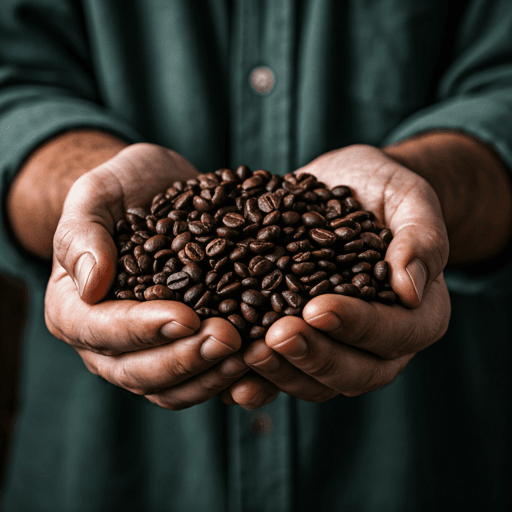
The tekisic coffee variety is an improved Bourbon: a Salvadoran arabica selected out of local Bourbon populations across roughly three decades, chosen for better yield while holding on to the cup that made Bourbon famous. It is a selection, not a hybrid and not a cross — no outside species, no introduced disease genes, just Bourbon refined generation by generation until the best-performing plants bred true.
That single fact explains everything else about it. Tekisic came out of the last era in which breeders still selected mainly for productivity and flavour, just before the industry pivoted almost entirely toward disease resistance. It has no Timor Hybrid anywhere in its background, which means it is fully susceptible to coffee leaf rust — and it is still in the ground, in serious quantity, largely because of how it tastes.
What the tekisic coffee variety actually is
Tekisic (also written Tekisik, and often sold as "Bourbon Tekisic") sits squarely in the Bourbon-Typica group, on the Bourbon side. Bourbon is the older of the two great arabica lineages that seeded most of Latin America; what Bourbon is, and why it cups the way it does, belongs to the Bourbon coffee variety guide rather than this one.
What matters here is the method. Tekisic was produced by mass selection — a slow, unglamorous technique in which a breeder identifies the highest-performing individual plants in a field of an existing population, bulks their seed together to make the next generation, grows that generation out, and repeats. There is no pollination between different varieties, no embryo rescue, no backcrossing to a wild relative. Over enough cycles the population drifts toward whatever traits the selector kept choosing, and because arabica self-pollinates readily, the result comes reasonably true from seed.
So Tekisic is best described as Bourbon that has been sifted. Sources are consistent on this point and it is worth stating plainly, because the variety is frequently and wrongly filed alongside hybrids: Tekisic is a selection from Bourbon, not a cross with anything. Genetically it is Bourbon. Agronomically it is a tidier, earlier, somewhat more productive version of it.
The name, the institute, and the dates
The etymology is commonly explained as a compound: teki- from tekiti, meaning "work," joined to the initials ISIC — the Instituto Salvadoreño de Investigaciones del Café, the Salvadoran coffee research institute that ran the programme. That reading appears in variety catalogues and in most trade writing about the coffee, and it is entirely plausible; it is also the kind of origin story that rarely arrives with a primary citation, so treat it as the standard account rather than settled fact. Sources also differ on the language: some say Nahuatl, others Nahuat (Pipil), the related language historically spoken in western El Salvador — a distinction worth noting given where the coffee comes from.
The dates deserve the same caution. The selection work is generally reported as beginning in 1949 and running for close to thirty years, with elite selected plants consolidated at the Santa Tecla experimental station in the early 1970s — 1973 is the year usually given. The release is most often dated to 1977, though accounts of seed actually reaching growers from 1976 also appear, and the difference likely reflects the gap between an internal release decision and distribution on the ground. Nothing important turns on the exact year. The useful takeaway is the timescale: thirty years of selection is an enormous institutional commitment, sustained across decades in which research budgets and national circumstances changed repeatedly.
The one thing it was selected for — and the thing it never got
Tekisic was selected for yield in a Bourbon that still cupped like Bourbon. Catalogue descriptions credit it with higher production than unselected Bourbon in the roughly 900-1,500 m band, plus early and relatively even ripening, which tightens the picking window and can reduce the number of passes through a lot. Quality potential in good conditions is rated very good. Yield potential, in the same catalogues, is rated medium — meaning better than the Bourbon it came from, and well short of the modern high-yielding cultivars that came later. Both things are true at once, and the second one is the reason Tekisic never travelled the way Caturra or the Catimor family did.
What it did not get is resistance. Tekisic is rated susceptible to coffee leaf rust, and susceptible to coffee berry disease and to nematodes as well. That is not an oversight; it is a consequence of the method. Mass selection can only concentrate traits that already exist in the population you start with, and unselected Bourbon had no rust resistance to concentrate. Durable rust resistance in modern arabica cultivars comes overwhelmingly from one source — introgression from the Timor Hybrid, a naturally occurring arabica-robusta cross — and that route requires an actual interspecific cross. Tekisic never took it.
This makes Tekisic the clean counter-example to the resistance era. From 2012 onward a severe leaf-rust epidemic swept Central America and cut harvests sharply, and El Salvador — where Tekisic and unselected Bourbon together have long accounted for the large majority of the country's coffee — was among the most heavily affected. The episode caused real hardship for farming families and for everyone who depends on the harvest, and its effects are still visible in national production, which remains at a small fraction of its historic peak.
It would have been rational, after that, to replace susceptible Bourbon-type plantings wholesale with rust-tolerant material. Some growers did. Many did not, and Tekisic remains widely planted. The reasons given, again and again, are the cup and the durability question: rust resistance carried on Timor Hybrid ancestry has never proved permanent anywhere. Rust populations shift, and resistance that held for a decade has broken down in region after region. A grower weighing a susceptible variety with a proven cup against a resistant one whose resistance may not outlast the planting is making a genuine judgement call, not a sentimental one.
Plant characteristics in the field
Tekisic reads, in the field, as a well-behaved Bourbon:
- Stature: tall, with a broadly conical habit. It is not a compact plant and it is not managed like one.
- Branching: abundant lateral branches on a flexible stem — the trait most often singled out as the improvement over unselected Bourbon, since productive lateral wood is where the extra yield comes from.
- Leaves: medium-sized, with green leaf tips, the Bourbon-group marker, as against the bronze tips of Typica-descended material.
- Cherry: red, and generally described as large.
- Bean size: average — Tekisic is not a big-bean variety, which sets it apart from the other Salvadoran material it often shares a farm with.
- Ripening: early, and relatively concentrated, which is why pickers tend to meet it near the front of the season.
- Planting density: catalogue guidance puts it around three to four thousand trees per hectare under single-stem pruning.
- Nutrition: medium requirement — neither the light feeder nor the heavy one on a mixed farm.
Catalogue altitude guidance places the optimum in the high band — above roughly 1,300 m nearer the equator, lower as you move toward the subtropics — while noting that the yield advantage over unselected Bourbon shows up from about 900 m upward. Those two numbers answer different questions: the first is about cup, the second about production. Cup quality in any Bourbon-type climbs with elevation and with the whole package of soil, shade, rainfall pattern and temperature that shapes a site, and that interaction is the subject of the coffee terroir guide.
Where Tekisic grows
El Salvador is the heartland. The country organises its coffee into six recognised growing areas — Apaneca-Ilamatepec, Alotepec-Metapán, El Bálsamo-Quezaltepeque, Cacahuatique, Chichontepec and Tecapa-Chinameca — and Tekisic turns up across them wherever elevation and shade allow, most consistently on the higher volcanic slopes of the west. Harvest generally runs from around October into March depending on altitude, with the higher farms picking later; Tekisic's early, bunched ripening means a given block often finishes ahead of the unselected Bourbon beside it.
Beyond El Salvador, Tekisic is commercially significant in Guatemala and is reported in smaller volumes elsewhere in Latin America, including Colombia. It has never become a global variety in the way the Caturra and Catimor groups did, and the medium yield rating is a large part of why. Where it does appear outside its home country, it is usually on a farm that has decided quality is the point.
Tekisic at a glance
| Attribute | Tekisic |
|---|---|
| Type | Mass selection from Bourbon — not a hybrid and not a cross |
| Genetic group | Bourbon-Typica group (Bourbon related) |
| Developed by | Instituto Salvadoreño de Investigaciones del Café (ISIC) |
| Selection period | Reported as beginning in 1949 and running close to three decades |
| Release | Usually given as 1977; distribution from 1976 also reported |
| Name | Commonly explained as tekiti ("work") + ISIC — attributed, not confirmed |
| Stature | Tall, conical, flexible stem, abundant laterals |
| Leaf tip | Green |
| Cherry / bean | Red cherry, described as large; bean size average |
| Ripening | Early, relatively even |
| Yield potential | Medium — above unselected Bourbon, below modern high-yield cultivars |
| Optimal altitude | High; yield gain over Bourbon reported from roughly 900 m upward |
| Planting density | Roughly 3,000-4,000 trees per hectare, single-stem pruning |
| Nutrition requirement | Medium |
| Leaf rust | Susceptible — no Timor Hybrid ancestry |
| Coffee berry disease / nematodes | Susceptible |
| Quality potential | Very good in good conditions at altitude |
| Mainly grown in | El Salvador; also Guatemala, and smaller volumes elsewhere in Latin America |
How it compares to its nearest relatives
The most useful contrast is with the other famous Salvadoran Bourbon derivative. Pacas is a natural dwarf mutation found in Bourbon in El Salvador — a spontaneous change producing a compact plant — where Tekisic is a deliberate, multi-decade selection that stayed tall. Two Bourbon-derived varieties from the same small country, arrived at by completely opposite routes: one a lucky mutation spotted in a field, one an institutional breeding programme that outlasted several changes of government.
Against unselected Bourbon, Tekisic offers earlier and more even ripening and somewhat more production, with the same disease exposure and a cup regarded as comparable. Whether it out-cups its parent is genuinely contested, and the honest answer is that lot-to-lot variation from processing, picking discipline and site swamps the varietal difference far more often than not. Sensory claims about any variety are only as good as the protocol behind them, which is why blind comparison on a controlled table matters; the mechanics of that are covered in the coffee cupping guide.
Against the rust-resistant cultivars that dominate newer plantings across Central America, Tekisic trades resilience for pedigree. Those varieties generally yield more, tolerate rust for a period, and carry robusta segments in their genome; Tekisic yields less, offers no rust protection at all, and is pure arabica of a lineage buyers actively look for. Neither position is wrong. They are answers to different questions.
What it tastes like, and how to read that claim
Descriptions of well-grown Tekisic run to the familiar Bourbon register: clean and sweet, with a rounded body and a citrus-leaning acidity, sometimes with stone fruit or a caramel-toned sweetness in washed lots from higher farms. Roasters generally treat it as a coffee that rewards a lighter to medium approach, on the argument that darker development flattens exactly the acidity and clarity it is grown for — a widely shared preference rather than a rule, and one that depends heavily on the lot and the roaster.
Read those notes as a range, not a specification. A variety sets an upper bound on what a coffee can be; picking at ripeness, processing, drying and storage decide how much of that bound is reached. Two Tekisic lots from neighbouring farms in the same season can taste further apart than a Tekisic and a Bourbon from the same mill.
The bottom line
Tekisic is what a coffee variety looks like when the selection criteria were yield and flavour and nothing else — a thirty-year Salvadoran project to make Bourbon a little more productive without making it something other than Bourbon. It succeeded on its own terms, and then the terms changed. Since 2012 the variety has been a standing test of a question the whole producing side now faces: how much quality is a grower willing to trade for protection, when the protection on offer has a track record of eventually wearing off?
Every hectare of Tekisic still in the ground is one grower's answer. When you see the name on a bag, that is what it signifies — a susceptible plant, kept deliberately, because of how it tastes.