
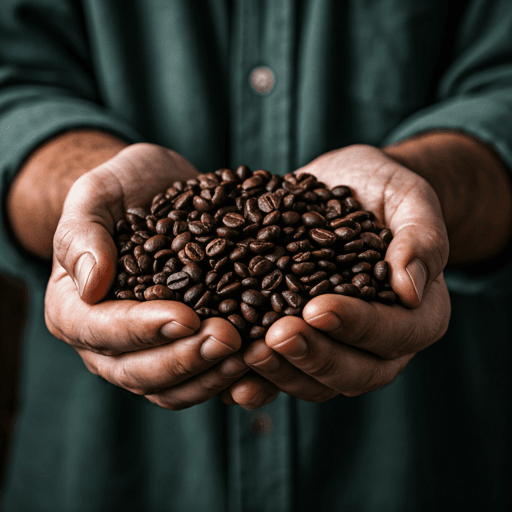
Ask a winemaker why two vineyards on the same hillside produce different wines and they will say one word: terroir. It is the French idea that a place — its soil, its slope, its weather, its light — leaves a fingerprint in the glass that no cellar technique can fully erase. Coffee people borrowed the word, and for good reason. Long before a roaster touches a single bean, the mountain it grew on has already decided a great deal about how it will taste.
That is the promise, and also the trap. Place genuinely matters in coffee, sometimes dramatically. But "terroir" has also become a marketing sticker slapped on bags to justify a story. This guide takes the idea seriously and honestly: what the environment of a growing region actually does to flavor, which factors matter most, and where the romance outruns the evidence. Think of it as the umbrella concept that ties together everything else you read about coffee origins.
What coffee terroir borrows from wine
Terroir translates loosely as "a taste of place." In wine it is a formal, almost legal idea — France's appellation system (AOC) draws boundaries on a map and says a wine may only carry a name if it comes from that exact ground. Coffee has no equivalent legal framework. There is no world body that certifies a "coffee terroir," and academics who study the question note that coffee still lacks a shared, rigorous definition of the term. So when someone speaks of coffee terroir, they mean the whole bundle of environmental factors of a specific place — altitude, latitude, soil, rainfall, temperature, sunlight, and the shape of the land — that influence how a coffee tastes before any human decision is made.
Those factors do not act in isolation. They stack. A high slope near the equator with volcanic soil and a clean dry season is a different flavor machine than a lower, sedimentary plateau in the subtropics with a single monsoon. The art of reading coffee terroir is learning to hear all of those variables at once.
Latitude and the tropics: the coffee belt
The first fact of terroir is a line on a globe. Nearly all commercial coffee grows in the tropical band between the Tropic of Cancer (about 23.5° north) and the Tropic of Capricorn (about 23.5° south) — the region often called the coffee belt or bean belt. Coffee, and Arabica especially, is frost-shy and heat-sensitive; it needs steady warmth, no hard freezes, and a reliable rhythm of wet and dry to flower and ripen evenly.
Latitude does more than draw the outer edge. Close to the equator, seasons blur, and some origins flower and harvest almost year-round or even twice a year. Farther toward the tropics' edges — southern Brazil, for instance — the year has a sharper single season, which concentrates a farm's picking and drying into a defined window. Distance from the equator also lets coffee grow well at lower elevations, because the cooler ambient temperature substitutes for some of the effect of height.
Altitude: elevation as a slow cooker
Altitude is the terroir factor most people can taste blind, which is why it earns its own deep dive in our guide to altitude and coffee. In short: higher, cooler air slows the coffee cherry's maturation. Slower ripening lets the plant pack more sugars and acids into a denser seed, which in the cup tends to read as brighter, more structured acidity and greater complexity. Much specialty Arabica sits roughly between 1,200 and 2,200 meters above sea level, though the "right" number depends on how far you are from the equator. Lower, warmer plots ripen fast and often yield softer, rounder, less acidic cups.
One honest caveat: altitude is frequently used as a proxy for quality on labels, but height alone guarantees nothing. A poorly farmed high-altitude lot can taste flat, and a brilliantly managed lower one can shine. Elevation shapes potential; it does not deliver the cup by itself.
Soil: volcanic versus everything else
Ask a coffee grower about their land and the conversation almost always turns to soil. The celebrated case is volcanic ground. Guatemala's Antigua valley sits in the shadow of three volcanoes — Agua, Fuego, and Acatenango — and the still-active Fuego periodically dusts the fields with mineral-rich ash. Volcanic soils there are prized because they are typically nutrient-dense, well-draining, and deep, which supports healthy, vigorous plants. Antigua's classic profile — full body, dark chocolate, brown spice, a whisper of smoke, clean acidity — is widely attributed to that volcanic terroir working together with high elevation.
Here is where honesty matters. It is tempting to say the coffee "tastes like the minerals in the soil," but that is not how the science works. Roots do not pipe iron or magnesium straight into the cup as flavor. Instead, soil chemistry, drainage, and fertility shape how vigorously the plant grows, how it ripens its cherries, and what sugars and acids it builds — and that is what you taste. Volcanic soil is not a magic flavor additive; it is a very good growing medium that tends to produce excellent fruit. Elsewhere, heavier clay and sedimentary soils correlate with different profiles, often rounder, nuttier, or more chocolatey, though processing and variety complicate any neat rule.
Climate, rainfall, and the dry season
Weather is terroir in motion. Coffee flowers in response to rain after a dry spell, so the pattern of wet and dry seasons largely sets when a region blooms and when it harvests. A distinct dry season is a quiet asset: it concentrates flowering, encourages even ripening, and gives farmers stable weather to dry the coffee properly after picking. Origins with erratic rain face uneven ripening and drying, which muddies flavor and consistency.
Temperature ranges, humidity, cloud cover, and the daily swing between warm days and cool nights all feed into the cherry's development. So does aspect — which direction a slope faces and how much direct sun it gets. Growers sometimes manage that last variable deliberately, planting canopy trees so the coffee ripens under shade. Shade moderates temperature and can slow ripening much as altitude does, blurring the line between "natural" terroir and human choice.
Terroir, variety, and processing: a three-way conversation
Terroir never works alone. The flavor in your cup is the product of three interacting forces: terroir (place), variety (the plant's genetics), and processing (what humans do after picking). Change any one and the cup changes.
Genetics set the ceiling and the character. The same Bourbon variety planted in volcanic Central America and in an East African highland will express differently, because each terroir coaxes out different sides of the same genome — yet both remain recognizably Bourbon, sweet and balanced. This is the clearest proof that terroir and variety are distinct levers: hold the genetics steady, move the place, and the flavor shifts.
Processing is the wild card, and it can overwhelm the others. How the fruit is removed and dried — washed, natural, honey, or a long anaerobic ferment — imprints its own strong signature, explored in our guide to coffee processing methods. A heavy natural or fermented process can pile on so much boozy, jammy fruit that the delicate signals of place get buried. This is precisely why coffee is often said to be more processing- and roast-driven than wine: a bold technique can drown out terroir, for better or worse. The finest single-origin coffees usually come from a light, clean processing that lets the place speak.
| Origin | Terroir signature | Typical cup character |
|---|---|---|
| Guatemalan Antigua | High-altitude volcanic valley, mineral-rich ash, warm days and cool nights | Full body, cocoa, brown spice, clean acidity |
| Ethiopian highlands | Ancient forest and garden plots, 1,500–2,200 m, vast native diversity | Floral, bergamot, berry, tea-like, delicate |
| Colombian slopes | Varied Andean microclimates, many altitudes and aspects | Balanced, sweet, juicy acidity, caramel |
Coffee terroir in three real origins
Consider Ethiopian coffee, grown in the plant's ancestral home. Ethiopia's forests hold more genetic diversity than the rest of the coffee world combined — thousands of local landraces, collectively (and loosely) labeled "heirloom," that evolved to fit specific mountain microclimates. That entanglement of native genetics with ancient forest terroir helps explain why great Ethiopian lots taste the way they do: jasmine and bergamot, blueberry and stone fruit, a tea-like delicacy that is very hard to replicate elsewhere. It is terroir and variety so intertwined they are almost impossible to separate.
Now look at Colombian coffee, where the Andes fracture the country into countless microclimates at different altitudes and aspects. There is no single "Colombian" terroir; a bright, floral Nariño lot and a heavier Tolima one can differ as much as two nations. And back in Guatemalan Antigua, the volcanic-plus-altitude combination produces that dependable cocoa-and-spice backbone. Three origins, three completely different fingerprints — that is coffee terroir made concrete.
The honest limits of coffee terroir
Terroir is real, but the word is also overused. Because coffee has no legal definition of it, "terroir" can mean anything a marketer wants, and a beautiful photo of a volcano on a label does not prove the flavor inside. A pretty origin story shapes expectations as much as it reflects the cup. And because processing and roast can dominate the flavor, it is genuinely hard to isolate the pure signal of place — the very thing terroir is supposed to name.
So hold the idea with both hands. Yes, altitude, soil, climate, and latitude leave a real imprint, and learning to notice it makes drinking coffee far richer. But treat sweeping terroir claims with friendly skepticism, taste widely, and remember that the mountain, the plant, and the person all get a vote. Read an origin label as an invitation to pay attention rather than a guarantee — the surest way to learn what a place tastes like is to keep tasting.
Frequently asked questions
What does terroir mean in coffee?
Terroir is a "taste of place" — the full set of environmental factors of a growing region, including altitude, latitude, soil, rainfall, temperature, and sunlight, that shape how a coffee tastes before it is picked or processed. It borrows the concept from wine. In coffee it describes why the same variety can taste distinctly different from one origin to another.
Does soil really change how coffee tastes?
Yes, but not in the literal way people imagine. Roots do not deliver soil minerals to the cup as flavor; instead, a soil's fertility, drainage, and chemistry affect how healthily the plant grows and ripens its cherries, and that shapes the sugars and acids you eventually taste. Volcanic soils are prized less for a "mineral flavor" than for being deep, nutrient-rich, well-draining growing media.
Is coffee terroir the same as in wine?
The idea is borrowed from wine, but the rigor is not. Wine has formal, legally defined appellations that tie a name to specific ground, whereas coffee has no such system and no agreed scientific definition of terroir. Coffee flavor is also more strongly influenced by processing and roasting than wine is, which makes a place's signature easier to mask.
Which matters more: terroir, variety, or processing?
None wins outright — they interact, and the balance shifts lot by lot. Terroir and variety set a coffee's potential and character, while processing can either reveal that potential or overwhelm it. A heavy fermented or natural process can bury terroir under bold fruit, whereas a clean washed process tends to let place and genetics show through.
How does altitude fit into terroir?
Altitude is one of the strongest and most tasteable terroir factors. Higher, cooler elevations slow cherry ripening, producing denser beans with brighter acidity and more complexity, which is why much specialty Arabica grows between roughly 1,200 and 2,200 meters. That said, height is only potential; farming and processing still decide whether the cup delivers on it.